Home>
Welcome to Graham's Public Blogs
These quick commentaries are written by Graham on events and developments in European finance. They are part of his pro bono work. Click through to see how you can support this work
Any comments on my blogs? Contact me: Graham@grahambishop.com
______________________________________________________________________________
Want to read all the stories that underlie these brief comments on just a few of them? Subscribe at www.Grahambishop.com. We offer a service of our weekly e-mail (with live links) for just €5 per month
9 January 2025
I have decided to cease posting comments on X/Twitter henceforth
______________________________________________________________________________
26 June 2025
Highlights of my week: ECFR highlighted the rising effect of President Trump on Europe’s politics while EPC’s Duff proposed a wider and deeper Union as a response – with a fast-track entry for Ukraine. CEPR pointed to a decline in non-tariff barriers stimulating trade in services. Banking union took another small step forward as Council and Parliament reached agreement on the Crisis Management and Deposit Insurance Directive (CMDI) but the EBF published a study showing the magnitude capital held by EU banks (i) above the Basel requirements and (ii) as a result of national gold-plating/discretion. These added €272 billion of CET, thus precluding around €2 trillion of financing. PCS gave a `first look’ at the Commission’s securitisation review proposals with “over 40 meaningful measures”. ISDA and AFME did a study of the recent growth of interest rate derivatives (IRD) trading in the EU, UK and US – showing staggering (and rising) volumes. This data can only underline the importance of ESMA’s continued work on the safety of CCPs. IFRS’ s Liikanen reflected on the two decades of growth in the use of IFRS standards – now used by 140 countries – and their spread into sustainability disclosures. The AMF inspected the French asset management industry to check professional employees’ knowledge to provide retail investors with high-quality services. There is room for improvement! The Federal Trust analysed the economic costs of Brexit nine years after the Brexit Referendum and found they were largely as expected by the economic fraternity – the much derided “experts” - at the time. No wonder a strong majority of citizens think Brexit was a mistake and have taken electoral revenge on the political party that was responsible!
_______________________________________________________________________________________________________________________________________
19 June 2025
Highlights of my week: ECB’s Elderson provided some powerful numbers on the benefits to Europe of the Single Market– calling for its “completion”. CEPR and Project Syndicate published papers on the risk of rising public debt – especially of the US. SSM’s Donnery highlighted the need for banks to manage credit risk properly just as SAFE published a report for ECON about the risks from real estate loans. The new Chair of the European Payments Council (EPC) took the opportunity to highlight the efforts made by the industry to respond to the ECB/Commission calls for `homegrown’ payments systems. CEPS’ Arnal reported that much fraud now falls outside the control of payment providers but they still bear the liability! The Commission came forward with its plans to improve securitisation but PCS levelled some serious criticisms. Assonime, CEPS and Irish Funds all happened to write up their capital market problems but the Swedish success story was welcome. Across the Channel, the London market is set for more distress as one of the biggest pension fund managers said it planned to reduce its exposure to UK equites to more or less nominal levels. Parliament and Council struck a deal on T+1 while ESMA published its final report on the Active Account Requirements (AAR) to use EU CCP’s to reduce exposure to UK CCPs. Parliament and Council struck another deal – this time to simplify the carbon leakage instrument – CBAM. Another study for ECON analysed the risk to the EU of “cryptomercantilism’ from US dollar “stablecoins” but another report from SUERF questioned – again – if retail CBDC’s would add much to the range of payments options open to citizens.
___________________________________________________________________________________________________________________________________
12 June 2025
Highlights of my week: The genuine liquidity of bank’s assets was put back into play by FSI’s Restoy, while SSM’s Elderson gave a forceful re-statement of the crucial importance of the `rule of law’ – at least in Europe! - for economic growth. CEPS pointed out that political resistance even to centralising supervision has stalled the reform that is so desired across Europe. The SSM’s Buch drew a clear distinction between simplification and de-regulation that weakens resilience. The Commission launched a consultation on a “savings and investment account” that would be a simple entry point for retail investors into capital markets but highlighted a potentially fatal problem – a need for tax incentives. EFAMA, AFME and Accountancy Europe responded on various aspects of the Commission’s call for evidence about capital markets’ integration. This was also a major theme of ICMA’s wide-ranging quarterly Report. OECD highlighted the growing role of retail investors direct participation in government bond markets – an entirely natural phenomenon in a technically advanced world where there is no need to reduce pension income by paying the high costs of financial intermediation. The theme of simplifying regulation was also on display in the ESG world where the EBF, ACCA and Insurance Europe all called for a simpler sustainability disclosure regime. Finextra reported on a major, global crackdown by the regulators on “finfluencers” who market financial products that scam retail investors. In Brexit-land, the FCA `rang the bell’ on a new type of stock market for smaller companies, just as three UK companies were bought by US investors in just one day!
___________________________________________________________________________________________________________________________________
5 June 2025
Highlights of my week: Bulgaria is now on the official track to become the 21st member of the euro area – despite domestic concerns about the inflation risks (which did not materialise when the euro came into existence!). In the intervening third of a century, the euro has gained massive trust from its citizen-users – now up to 83% in the latest Eurobarometer. The Polish election result was not what the EU establishment wanted but it did highlight the schism in Polish society. The Trump administration appears set to ease capital rules that constrain US banks – a `courageous’ move at a time when the role of the dollar is under threat and the massive, short-term debt of the US Government is a classic threat to financial stability. Another unexpected fallout from “Trump” is the rise of Wero - the European banks’ digital wallet to give autonomy in payments instead of reliance on Visa/Mastercard from the US. The EBF’s T+1 taskforce passed a key milestone by producing the first draft of its action recommendations for the changeover – inspired by the US! The Commission’s Omnibus proposals continue to generate reactions – with an emerging theme that simplification is popular – but via tweaks rather than wholesale junking of concepts that investors have now grasped. The Poles may be suffering from schizophrenia but the Brits are in a league of their own: after the local election results in early May, Electoral Calculus’ MRP regression analysis puts Prime Minster Farage into Downing Street with a substantial, 74 seat majority. Yet opinion polls show a settled majority of nearly 60% of electors want to rejoin the EU – a `somewhat unlikely’ result from a PM Farage!
__________________________________________________________________________________________________________________________________
29 May 2025
Highlights of my week: The euro area is set to chalk up its 21st member state next year when Bulgaria joins – according to POLITICO. The euro may be expanding but the drumbeat of stories about the fundamental problems of the dollar continue. ECB President Lagarde joined the chorus and O’Neill sounded another warning about President Trump undermining confidence, just as Bloomberg reported that €7.5 trillion of Asian dollar holdings may be unravelling. But not everything in Europe is rosy: The EU is planning a sweeping stress-test of non-banks as fears about the NBFI sector rise; BIS’s Restoy called for a simplification of EU bank regulation; Bocconi’s Bini-Smaghi called for a review of the SSM and Bruegel’s Mejino-Lopez/Veron suggested banking union must be completed – with more decision-making at EU level. The EU’s Court of Auditors pointed out the EU’s failure to boost supplementary pension saving (especially the failure of the PEPP project) – echoed by PensionsEurope. However, Irish Funds claimed that EU citizens are not saving but France’s AMF provided a ray of hope as its quarterly retail investor dashboard showed a strong pick up in the demand for financial instruments. ESG commitments may be slipping but ECGI’s Mayer and CEPS’ Thomadakis both floated an antidote: corporate governance looking beyond narrow shareholder returns. Online financial scams are a rising problem and both IOSCO and ESMA urged online platforms to meet their responsibilities. Certainly the websites of regulators such as Bafin and AMF seem to carry ever-lengthening weekly lists of scam sites to avoid.
___________________________________________________________________________________________________________________________________
22 May 2025
Highlights of my week: Maybe it was just a co-incidence but this week produced a crop of warnings about the fragility of the global financial system. The ECB’s Financial Stability Review set the tone; the FSB commented on the leverage of the NBFI sector; FSI reviewed banks’ liquidity resilience after the 2023 turmoil; ”Basel” re-committed to implementing Basel III; the IMF blogged about the need to foster resilience in government bond markets; ICMA put out its position paper on a macro-prudential framework for NBFI activity in the bond markets and Bruegel was clear that sovereign debt is unsustainable amidst climate warming. Perhaps the common theme is the risk of the dollar `falling from grace’ – the subject of comments from a set of heavyweights in Project Syndicate. The impact of AI is increasingly recurrent – Insurance Europe commented on EIOPA’s Opinion about the impact on insurance and finextra reported that BCG found that less than 1in 4 banks are really ready for the AI era. The Brexit commentariat leapt into action after the EU-UK “Reset Summit” – welcoming a new era of co-operation but failed to find much detail for the devil to lurk in! However, Curtice highlighted the public’s sensitivity to the precise terminology used to pose questions about the benefits of closer ties to the EU. CER pointed graphically to the slow but progressive strangulation of the UK economy by Brexit manifested in the long-run decline in export competitiveness. This may have been offset by the strength of financial services (and its £110 billion tax contribution!) but London has just lost its `tech crown’ to Paris.
___________________________________________________________________________________________________________________________________
15 May 2025
Highlights of my week: Eurogroup acknowledged the `overall good condition ‘of the EU banking sector as EBA reported good news on liquidity and stable funding. The Governors and Heads of Supervision (GHOSH) met at the BIS and re-stated their intention to implement Basel III in full but the FT splashed a report that US authorities are poised to dial back on some key components. Eurogroup also `took stock’ of progress on the digital euro as finextra reported that the Nordic countries are – sensibly – developing offline payment back-ups. Will the digital euro contribute to the resilience of Europe’s payments infrastructure? The BIS and NY Fed are testing how to operate monetary policy in a tokenised system. But the IMF produced a startling chart about the electricity consumption of data centres. It feels as though it was only last year that global AI was consuming more electricity than the Netherlands. This year, it is more than France. By 2030, consumption may have tripled to become the world's fourth largest user! Is this feasible or who will be squeezed out? As Farage increasingly tops opinion polls and actual votes, Uk and EU’s Relan points out that the UK’s rules have not diverged significantly from the EU’s. That may make next week’s EU/UK summit easier but the problem of fish remains firmly in the net.
______________________________________________________________________________________________________________________________________
8 May 2025
Eighty years ago today, the Second World War ended in Europe and seventy-five years ago tomorrow, French Foreign Minister Schuman made the Declaration that launched the process of European integration that continues to this day. However, that process is not irreversible – underlined by the question marks raised over the stability of the new German Government of Chancellor Merz. Moreover, questions are being asked about the permanence of the role of the dollar – supreme since the 1944 Breton Woods agreement. President Trump may even withdraw the US from the system of global financial regulation – removing the trust that is the glue of global financial regulation. Suddenly, the push for a digital euro is taking on a new dimension as the ECB brings the private sectors into its preparations and a private player – EPI – pushes a solution to give Europe independence in payments. Coming down to the technical level, the ESAs continue to deliver technical advice and standards in many areas: resolution planning, real estate risk weights, listing requirements and ESG ratings. Parliament confirmed new rules for benchmarks and Council adopted it position on shortening the settlement cycle to T+1. Brexit is coming back into focus as the EU-UK Summit looms but the old fault lines have not disappeared – fishing rights may be pivotal. Mainland Europe does not yet seem to have recognised that the political revolution in the UK is still gathering momentum. The local council elections may be the harbinger of Prime Minister Farage in 2029. Bruegel called for financial services to be part of the EU-UK reset but who would trust a Farage Government to stick to any Starmer deals on say CCPs??
_____________________________________________________________________________________________________________________________________
1 May 2025
My highlights of the last two weeks: The Easter holidays may have slowed the legislators but the first “100 days of Trump” continue to reverberate as global commentators such as the IMF and FSB highlight financial vulnerabilities. The bank/NBFI nexus also attracted further attention. However, for the EU, CPMI/IOSCO have good words on its implementation of the Principles for financial market infrastructure – though still with room for improvement. EU banks had an excellent first quarter of profitability but are now signalling caution as `Trumpian’ uncertainty hits clients. But EU banks start the new situation in a strong position – underlined by the Banque de France’s analysis of the stress tests done in the EU and US. Despite the differences in methodology, EU banks emerge stronger. EIOPA’s dashboard of risks for the insurance industry also highlighted geopolitical uncertainties. The Omnibus proposal for simplifying sustainability reporting is still gaining much attention: how to maintain transparency for investors on the one hand but -on the other hand – how can companies continue to fulfil their obligations. GRI stated it will keep its well-known voluntary standards aligned with the EU. The EBA is also filling in some details of the mechanics of the EU’s crypto regulatory regime while ECIPE pointed out the pitfalls of the “Brussels effect” in extending the DMA to emerging markets with weaker governance systems due to the Act’s ambiguous concepts. The Trump decision to abandon the OECD agreement on minimum global corporate tax rates has caused concern at Insurance Europe and POLITICO reported that EU governments are considering trying to appease Trump on this issue. Brexit is never far from the headlines and the FT reported that the EU plans to hold a reset in food standards hostage to fishing rights!
_____________________________________________________________________________________________________________________________________
Highlights of last month: Returning from a month in Australia, the US and EU seem to be standing on their head! The extraordinary antics of President Trump have let a genie out of the bottle that can never be put back in – global perceptions of the US will never be the same again. The think tanks are responding about retaliatory tariffs and also the “Mar-a-Lago Accord” discussions on the potential implications for the dollar and thus the role of the euro. Already, the first impacts on financial regulation are playing out: a Commission proposal to maintain current bank liquidity rules and a possible delay to revised market risk rules for banks trading books. Could this supercharge the development of SIU? The strategy was unveiled along with yet another consultation to identify the obstacles. Perhaps the drive for more securitisation could be a first beneficiary? ICMA produced its excellent semi-annual surveys of sovereign and corporate bond trading in the EU and UK. The Retail Investment Strategy continues to draw more criticism – from EFAMA and the German Bankenverband. The co-legislators – Parliament and Council - moved with remarkable alacrity to `stop the clock’ on some of the sustainability reporting requirements in the CSRD and CSDDD. CEPS Thomadakis reviewed the last decade of EU audit reform but new challenges of auditing sustainability measures. But the increasing concentration of audit services in the hands of US-led firms raises the issue of `strategic autonomy’ in a world that can be up-ended at any moment by a flick of Trump’s pen.
______________________________________________________________________________________________________________________________________
13 March 2025
Highlights of my week: The consequences of Trump’s rupture of defence support for Europe continue to play out – and will for a decade or more as the EU’s fiscal and financial system adjusts. The BIS analysis of the drivers of private credit is worth studying – banks risk a progressive disintermediation due to capital requirements to maintain the capital-certainty of their deposits. Another strand of Trump-chaos is beginning to crystalise as questions rise about the dollar’s role amidst Bitcoin enthusiasm – but the latest theft surely rings an alarm bell about crypto! The Commission’s consultation on SIU triggered a round of comments from virtually every part of the EU financial system while the application of AI to financial services (and its regulatory reporting is clearly becoming an issue. The Commission’s Omnibus proposals continue to generate more comment.
_______________________________________________________________________________________________________________________________________
6 March 2025
Highlights of my week: “Everything” really did change last week! The EU commentariat was just grappling with possible eventual consequences of the German election when those consequences suddenly arrived in the form of a massive debt-financed defence splurge – provided the constitution can be amended in the next couple of weeks! More directly for financial regulation, Howard Davies put the question about global financial rules surviving in a Trumpian world. For the good news, SRB Chair Laboureix was able to tell ECON that MREL requirements are fully met and that the “rainy day” fund is now full – achievements that seemed far out of reach a decade ago. However, have the risks now migrated from banks to NBFIs?? Responses to the FSB consultation on NBFI leverage suggest this will be a difficult issue and the FSA pointed to some problems with private credit valuations – eerily reminiscent of the first signs of the strains that heralded the onset of the Great Financial Crash. The Commission’s Omnibus package to simplify sustainability reporting rules last week triggered an out-pouring of comment this week. AccountancyEurope explained the actual mechanics while professional bodies representing the issuers and holders generally welcomed the simplification proposals. However, the ”thinkers” all seemed to be concerned about rolling back the drive to achieve sustainability. Our children will bear any consequences. They may also witness the consequences of Trump’s embrace of “stablecoins” when that turns out to be a misnomer and the merits of a century and a half of banking regulation become apparent again.
_______________________________________________________________________________________________________
27 February 2025
Highlights of my week: Another week of politics that could re-shape EU financial markets over time: Friedrich Merz wins the German election and looks set to be bold. But no answers yet from the EU on how to fund huge defence expenditures: joint bonds from some states? Adapt the new fiscal rules? Trump threatens 25% tariffs on the EU – but based on a total lack of knowledge of the EU’s origins! Banque de France Governor Villeroy de Galhau argues that Trump’s financial de-regulation drive creates a “big risk” for financial stability. Stripe joins the European Payments Council: will the private sector create an alternative to the digital euro, though US-led! The Commission published its Omnibus package to simplify several parts of the green regulatory agenda – but is it just simplification to boost competitiveness, or is it actually a scaling back of ambition to keep competitive with Trump’s agenda? Much ink will flow shortly! The FSB wants to see its Global Regulatory Framework for crypto assets implemented widely and the need was underlined by a $505 million US fine for AML breaches by a leading crypto exchange. The UK continues with a consultation on its own Green Taxonomy – but many market participants question if it is necessary. That scepticism may be re-enforced once they digest the interoperability issues with the EU’s about-to-be-simplified standards.
______________________________________________________________________________________________________________________
20 February 2025
Highlights of my week: Financial regulation took a bit of a back seat as Europe stared – aghast – at the extraordinary antics across the Atlantic. Even before the “Trump effects” work through, the US already has the largest – proportionately – budget and current account deficits amongst the major industrialised powers. Will the famed `bond market vigilantes’ step in instead of the Fed and “take the punch bowl away”? If they do, the malaise will surely spread to heavily indebted EU states and Friedrich Merz – in pole position to become German Chancellor after this weekend’s election – has already warned of a renewed financial crisis. However, the routine flow of regulatory activity continued as Commissioner Albuquerque laid out the plan to move to T+1 settlement and ESMA consulted on further improvements to settlement discipline. The Commission’s NPL group published a paper showing that the new secondary market in NPLs has succeeded in shrinking bank’s NPLs to a historic low – despite the headwinds from national insolvency procedures, stimulating comments from CEPS about the merits of a “28th regime” to assist CMU. The ESAs are pushing forward the implementation of both DORA and MiCA – perhaps in the nick of time as Reuters has just reported the suspicious withdrawal of $99m from an Argentinian liquidity pool.
______________________________________________________________________________________________________________________________________
13 February 2025
Highlights of my week: The shadow of Trump over history seems to be everywhere: Smoot-Hawley tariffs, appeasement, undermining America’s public money by promoting a private alternative – private cyber-money. What next? De-regulation seems to be the US answer but European voices like Gros are arguing for caution! However, there is good news around: the Single Resolution Fund (SRF) has now reached its target size so banks will not need to contribute this year. After all the talk of T+1, the Commission tabled the formal legal instrument - with 11 October 2027 as the target date. Trump’s cancellation of US efforts to create a digital dollar should be a boon to other digital currencies, but finextra reports that a third of central banks are pushing back their launch. The European Parliament’s research unit reviewed the Debt Sustainability Analysis for the EU’s new economic governance system and argued that the debt issuance component “could benefit from more explicitly modelling the approach that debt management offices follow in reality.” POLITICO reported that the famed Brexit “reset” may be already getting into trouble from the actions of UK regulators in `blindsiding’ the EU recently.
_____________________________________________________________________________________________________________________
6 February 2025
My highlights since 24 January: The Commission’s Competitiveness Compass continues to draw support from across industry as well as finance though Bruegel’s Zettlemeyer described it pithily as “Draghi on a shoestring”! Unsurprisingly, the Commission extended the deadline for equivalence of UK CCP regulation by three years BUT Commissioner Albuquerque emphasised that the extension was to allow time for the newly-enacted EMIR3 to become effective. Coincidentally (?) EIOPA suggested changes to the rules for insurers (the largest category of EU investors) exposure to CCPs. The Bank of England welcomed the Commission statement in a four-line comment. The T+1 campaign was officially launched. Simplification is the current watchword and the Commission’s ”Platform” proposed a major `simplification’ of green rules but the debate is now well underway on tweaking versus serious change, More than 150 major investors came out against any serious dilution. President Trump’s `plans’ for private dollar-backed crypto stable-coins led Project Syndicate's Reichlin to pose the question “Will Crypto Save the Dollar?” but the ECB’s Cipollone took the challenge as stepping up the pressure for a digital euro as a rival. The Bank of England caught Brussels unaware by postponing some final Basel regulations while awaiting Trump’s actions rather than words. The fifth anniversary of the UK’s actual Brexit moment caused much heart-searching among the think tanks but 60% of those who were too young to vote in the referendum want to rejoin. Prime Minster Starmer’s rhetoric about a re-set with EU is welcome but the EU is increasingly wondering about the lack of content.
_______________________________________________________________________________________________________________________________________
23 January 2025
Highlights of my week: The beginning of Trump II dominated the think tanks but there were some nuggets left for financial services: The Commission gave Eurogroup a preview of its forthcoming Omnibus package on streamlining green reporting and Commission President UvL told “Davos” that “innovative firms” will be offered a 28th Regime for corporate, insolvency, tax and labour laws. But why would such a welcome package only benefit” innovative” firms? However, President Trump may already have thrown a first spanner into these good works by withdrawing the US from the OECD’s minimum corporate tax rate deal. Can the EU respond as one? Big banks are in for another round of stress tests this year from both EBA and ECB but many smaller ones will face an ECB test. Moreover, banks will be examined for using “insufficiently prudent projections” – or cheating - as ordinary people might say! ESMA is starting the year with a new governance structure for the enormous challenge of moving to T+1 settlement. The Digital Operational Resilience Act (DORA) took effect in the EU to maintain the resilience of the financial system against digital threats. As expected, the Commission extended the equivalence decision for UK-based CCPs for a further three years- perhaps giving itself enough time to build up an on-shore clearing alternative – just in time for the next UK General Election! The Federal Trust published another of its videos - this time focussing on the Tory admission that there really was `no plan for Brexit’…but maybe there is a warming by the EU to some form of Customs Union.
_______________________________________________________________________________________________________________________________________
16 January 2025
Highlights of my week: In an otherwise light week, Bruegel advocated a greater role for European ‘public goods’ to bolster the EU’s efficiency while EPC lamented the decline of the ‘Brussels effect’ in the EU’s soft power. The SSM underscored that EU banks still have plenty of work to do in remediating ‘material and persistent shortcomings’. For CMU, Parliament published a study of the recommendations of Draghi, Letta and Noyer. The ECB analysed the need to strengthen risk monitoring of the NBFI sectors while IOSCO, BCBS and CPMI made proposals on varying aspects of margining derivative trades – underlining that derivatives have not yet been de-risked for the financial system. The FSB’s comments on climate transition and financial stability may prove to be timely as the Los Angeles fires impact insurance cover there. The Commission’s “Platform” is looking for feedback on its recommendations for streamlining the implementation of the rules in the taxonomy etc. while the Net Zero Asset Managers initiative seems to be on the verge of foundering – continuing the pressure on private initiatives flowing form the imminent Trump Presidency. Bindseil and Pantelopolous produced a useful paper for SUERF analysing the confusing – perhaps wilful(!) – terminology used by cyber-people. TheCityUK’s latest report showed the UK as being the world’s largest net exporter of financial services – still.
______________________________________________________________________________________________________________________________________
9 January 2025
Highlights of last three weeks: The December European Council #EUCO meeting said nothing about financial regulation and the #PolishPresidency programme – understandably – is focussed on security. However, there may soon be a blast from across the Atlantic as President-elect #Trump seems to be talking about a bonfire of regulation, prompting the #BankofEngland to warn against a `race to the bottom’ on financial rules. The New Year tends to bring the start date for new rules and the #GenderBalanceDirective came into force for company boards. #AccountancyEurope summarised the key provisions of the new #AMLR for the accountancy world while its #CSRD transposition tracker highlighted the impact on 42,500 EU companies this year. #ESMA closed the year with a flurry of activity: launching the selection process for a bond Consolidated Tape Provider #CTP, published the feedback on its #securitisation templates review and consulted on a #CodeofConduct for issuer-sponsored research. The #ECB attempted to quantify the scale of green investment needed (3-4% of GDP) and the Commission’s #Platform suggested two voluntary `labels’ for benchmarks on the `transition’ of finance away from high greenhouse gas (#GHG) emission industries. Though institutional investors may be adopting such policies, Trumpian blasts have already induced all the major US banks to abandon their `climate alliance’ trade group. Even the #EIB – Europe’s leader in green reporting - is concerned about the impact of new rules. So the `green’ world is not starting the year cheerfully. The #EU’s potential challenger to #Visa and #Mastercard – #WERO – successfully tested its systems in practice and is now set for a major roll-out. #Brexit continues to weigh on #UK industry but - as economic woes deepen – there seems to be no public debate on the £100+ bn hit in 2025 to public finances from Brexit-induced absence of growth and higher-than-necessary interest rates – see my year-end video
_______________________________________________________________________________________________________________________________________
19 December 2024
Highlights of my week: The Non-Bank Financial Institution (NBFI) sector seems to be emerging from the shadows as the FSB reported that, globally, it is now the same size as the traditional banking sector and growing much more rapidly. There are clear risks to financial stability from its leverage – echoed in the ESRB’s recommendations following a review of its first decade. Debt sustainability is also emerging as a major issue as ECON’s study is sharply critical of the new rules. The resilience of the financial sector attracts much attention but the risk to the sub-sea cables that carry its data is only just surfacing. Both EBA and SSM pronounced on the EU’s banking sector: profitability is holding at high levels and liquidity (on the traditional metrics!) is high. The EU’s insurers were also given good marks in EIOPA’s stress test but the ECB and EIOPA jointly suggested that insurance coverage of natural catastrophe’s needs to be improved. According to the City of London, the UK remains the world’s top exporter of financial services, but questions remain about how much the City might benefit from the Government’s much-touted reset of relations with the EU. Sadly, in my latest video, I felt the need to explain why the reset is doomed – see below. In any case, the leaked draft of the Conclusions of tomorrow’s Heads of Government Summit (EUCO) does not even mention the UK but focusses instead on the potential accession of many other small states…Perhaps the fevered UK debate about “reset” has not made it onto the EU’s radar screen.
As 2024 draws to a close, I have recorded a video with the Federal Trust's Brendan Donnelly to set out my views about the prospects of a Brexit reset for the City of London. Sadly, I believe hopes of a major improvement are doomed as the plans will inevitably founder on the rock of derivative clearing.
A Brexit Reset for the City of London?
____________________________________________________________________________________________________________________________________
12 December 2024
Highlights of my week: As the Polish Presidency is about to begin, Parliament President Metsola spoke warmly about Poland’s strengths and the IMF published a blog highlighting the substantial benefits to the original EU of the 2004 enlargement but highlighting the reforms that were undertaken and will be necessary for any new members. Coincidentally, the finance minister of a former EU member - UK Chancellor Reeves –- was invited to join a Eurogroup meeting given the “bedrock of shared values”. FSB, ESRB and BIS happened to produce papers that highlighted the risks of “fire sales of safe assets” resulting from the UK’s LDI crisis of 2022. The Commission’s “timely” consultation on securitisation closed - with a clutch of comments from all the relevant professional associations. The IAIS adopted its Insurance Capital Standards (ICS) – welcomed by Insurance Europe as it shares so many building blocks with EU regimes. IASB Chair Barckow pointed out that the EU’s adoption of IFRS 20 years ago ushered in a 150-state language of corporate reporting. Commercial Risk reported that climate change has cost insurers €600 bn in the last two decades but an LSE blog showed that these extreme weather events have not spurred the political action that one might have expected. The Financial Data Sharing Act (FiDA) triggered a joint letter from the six major professional associations cautioning on the need for a thorough assessment across the value chain. Council adopted the new rules for `FASTER’ withholding tax relief – to be implemented just 30 years after the Giovannini Group (of which this author was a member!) identified this as a major barrier to the single market in capital. Chancellor Reeves called for a business-like relationship with EU and greater access for the City of London but seems to fail to grasp the existential nature of the derivative clearing problem for the euro area. Would a future PM Farage pay up to preserve the financial stability of the euro area???
_____________________________________________________________________________________________________________________________________
5 December 2024
Highlights of my week: With Barnier’s demise as PM, France may now fall into a political crisis but – as a member of the euro area – it is not an immediate financial crisis. UvL is setting up a “Draghi taskforce” so there may be a serious attempt to produce reform but the growing number of “Putin sympathiser” states may frustrate progress. Despite all this, Eurobarometer showed record high trust in the EU and especially the euro. However, the FSB Plenary reviewed its work- particularly on non-bank financial institutions (NBFI) – just as the ESRB published a report on system-wide macroprudential supervision rather than restricting it to banks. The EBA said that EU banks continue to be robust but the ESRB’s diagnosis of aspects of the NBFI eco-system (especially CCPs) is disturbing. The European Payments Council published its annual report on fraud just as two thinks tanks gave their views that the European Parliament may have mis-stepped on extending liability for fraud to entities that are not participants in the fraudulent process. The Retail Investment Strategy was also subjected to serious criticism from a heavy-weight group of professional associations. Meanwhile EIOPA is consulting on a ‘tool’ to enable citizens to understand how under-insured they are. Council agreed its position on FIDA – Financial Data Access – and the ECB published its second update on progress to the digital euro. Across the Channel, there is much hand-wringing about ‘London’s Shrinking Exchange’ as more companies are de-listed. Pollster Kellner showed that Labour’s re-capture of the ‘red wall’ seats was not due to a rise in Labour but a collapse in Tory support as their voters chose Farage’s Reform Party instead.
_________________________________________________________________________________________________________________________________
28 November 2024
Highlights of my week: After all the excitement, the “von der Leyen II” Commission will take office on 1 December! The new President of the European Council also takes office so the EU institutions are now renewed for five years and can get down to business - and there is much in the in-tray. However, the first crisis could be in France where government bond yields are just about to exceed Greek levels – unthinkable just a few years ago. (As an amusing aside, an LSE blog demonstrates that the more EU negotiations take place in public, the more the actual deals are struck in the privacy of the lunch break!) The Commission’s consultation on the regulation of non-bank financial institutions (NBFI) continues to stir strong feelings - especially from the insurance industry. IOSCO published two papers – showing commodities exchanges still face significant challenges in understanding customer positions, and highlighting the concentration of post trade risk reduction services for derivatives. GRI trumpeted that its standards are increasingly being used by major companies, especially as they are now interoperable with ESRS. The UK government consulted on whether it should launch its own ‘green taxonomy’ – the market reaction to the relevance will be interesting.
______________________________________________________________________________________________________________________________
21 November 2024
Highlights of my week: At the very last moment, Parliament has agreed the new Commissioners so “UvL2” should be able to take office on 1 December. But that start will have as its backdrop the ECB’s chilling assessment about the potential revival of the euro area debt crisis contained in its new Financial Stability Review. The G20 meeting triggered calls from both FSB and the Basel Committee (BCBS) to implement fully the agreed reforms, especially on links to NBFIs. CEPS suggested that the EU should not compare itself precisely to US financial markets, given its very different characteristics and the ECB seems split about publishing its report showing big EU banks would have lower capital requirement than US banks. Council finally agreed EMIR3 and ESMA promptly began asking about the Active Account Requirement (AAR). AFME published the next edition of its CMU Performance Indicators – with bleak comparisons for the EU. ICMA concluded that one-size-fits-all regulation is not appropriate for the NBFI sector. COP29 ends tomorrow and the institutional investors’ group – IIGCC- summarised the first week for investors. IFRS provided a guide for companies to identify their risks (and opportunities). The ESAs examined the risks of the transition to Fit-for-55 climate standards and concluded that the transition alone would not pose risks to financial stability. Chancellor Reeves delivered her Mansion House speech and the FCA came out with a statement about the UK being a world leader in several fields and the City of London pointed out that the UK raised as much new equity as Paris and Frankfurt together – but still ranked fifth in the world!
____________________________________________________________________________________________________________________________________
14 November 2024
Highlights of my week: The European Council issued another grand declaration about taking decisive steps to achieve SIU and CMU but implementation will require a functioning European Commission. That prospect may now be receding into 2025 as the Parliament seemed to reach deadlock on the political balance of new Commissioners after the Hearings. The context is the rise of the far right and now – even worse – the personnel choices of Trump 2.0 for his new government. However, there was good news to be celebrated – 10 years of “European banking supervision”. But not all problems have been `resolved’ – the lessons from 2023 about the difficulties of bank resolution are still emerging from the FSB and think tank SUERF. One of Schuman’s famous `concrete steps’ was taken by Euronext in proposing a single prospectus document – in English – for its seven exchanges to simplify capital raising in the EU. COP29 is not over yet, but ECB President Lagarde warned of the growing gap between climate commitments and actual investment cash. Good news from IFRS and IAASB: corporate climate disclosures are progressing but – bad news – ACCA reports that only 20% of businesses are prepared for climate disasters. Both SSM and FCA are focussed on banks’ cyber resilience but BEUC reports that DMA obligations remain an issue for Apple, Alphabet/Google and Meta.
___________________________________________________________________________________________________________________________________
7 November 2024
Highlights of my week: In the past four months, the governments of France and Germany have been dramatically weakened whilst radical change has happened in the UK and US. So today’s European Political Co-operation meeting in Budapest will confront a very different picture from that at the Blenheim Palace meeting in July. Meanwhile…the Commissioner hearings continue in Brussels and Maria Albuquerque seems to have clinched the finance role with a solid performance. However, she did commit to even more collaboration with the Parliament – a further uptick in its effective powers. Eurogroup reviewed the stability of the financial sector with positive reports from both SSM and SRB – though deposit insurance remains a well-known but still open weakness. The tenth anniversary of `single banking supervision’ was celebrated in Frankfurt with strong re-affirmations of the benefits of pan-EU banks and the independence of the ECB in this field as well as monetary policy – though UniCredit’s bid for Commerzbank was carefully not mentioned! Council signed off on amendments to Solvency II and IRRD, as well as an updated statistics regulation. ESMA brought two more entities under its direct supervision. The imminence of COP29 triggered more progress reports on the financial sector’s impact on green financing – EIOPA reported that taxonomy-aligned investments are now up to 4.5% of insurers’ assets. Council agreed a package of VAT changes to bring it into the digital age. The UK’s FCA enhanced access to market data and investment research – welcomed by both AFME and ICMA.
_______________________________________________________________________________________________________________________________
24 October 2024
Highlights of my week: As the tenth European Parliament settles into its stride, it used its moment of peak power to extract a commitment from the Commission to treat it as an equal to the Council. The run up to the IMF meetings produced a crop of comments from the FSB and IMF staff highlighting the risks and the amount of work still to be done to make the financial system truly resilient. SUERF published a study showing that GPT4 was better at forecasting company earnings than the human financial analysts… SSM’s McCaul spoke about banks outsourcing activities to the cloud but still remaining responsible for ensuring their systems work properly. The Commission reported on its progress on the consolidated tape project, while ICMA and Better Finance commented on ESMA’s consultation about the effectiveness of order execution systems. Another straw in the ESG wind: a leading insurer is backing away from insuring mining companies with poor ESG records. Both FSB and CPMI wrote about the risk to financial stability that might come from tokenisation and the concepts for its regulation. Labour’s former Europe minister McShane bemoaned PM Starmer’s attitude to Europe – ‘reverting to type’ of earlier, sceptical Labour PMs.___________________________________________________________________________________________________________________________________
17 October 2024
Highlights of my week: All the Commissioners-designate have had Parliament’s green light on their “conflict of interest” declaration. Now to the main test: answering the written questions and Financial Services Commissioner Albuquerque has been asked directly the “Brexit” question: “Do you think that the recent review of EMIR will succeed in bringing the clearing business of derivatives denominated in euro to EU financial centres?” She also has to answer on how she will respond to the CMU recommendations in the Draghi, Letta and Noyer reports. UK Prime Minister Starmer may also reflect on the EU response to Switzerland when considering his “re-set” in relations: The EU is not an `a la carte’ menu. The flow of technical matters continues unabated: EIOPA Chair Hielkema testified to ECON about the role of insurance and pension funds while the BIS discussed the liquidity issues from the 2023 banking turmoil. SSM Chair Buch highlighted that banks’ apparent profitability can conceal underlying, fatal risks. But the biggest technical announcement undoubtedly came from the Commission: the settlement cycle will indeed be shortened to T+1. There is not yet an explicit timeline but it should be synchronised with the UK and Switzerland so 2027 looks likely. Hopefully, the industry’s advice will be taken and a number of long-standing bottlenecks will be swept away at the same time. The Commission rejected two recommendations from the ESAs and ESMA on DORA and MiCA. The Lord Mayor of the City of London described Brexit as a disaster and pointed to the 40,000 finance jobs gained in EU financial centres rather than in London.
______________________________________________________________________________________________________________________________________
10 October 2024
Highlights of my week: While we await the Commissioner-designate Hearings, the normal business of Eurogroup and ECOFIN rolls on: will consumers take to the digital euro? Digital resilience is a major concern for the ESAs and Insurance Europe’s Wenning questioned the actions of cybercriminals and how cyber insurance could help. Amidst the Commerzbank/Unicredit debate, SSM’s Buch argued strongly for financial integration – highlighting the economic benefits to the transformation of the Baltic states since EU membership. New listing rules were agreed by Council and Spain opened the case for a `vanguard’ of three or more states proceeding to break the CMU stalemate. However, the existing system of “enhanced co-operation” of at least nine states is rarely used in practice. The incoming Commission may find that plans to revive securitisation are advancing quickly – given the push by many sectors and now the launch of the Commission’s consultation. The ECB’s Cipollone also pointed to the continuing problems from the lack of harmonisation of the financial system’s `plumbing’. Many of the major professional bodies in capital markets strongly criticised ESMA’s proposed Post-trade Deferrals for Bonds. ESMA published its first annual report on carbon trading and set about improving the accounting treatment of carbon `assets’ though EFAMA criticised ESMA’s green Fund Naming Guidelines. BEUC levelled serious charges against the six Big Tech Gatekeepers for non-compliance with the Digital Markets Act and BIS researchers highlighted the risk to the financial system’s cryptography from quantum computing. POLITICO reported that the City of London will – yet again – be left out of any re-set in relations between the EU and UK.
__________________________________________________________________________________________
3 October 2024
Highlights of my week: The final steps in the creation of the new Commission are now underway: the financial declarations have been made and the Parliament has now scheduled public Hearings for early November – in the hope that all will go smoothly and the vote on the entire Commission can take place at the plenary in the last week of November. In the meantime, the far-right scored another victory – this time gaining the most votes in the Austrian election – but a long way from an outright majority. Think-tankers continue to digest the implications of the Draghi Report – even as Letta described Europe as a “financial colony” of the US. However, SSM Chair Buch said the ECB would do anything to remove the hurdles to bank mergers – a modest step towards strengthening EU banks. The Consolidated Tape of securities prices is drawing closer and both EBA and ESMA published their 2025 work programmes. A study for ECON argued that the persistence of national interests remains a key problem for financial integration – just as Insurance Europe pointed to the rising pressures from the demographic hit from a dwindling ratio of active citizens. Better Finance highlighted the `alarming rise of online investment scams’ – hardly an encouragement for the newly-named Savings and Investment Union! The ECB’s Bindseil published a paper via SUERF arguing that many academic papers on retail CBDC design no longer reflect what central banks are actually designing – quite a castigation! Finextra reported that the UK is preparing a switch to T+1 in 2027 with or without the EU. However, the new Labour Government may not wish to upset the EU reset that the Prime Minister is attempting.
_______________________________________________________________________________________________________________________________________
26 September 2024
Highlights of my week: Brussels attention is now swinging to the personalities of the proposed Commission and – for finance particularly - Commissioner-designate Albuquerque. But reflections on the Draghi report continue and now include 20 states criticising both Draghi and Letta for not paying enough attention to the basic integration needed for completing the single market. However, the first test of sincerity for this process looks set to be flunked as Germany furiously denounced Italy’s Unicredit’s approach to Commerzbank. But can they actually stop it? Bruegel reviewed the EU’s debt sustainability problem flowing from its demographics but few commentators focus on China’s incomparably worse situation. Parliament produced a study on the implications of insolvency law for banking union – another basic requirement for any sort of single market in financial services but consistently avoided by the politicians. The ECB is sharpening its teeth on environmental policy by issuing “fine notices” to banks that seem at risk of non-compliance. The mandatory due diligence required by CSRD has attracted the interest of both accountants and risk managers while the asset managers reflected on the growth of sustainable equity funds in recent years. The pressure from asset owners does seem to be having an effect on corporate behaviour. The problem of stimulating retail interest in CBDC continues. The cost of Brexit may exercise some academics but there seems little recognition that restoring the lost growth would go a long way to solving the UK’s public finance problems.
______________________________________________________________________________________________________________________________________
19 September 2024
Highlights of my week: Finally, the list of new Commissioners was unveiled by #CommissionPresident von der Leyen (#UvL) but now begins the great guessing game of how many will be voted down at their #EuropeanParliament hearings. Indeed, will the new Commission start on schedule on 1 November? The #Draghi Report has triggered a wave of competitiveness - but only between the think tanks, academics and professional associations at this early stage! However, the sheer volume of analysis will make it much more difficult for the #EU’s political leaders to shelve the main thrust of the report without engendering massive disillusion with the “European project”. Moreover, the defence issues uncovered by the #Ukraine war cannot be ducked and are already surfacing innovative ideas to finance the air defence of “Europe” – all highlighting the need for a proper Capital Markets Union (#CMU) to provide the finance. #InsuranceEurope pointed to the opportunity for the #SolvencyII Review to open the way for the massive life insurance funds to invest in more risk-bearing assets, though the #BIS Quarterly Review highlighted the shift of insures to riskier, less liquid assets. The role of #AI continues to generate much comment - whether from bank regulators like the #SSM’s #McCaul or the #OECD. The Commission consultation on Artificial Intelligence in the financial sector drew responses from #AFME, #ICMA and #ALFI. #AstonUniversity caused a stir by detailing the 27% drop in UK exports since #Brexit in 2021.
_____________________________________________________________________________________________________________________________________
12 September 2024
Highlights of my week: The Draghi Report took centre stage this week as it is intended to be the foundation of the Commission President’s second term. However, many such illustrious papers have just “gathered dust on the shelves” in the past…will this be different, even though industry and finance gave it a warm welcome. ICMA helpfully summarised the key messages for financial markets in four pages, while PCS went straight to the positive messages on securitisation on pages 60-61! A key suggestion was more EU debt even if it was just rolling over the NextGeneration debt in due course. POLITICO concluded it was politically impossible and indeed the probable next Chancellor of Germany – Friedrich Merz – ruled it out in familiar Merkel-era terms. SUERF pointed out that non-bank finance has resumed growth and the BIS published a case study on why this is happening. Beyond Draghi, capital markets union produced a slew of comments on many topics while Finextra highlighted a Capgemini paper that suggesting account-to account (A2A) payments using European banks’ new Wero wallet will take more than a third of the card payments market in the next few years. Brexit has taken a lower profile since the UK election as observers wait for the new Labour Government’s substantive moves but Bloomberg’s editors think Starmer has to make a bolder move if he is to galvanise a reluctant union.
__________________________________________________________________________________________________________________________________
5 September 2024
Highlights of the summer holidays: “UvL” spent her holidays cajoling Member States to propose more female Commissioners and balancing the competing claims of States/political factions with the available jobs. Draghi’s initial briefing on his `competitiveness’ report was describes as `underwhelming' but Bruegel, ECIPE and EPC think-tanks put forward suggestions for the new mandate. Plenty of `old problems’ remain: FSB’s Knott was clear that not enough has been done to mitigate the vulnerability of the financial system to NBFIs; ESRB laid out the policy options for dealing with the risks of bank runs and SSM’s Elderson spoke strongly about the need for operational resilience of banks. The mechanics of the forthcoming `consolidated tape’ attracted attention from the major capital markets associations and ESMA’s review of eligible assets for UCITS caused BETTER FINANCE to say `keep it simple’. The Commission clarified its rules for the Corporate Sustainability Reporting Directive (CSRD) and the insurance world is now grappling with the findings of the Climate Resilience Dialogue about protection gaps for catastrophes. The IMF published the remarkable statistic that AI and crypto mining jointly consume 2% of the world’s electricity and cause 1% of global emissions! As the new UK government settles into its stride, the think tanks are grappling with the reality of achieving a reset in relations with the EU. However, if the EPC’s Duff is right about the scale of the federal impulse that Putin has unleashed in the EU, the UK may have to think about getting on board that train more quickly than anyone in the UK thinks.
________________________________________________________________________________________________________________________________
18 July 2024
Highlights of my week: The 10th European Parliament got down to work this week – with the first task of massively re-electing Roberta Metsola as its President. The second task is currently still underway: listening to Ursula von der Leyen’s speech applying for a second term as Commission President, digesting the details in her “Political Guidelines” and then voting for her (or not) in a secret ballot. In the background, the rows about the Hungarian Presidency rumble on. However, the usual flow of detailed financial regulatory actions continues – ranging from FSB comments on aspects of cross-border payments; the EBA’s reflections on how EU banks actually manage their capital “stacks” and ESMA’s consultation on order execution policies. The Corporate Sustainability Reporting Directive (CSRD) should now have come into force in all Member States – raising the question from ICGN of - yet again - how to assure investors about `greenwashing’ claims. The UK announced plans to reform its audit watchdog – does the EU need to follow suit? The ESAs are still clearing their desks ahead of the holidays with a batch of policies, guidelines and consultations on cyber matters. The UK was dazzled by the splendour of the King’s Speech opening the new Parliament with a wide-ranging list of proposed measures – including plans to rebuild relations with the EU. Soft diplomacy starts later today with the opening of the European Political Community meeting at Blenheim Palace – Churchill’s birthplace.
_______________________________________________________________________________________________________________________________________
11 July 2024
Highlights of my week: As expected, the first problem of the Hungarian Presidency is: what to do about it! The Council’s legal services said that President Orban’s unauthorised visit to see his friend Putin breached the EU’s Treaties and the Parliament is thought to be considering whether it should – or can – boycott or shorten the Hungarian Presidency. However, it will take another two weeks to constitute the new Parliament completely as the structure of the political “families” continues to evolve. Moreover, the full implications of the shock result of the French elections are yet to emerge. The forthcoming European Political Community is yet another factor to add to the mix as the new UK Prime Minister may take the opportunity to start building bridges to the EU. As a result, financial market participants will have to continue waiting for the next round of regulatory activism but the current “mandate” still has many loose ends. ESMA seemed intent on clearing its desks ahead of the holidays by launching no less than five consultations to keep the lobbyists occupied over the summer. BETTER FINACE continues to bemoan the weak influence of consumers rather than the financial industry. DG FISMA produced a useful overview of what the EU has done about climate change and finance during this “mandate”. The European Payments Initiative of private banks began the rollout of its digital payment wallet. The sweeping victory of the Labour Party in the UK election triggered a first wave of advice from think tanks on concrete steps to improve relations as the Federal Trust pointed out that the Brexit issue had been “too hot to handle in the General Election”.
____________________________________________________________________________________________________________________________
4 July 2024
Highlights of my week: European politics continued to dominate attention last week as the snap French elections may have terminated President Macron’s ambitions and today’s British election may terminate the Conservative Party as a political force for a decade (or two?). Meanwhile the European Council exercised state’s rights to nominate personnel for key EU roles but the Parliament must now vote – even as the membership of the `political families’ continues to evolve. BusinessEurope published the policy wish list of the business community as a whole. Almost below the radar, EBA cautioned about the risk outlook for banks and especially about the inter-connections with NBFIs while ESRB fulfilled its function by worrying about liquidity risks. The push for more securitisation in the EU attracted attention and FSB decided to consult on whether last decade’s G20 reforms had simply shifted risk from banks to NBFIs. EIOPA produced one bright spot when it reported that the insurance and pension sectors remain resilient. EBA and ESMA published guidelines for the suitability of board members of crypto-asset market players. The likelihood of a Labour government in the UK stimulated the think tanks to start considering how it might boost EU-UK trade ties but – as EURACTIV pointed out – the UK enjoys talking to itself on these matters!
_______________________________________________________________________________________________________________________________________
27 June 2024
Highlights of my week: Jockeying for membership of the Parliament’s `political families’ continued apace as the EPP strengthened its leading position and Renew slipped decisively into third place behind ECR. But that ranking in the Parliament was not enough to secure Italian PM Meloni a seat at the top table sorting out EU top jobs – which may be confirmed late today. The European Council also has to agree on the Strategic Agenda for the EU for the next five-year term. Naturally financial market participants will focus on the attention given to CMU and the final completion of banking union - highlighted by Commissioner McGuiness at Bruegel. The incoming Commission President will flesh out these polices in a manifesto that will be the basis of the Parliament’s approval of the candidate. Both EFAMA and ISDA set out their case for specific measures. The CEPR’s Cecchetti published an interesting paper on the implications of central bank losses from QE operations but he did not highlight the dramatic situation created in the UK by QE losses and the index-linking of interest on a quarter of public debt. In the past three years, interest costs have risen permanently by an amount substantially great than the entire defence budget! As the UK election draws to its conclusion, the City seems to be hoping for a re-set in relations with the EU but the EU-UK Forum’s Oberg was clear the EU will be guided by what is in its best interests.
____________________________________________________________________________________________________________________________________
20 June 2024
Highlights of my week: Intrigues after the EP election are in full swing! The big political `families’ are trying to attract non-allied/un-attached MEPs to their family, or even entire factions to switch. Currently, these re-alignments have moved the right-wing ECR into third position – potentially increasing their leverage on the top EU jobs and EP committee roles. But the “grand coalition” (EPP/S&D/Renew) still holds 56% of the seats. More immediately for financial markets, the Commission and ECB held their annual Financial Stability and Integration conference after publishing their reports. The stocktake on progress of CMU and banking union, together with recommendations for future action, may short-circuit some of the usual delays while the incoming financial service Commissioner goes round that track for his/her first year. Ominously for the City of London, both Commission and ECB re-iterated (and underlined!) their concerns about the financial stability risks of being dependent on UK clearing services. The Belgian Presidency continued its push to wrap up as many Council positions as possible before the incoming Hungarian Presidency may face other distractions. CMDI and simpler financial reporting were ticked off this week. Both ESMA and EIOPA published their annual reports for 2023 while the ESRB re-iterated its concerns about the structural vulnerabilities in all segments of the NBFI sector. The ESAs proposed improvements to the sustainable finance disclosure regime and the internal auditors body drew its members attention to (and their responsibility for) implementing the EBA’s “greenwashing” report.
_______________________________________________________________________________________________________________________________________
13 June 2024
Highlights of my week: The European Parliament elections have happened! The final turnout may top 51% - a 30 year high – and the swing to the right was more muted than expected. The big-three “pro-EU” centre parties (EPP, S&D, Renew) may have slipped from 61% of the seats to 56% but including the Greens would bump them up to 63% - enough to provide working majorities on many issues. Attention is already swinging to the big EU jobs to be filled and the margins of today’s G7 meeting may provide an opportunity for some initial horse trading. However, the turmoil in Germany - and even more so in France - may determine the final implications for the EU and the think tanks are already mulling these over. The election hiatus has not stopped the flow of regulatory news completely as Council agreed its position on the retail investment strategy(RIS). CEPS put forward its priorities for payments; CEPR looked at the implication of bank supervisory boards’ competence; AFME commented on BCBS finalising its G-SIB assessment and SUERF cast light on market measures of concern about banks. The Shareholder Rights Directive (SRD) revision also attracted attention whilst the Delors Centre pointed to the necessary €620 billion of green investment – which will not happen without more certainty on policy. The ECB’s Cipollone reviewed the reforms necessary to maintain the euro’s global role and Bloomberg’s Wooldridge highlighted the harm done to the Tory party by their Brexit policy and we await the possible July 4th “meteorite strike” on it as retribution.
_______________________________________________________________________________________________________________________________________
6 June 2024
The voting booths have begun to open for the world’s second largest election – to the 720-seat European Parliament. The pollsters predict that the centre-right grouping of EPP, S&D and Renew will retain their majority - albeit slim. (See POLITICO’s forecast). After the spectacular failure of pollsters in India, perhaps we should wait to see the actual votes of the citizens! As we watch the commemorations of the June 1944 D-Day landings, it would be an astonishing turn of history if the 80th anniversary marked a return to political power of the extreme right – should they ever be able to agree amongst themselves. Meanwhile, Eurogroup met and looks as though it only awaits the signal from the G7 to begin utilising at the least the income from frozen Russian assets – a potentially momentous turn for EU finances. A new trio of top SSM leaders was announced and they may have to consider the full implication of the Swiss experience of not-liquidating Credit Suisse because it was legally so fraught. Is too-big-to-fail really defunct? PensionsEurope and FESE were the latest to contribute their thoughts on how the next Commission/Parliament should achieve genuine CMU. The ESAs set out the final rules on “greenwashing” and ECGI reported that “acting in concert” rules may frustrate institutional investors from exercising their “green power” as shareholders. Former-MEP Farage may shatter the Conservative Party in the UK Parliament but do the new Labour voters care about Starmer’s subtleties of only moving `closer’ to the EU. Will they push him to face up to joining the EU again?
_________________________________________________________________________________________________________________
31 May 2024
Highlights of my week: The flow of ideas for the next mandate of the #EU institutions continues. Internationally, the #G7 Finance Ministers/Governors called for attention to the remaining vulnerabilities in the financial system and the #CPMI set out a work programme that will be focussed on the financial infrastructures. Nobody seems to think the wave of financial regulatory activity in the last two decades has reached its end point! The #SSM has decided to update #SREP – the most detailed inquisition of banks’ health – but #EBA reported that the funds available to support failing banks are still rising. #ESG issues remain central as the #ECB’s #Cipillone warned that current policies will fail to produce “net zero by 2050”. However, the financial sector has a major role to play and the new #ISSB standards have attracted supporting legislative efforts from more than half the global jurisdiction – though not yet the #US or #UK and the #EU was the first adopter. Despite much criticism of it, #ProjectSyndicate's #Frankel came to the support of Europe’s Carbon Border Tax, arguing that the #CBAM may be the best chance the world has. #Brexit has gone quiet for the moment as the #UK’s General Election got underway and the two biggest parties try hard not to talk about the substance of the “elephant in the room” despite pressure groups trying to push for closer relations with the #EU.
___________________________________________________________________________________________________________
23 May 2024
Highlights of my week: The ECB’s Financial Stability Review found that markets remain exposed to surprises…while the FSB looked at the risks from short term funding markets. Commissioner McGuiness launch a consultation on the regulation of Non Bank Financial Intermediaries (NBFI) as they are now significantly larger than the banking system and EBA Chair Campa touched on the same topic at the BCBS. ESMA launched its package of 20 recommendations for an effective CMU and EURACTIV underlined that the topic is likely to take ‘centre stage’ in the next legislative cycle. ISDA said that proposed US capital rules on central clearing could require a sharp increase in capital and crimp US banks’ activities. That would spill over to Europe so CEPS paper on finding the right balance in EU derivatives clearing was timely. A SUERF paper found that there was ‘limited evidence’ that banks had actually reduced financing to non-green activities – ‘business as usual’! The EU enacted its new AI rules – thereby setting the global benchmark for companies doing any business with the EU. The UK announced a General Election surprisingly early despite the polls pointing to a historic defeat - with Tory MPs falling to possibly a quarter of their current tally. Will that lead to a rapprochement with the EU? Don’t hold your breath! But there could be an end to deliberate divergence as new research now puts the City’s contribution at 12% of total taxes – not a golden egg to be recklessly broken!
__________________________________________________________________________________________________
16 May 2024
Highlights of my week: ECOFIN had a crowded agenda and dealt with a wide range of topics including: Withholding taxes; VAT in the digital age; Recovery and Resilience Facility; Ageing; Financial literacy; Financial services; Climate coalition. However, this author participated in the Giovannini Group in 1999 that identified withholding taxes as a key barrier to an effective single market in investing. The new plan is to become fully effective by 2030 so the Member States’ commitment to achieving that part of the single market/CMU remains questionable. Nonetheless, the fund management industry welcomed the news of this belated progress. Global supervisors continue to push full implementation of Basel III while Bank of Greece Governor Papaconstantinou laid out the key lessons from the GFC and called for “more Europe”. President Macron had already called for French banks to be involved in transforming Europe’s banking landscape. IOSCO welcomed proposals from the accountants’ ethics standards board for new standards in ESG – just as ESMA published guidelines on fund names that purport to be ‘sustainable’. Financial literacy was put in the spotlight by both Council and the OECD.
_______________________________________________________________________________________________________________
9 May 2024
Highlights of my week: Today is “Europe Day” – always a moment to reflect on Schuman’s wisdom in 1950 and consider if current regulatory developments are continuing to build that “de facto solidarity”. The answer from several leading financial associations about Capital Markets Union is effectively `not fast enough’. SSM Chair Buch also noted that only two pillars of Banking Union are yet in place. Citizens will also give an answer about solidarity in the now-imminent elections for the European Parliament. However – at a technical level – there is increasing recognition that Non-Bank Financial Institutions (NBFI) really have surpassed the size of the banking system. As they are financed by the capital markets, the need for an effective CMU should be obvious. AFME believes that settlement efficiency is improving though different methodologies may have implications for the T+1 debate. EIOPA wants to see improvements in the Prudent Person Principle to cover new asset types and remains concerned about high levels of investment risk – especially in real estate. In a landmark, ISSB and EFRAG published their interoperability guidance on how EU companies can apply both sets of standards. (Brexit note: this alignment seems to leave little space for the UK to exercise its ‘Brexit freedom’ to develop distinct standards that will appeal to global market players. Perhaps the incoming Labour government will abandon such notions). The EuandUK’s Luke analysed whether the EU would actually want the UK back: only 27% of UK voters believe the EU would but – rather inconsistently – nearly 50% would like to return.
_____________________________________________________________________________________________________________
2 May 2024
Highlights of my week: The legislative flow from the European Parliament has now halted but the Council still had to finalise the legislation on the reform of fiscal rules. The ESAs and FSB issued warnings about the risks flowing from high valuations – especially as non-bank financial intermediaries (NBFI) are now much bigger than the banking system. The think tanks are continuing to ruminate on the implications of the Letta report and President Macron’s major Sorbonne speech is also giving food for thought. The EBA is struggling to keep up with technology-driven payment fraudsters and the FSB introduced a new standard for CCP resolution – just a decade and a half after their problems came to the fore in the Great Financial Crash. AFME called for more CMU. Concrete steps to create it may proliferate but PensionsEurope published a sobering paper on the implications of the evolving demographic structure of Europe. Mature pension funds will not be the engine of a boom in equity investment. Rather they will sell their equities and buy bonds to match remaining lifetimes as the funds move to a “DC” model! The wonderful benefits of Brexit continue to materialise: The FCA has published hundreds of pages on new `British’ securitisation while it also grapples with the awkward problem that most funds sold to British retail investors are listed in the EU. This month also marks the start of new, enhanced border checks on high risk/perishable goods entering the UK. Citizens are bracing for long queues at Dover, empty shelves and higher prices!
_________________________________________________________________________________________________________________
25 April 2024
Highlights of my week: The legislative activity of the Ninth European Parliament closes this week – with more than 100 plenary votes, including many on financial dossiers. ECON also signed off a number of dossiers but these are not binding on the next ECON. The European Council also reached a number of Conclusions on CMU items - insolvency, securitisation, supervision of capital markets, equity investment, financial literacy - but the leaders’ hypocrisy will probably be on display in the next year or two when their junior ministers are permitted to obstruct the measures just welcomed! However, the issue of re-starting securitisation at scale is now inescapable – as a means of managing banks’ balance sheets but also offering competition to them. The `Letta’ report was widely welcomed and may have provided a key trigger to progress on CMU. Indeed, Chancellor Scholz called for deepening CMU and Bundesbank President Nagel supported European deposit insurance –– despite his government’s opposition to `EDIS’. However, professional associations continue to temper their welcome for legislative progress with detailed criticisms on say Solvency II and the Retail Investment Strategy. The ISSB will now turn its attention to nature and human capital -related disclosures. However, a senior head-hunter cast an interesting light on asset managers’ ESG enthusiasm by reporting the surge in senior ESG staff looking elsewhere. POLITICO highlighted the damage done to the City of London’s green ambitions by the Tories’ `flip-flopping’ on the issue. Goldman Sachs quietly moved one of its most senior bankers from London to Paris.
_____________________________________________________________________
18 April 2024
Highlights of my week: Later today, former Italian PM Letta will present his report on the Single Market to the European Council and reports suggest some radical ideas for the financial markets. Aside from foreign policy, CMU appears to be centre stage at EUCO so perhaps the next Commission/Parliament will finally overcome deep-seated national protectionism. Fortunately, the evidence seems to point to citizens becoming more engaged in the EP June elections which may blunt the impact of far-right groups - perhaps further blunted by their lack of voting cohesion. The EBF published its `manifesto’ of recommendations for the next mandate and `securitisation’ continues to enjoy wide support – this time from German banks but only as a capital management tool for banks, rather than as a competitor to banks! Cyber resilience also featured in FSB and ESRB reports. The FT picked up on the story behind the policy error of EU and UK regulators in forcing the unbundling of investment research – only to find that the classic `unintended consequences’ were exactly what researchers predicted: the volume of research has gone down and market liquidity has been diminished as a result. Public support for Brexit continues to ebb away and a settled 59% now want to `rejoin’ – perhaps the Labour Party will listen to them?
_______________________________________________________________________________________________________________
11 April 2024
Recent Highlights: The Easter break slowed the news flow but Commissioner Gentiloni seized the opportunity to argue that the RRF should be made a “permanent” feature – setting the stage for debate about a European `safe asset’ in the next legislative mandate. SUERF published a note questioning the sustainability of US public debt and the IMF highlighted the challenge of private credit to conventional/regulated markets, though POLITICO suggested that the EU might relax some banking regulations if the US does not implement `Basel’ fully. Bank valuations may be diverging anyway because of the EU’s tougher ESG regulations. EIOPA’s stress tests of insurers will include escalating geopolitical tensions this year and it is consulting on how to include natural catastrophe risks in its standards. The IFRS has updated its standards on presentation/disclosure in company financial statements just as ICGN proposed improvements to its Global Stewardship Standards. Project Syndicate's Pistor underlined the need for change by questioning whether Boeing’s problems will finally crash the concept of pure `shareholder value’. “Tokenisation” of the financial system may be taking a step forward as the BIS announced a project between seven major central banks and hundreds of private banks to explore tokenising cross-border payments.
The US drive to launch T+1 settlement is causing concern in Europe as FESE reported that the European T+1 Taskforce wants to explore close collaboration with the UK which is not yet seizing a “Brexit benefit” by aligning with the US. Ironically, the FCA seems set to abandon `unbundling’ of execution and research – a reform it foisted on a reluctant EU! Canada will impose tariffs on UK goods and the UK will soon levy substantial charges on imports – re-enforcing the UK’s declining trade intensity relative to G7 competitors. However, UK service exports continue to rise to new records – despite a significant decline in financial exports.
___________________________________________________________________________________________________________________
28 March 2024
Highlights of my week: The Euro Summit accepted the call from Eurogroup to urgently speed up the creation of the CMU - with no shortage of advice on concrete measures to boost securitisation from the Joint Associations and Delors Centre. PCS noted – caustically – that expressions of support for this market now seem to outnumber the issuance! The SSM responded in great detail to the European Parliament’s comments on its Annual Report – a welcome example of accountability in action. The BIS analysed supervision and concluded it will not be effective without adequate resources, underlining the importance of the IMF’s lessons from last year’s bank crisis: intrusive supervision is critical. ESMA won the prize for pre-Easter holiday `deck clearing’ with a raft of guidelines/comments on MiFIR etc. The SSM’s Elderson spoke in Brazil about why supervisors have to take climate risk into account while on the other side of the world in Tokyo, a UBS banker told the central banks’ Network for Greening the Financial System (NGFS) that such expectations from civil society are unrealistic given their economic impact. In Brexitland, the FCA has proposed a watering down of shareholder protections to boost the UK equity market but both the Investment Association (all UK investment institutions!) and ICGN have pushed back hard on these ideas as being manifestly counter-productive.
_____________________________________________________________________________________________________
21 March 2024
Highlights of my week: Will defence force more joint borrowing? France hopes so. The European Parliament had a busy week as votes were rushed through. Only one full plenary remains, though Committees will be in almost continuous session after the Easter break. The Artificial Intelligence Act was passed – underlining the EU’s global ground-breaker role. ECON agreed many measures including a package on bank resolution – especially for smaller banks – and for providing financial advice to retail investors. However, the consumer organisations issued a statement that was exceptionally critical of the Retail Investment Strategy proposal on the table – an essential component of CMU. SSM Chair Buch warned EU banks of tougher times ahead while ECB/EBA stepped up efforts to make data reporting more efficient. AFME’s report on German capital markets highlighted the need for Germany to take action to turn CMU into a reality though Veron argued that if ESMA does not become a genuine single regulator, it might be better to stop talking about CMU at all… EFAMA pointed out a classic example of the law of unintended consequences: The US will introduce T+1 settlement in May but EU asset managers will have to find a way of settling their foreign exchange transactions correspondingly to pay for their purchases. Will they have to abandon FX settlement via CLS bank – perhaps bringing back “Herstatt risk” from 50 years ago? EIOPA pointed out how little of pension funds’ investments are aligned with the EU’s Taxonomy – a fifth of what could be. ICMA’s EU/UK bond trading report showed that the UK retains its major position overall but much trading in euro-denominated bonds has shifted to the mainland.
___________________________________________________________________________________________________________________
14 March 2024
Highlights of my week: Capital Markets Union (CMU) has suddenly become a very hot topic. The ELEC paper a few weeks ago set out several concrete steps – especially on securitisation. It is gratifying to see that both the ECB and Eurogroup have echoed many of ELEC’s key recommendations. But there is a note of hypocrisy from many Eurogroup members calling on the Commission to propose actions which have already been done before while knowing they personally will frustrate the resulting proposals. ECOFIN authorised the Commission to open negotiations with Switzerland that will include “dynamic alignment with EU rules while the City of London celebrated the “Berne Financial Services Agreement” as it moves towards ratification – another UK trade agreement of great fanfare but probably little substance. Key speakers from the SSM and SRB emphasised the resilience of EU banks but stressed that risks remain – especially in the resolution of trading books. Is there a backlash against ESG? The Delors Centre survey found the risk to be overblown and SUERF/Bank of Finland found that 60% of retail investor respondents consider ESG factors. The EU’s AI Act was approved but there are quite some doubts about its efficacy. The EBA published technical, standards for complaints handling for issuers of “asset referenced tokens”. In Brexit-land, immigration may actually have bailed out Chancellor Hunt while CER observed that the UK’s fabled trade deals provide only marginal benefits – as the Tory party gets closer to its moment of reckoning about the “benefits” of Brexit with voters.
_____________________________________________________________________________________________________
7 March 2024
Highlights of my week: The tentacles of Russia’s war on Ukraine continue to spread dissension between France and Germany and no resolution in sight about the imminent problem of Putin’s ally – Orban – taking over the EU’s rotating Presidency. Should the EU fund - collectively – public goods that are European in scale? If so, how to fund it? Already the RRF has set a precedent – making the EU itself one of the largest bond issuers in the EU and raising questions about how they should be traded in the markets. The SRB welcomed the “Daisy Chain” Act to reinforce banks loss-absorbing capital though the BCBS was able to report the good news that the major global banks’ capital ratios continue above pre-pandemic levels. The vexed issue of `benchmarks’ remains as EFAMA worries that the rush to complete legislation before the EP elections may produce a bad outcome. EIOPA published research on why consumers are reluctant to buy natural catastrophe insurance – perhaps perversely in the light of the extreme weather that has already occurred in recent times. Remarkably, Council went back on an agreement in trialogue over the issue of due diligence in sustainability and human rights. In the run up to a US decision on ESG standards, IFAC reported that 93% of firms use a “jumble” of ESG frameworks - complicating the job of investors. The EU’s pioneering work on digital operational resilience (DORA) continues to stir concern. In far-off Brexitland, the Budget documents show that the OBR maintains its view that there would indeed be a 4% hit to productivity and an additional tax-advantaged scheme for retail investment in UK equities was launched. ESG rating agencies in the UK are to be regulated: how closely will its rules follow the EU’s existing lead?
__________________________________________________________________________________________________________________
29 February 2024
Highlights of my week: The Belgian Presidency has ticked off some more pieces of legislation as the deadline gets ever closer. The debate about CMU heats up as Eurogroup nears the end of its `reflection’ process. Commissioner McGuiness did not hold back about her disappointment with the outcome of the co-legislators’ decision on EMIR 3.0 and CCPs, or with the extra powers to ESMA. But she highlighted the review clause in 18 months so EMIR 3.0 is only “the first steps of addressing our concerns” Council adopted rules on AIF/UCITS managers to improve liquidity while the FSB’s review of MMFs called for IOSCO to consider actioning its findings. PCS described securitisation as a `categorical imperative’ to go beyond merely a tool to manage bank capital. The International Federation of Accountants (IFAC) reported that 98% of large companies now report some detail on sustainability – with GRI standards most widely used for assurance on the goals. However, City AM said that nearly two-thirds of UK business leaders fear litigation if they miss their ESG targets. Cryptocurrencies had another seesaw week as Coinbase reported that many US customers suddenly saw their balances at zero! But customers need not worry – it was just due to high volumes! What would have happened to regulated banks etc if they made such an announcement? Appropriately the ECB’s Bindseil and Schaaf issued another blast at Bitcoin et al as they are `hardly used for legitimate transfers’ and have a zero intrinsic value. The EUandUK’s Curtice examined Labour supporters’ attitudes to Brexit now that 60% of voters want to join the EU and only 40% stay out. A pity these voters did not give more thought to it in 2016.
___________________________________________________________________________________________________________
22 February 2024
Highlights of my week: To nobody’s surprise, Ursula von der Leyen announced her intention to run for a second term but her biggest obstacle may be getting the support of the absolute majority of newly elected MEPs. SSM and SRB leaders produced a battery of comments about the need for banks to ensure their resilience while Angeloni – in a paper for ECON – called for a `single jurisdiction’ for cross- border banks. Bloomberg reported that Eurogroup are planning to push for a more integrated capital oversight – re-enforcing the calls from ELEC (see paper above) for much wider powers for ESMA. The UK announced the opening of gilt sales direct to retail - following the examples of Italy, Belgium and Portugal but begging the question of why public debt managers are so far behind the technological curve? The ECB seems to be opening a campaign to `demystify’ the digitaleuro and generate support for it – just as the European Payments Council’s ( EPC) new Instant Credit transfer system went live 24x7. That would seem to be formidable competition for the digital euro in the payments field. However, the ECB is warning banks about the dangers of outsourcing risk – especially of processing personal data. The UK government has moved forward on delivering the Edinburgh Reforms but Parliament’s Treasury Committee TSC pointed out that some of the actions had not in fact been completed and that just publishing a document could hardly count as a reform completed! POLITICO unravelled some of the Franco/German intrigue on EMIR3 that left the UK feeling more secure in keeping clearing in London.
___________________________________________________________________________________________________________
15 February 2024
Highlights of my week: Finally, the new economic governance rules were agreed by the co-legislators and POLITICO pointed out that defence spending etc routed through the EU budget were exempt from the limits. No less that twenty-five Europe-wide associations called for deepening the single market as the priority for the next two Commissions. ECON voted through the new rules on payments services. The SRB’s Laboureix set out his vison for 2028 but the commentariat continues to make the case for improvements to the system. CPMI and IOSCO opened a discussion on streamlining CCP variation margin (VM) management especially as it impacts clients – underlining that, more than a decade after G20-mandated central clearing, there are still unresolved difficulties. GDPR is up for review and new technologies may pose new difficulties. The EU is stepping up pressure on G20 to implement the OECD-agreed global corporate tax rules. The revisions to the UK’s listing regime were spelt out by the FCA but blasted by the International Corporate Governance Network (ICGN) and global financial institutions. British voters now seem settled in their view that Brexit was wrong – by 60:40% - as they contemplate the view of increasing numbers of economists (with Goldman Sachs the latest addition) that the UK economy is about 5% smaller than it would have been without Brexit. That may explain the stubborn decline in support for the Tory party – cheerleaders for Brexit – that now threaten its annihilation at the imminent election.
____________________________________________________________________________________________
8 February 2024
Highlights of my week: Ukraine’s EU membership continues to cause much discussion, partly due to the rising risk of a shift to the right in the balance of political power in the European Parliament. 25 years of the euro/ECB and 30 years of the single market also triggered some introspection – and about what ought to come next. The European Systemic Risk Board (ESRB) also fulfilled its duty by continuing to warn about residential real estate risks. Instant payments – cheaply and safely – are now on the horizon as Parliament voted the new law through. The EMIR3 review crossed the line with agreement by Council and Parliament but their press releases showed the difference of view that remain: ESMA gets more powers but Parliament highlighted the next review in two years where the issue of making ESMA into the CMU equivalent of the SSM is bound to come back. There was some crowing in the UK about the much-vaunted Active Account Requirement (AAR) being limited to just five transactions per year. Once the systems are set up and working – lets see what the two-year review brings in 2026! Sustainability reporting is proving to have some thorny details so Council and Parliament wisely agreed on a delay to allow more time for preparations. However, the financial sector wants to have greater co-ordination between various reviews as “greenwashing” appear to be a major deterrent for investors – both institutional and retail. New Brexit border control on imports from the EU are due to come into effect – after five postponements – but plans were leaked to `wave goods through’ if the ports are overwhelmed. With an election perhaps nine months away, it is surprising that the government has chosen this moment to show British electors that “Brexit isn’t working”!
____________________________________________________________________________________________
1 February 2024
Highlights of my week: Political uncertainties are rising rapidly: two projections for the outcome of the EU elections note a swing to the right but – crucially – the three-way grand coalition is still likely to hold a slender majority of the seats. Today’s European Council may see a showdown with Putin’s friend – Orban – but he is still set to preside over the EU’s agenda from 1 July. Is that sensible? The EU economy is stagnating but CEPS’s Pelkmans has presented a vison of a 9% boost to GDP growth in the medium term from an active pursuit of a genuine single market. Could the current crisis be the spark for another leap towards integration? ESMA highlighted some of these geo-political problems as a high risk for market corrections.
In the meantime, there is a continued flow of actions directly in financial regulation: Council and Parliament agreed the Listing Package, ECB’s Panetta called for a Common Safe Asset, ESMA stepped up its surveillance of real estate funds due to their liquidity mismatches and the IAIS said that 2024 will be a defining year for the development of the Insurance Capital Standard. EBA asked banks about the classification methodologies for ESG risks but EBF argued that any idea of a “Green Asset Ratio” being comparable to the tightly defined CET1 ratio could be misleading.
An election in the UK is now certain within the next twelve months so the collapse of negotiations on free trade deals (e.g. with Canada) should be worrying Brexiteers. But they should be even more worried about the imminent application of full border controls on UK imports and - even more importantly – the finger-printing and photographing of UK electors going on holiday to the EU.
_______________________________________________________________________________________________
25 January 2024
Highlights of my week: Commission President von der Leyen is expected to announce her candidacy for a second term in February but the second term’s inbox will be very full – led by the geo-politics of Ukraine, but hampered by the political problems of both Germany and France. In another `first’, the European Parliament is holding public hearings on the suitability of nine candidate cities to host the new AML Agency. Another `first’ (perhaps) – Italy is praised for its banking system: the FSB praised its progress on NPLs due to its legislative progress on insolvency regimes and its secondary NPL market while S&P praised the sector’s EU-leading profitability. (How closely are the two items linked?? Should other states learn the lessons?) After a decade of astonishingly low interest rates, SUERF raised a warning flag about the potential impact on insurers` liquidity from higher surrender payouts. Just as global standard setters get ESG standards in place, the UN’s Net-Zero Insurance Alliance struggles to respond to the anti-ESG backlash in the US. The UK’s Corporate Governance Code is weakened on ESG matters. The City of London Corporation found that the City is just ahead of New York due to post-Brexit reforms. However, the British public may be about to experience adverse Brexit impacts from new, five-times postponed border controls – particularly on fruit and flowers.
____________________________________________________________________________________________
18 January 2024
Highlights of my week: The European Parliament approved – rapidly and strongly – their negotiating mandate for the EU’s new fiscal rules so they should be in force for the new Commission. As the fallout continues from the sudden decision of Council President Michel to step down, a familiar name floated to the top of the suggestions list: Mario Draghi even as ECB President Lagarde blasted the `tribal clique’ of economic modellers! (though Draghi is not a member of that tribe…) Council and Parliament reached agreement on the anti-money laundering package while the EBA reported that banks remain robust even though headwinds probably lie ahead. Parliament also gave approval to the MiFID/R package – welcomed by both AFME and EFAMA but caveated with “could do more”. BCBS, IOSCO and CPMI published further reports on how margining could still be improved in both cleared and non-cleared derivative markets. The “T+1” question is now looming urgently as the US makes the change in just four months. Market participants are clear that the EU and UK should move in lockstep (Brexit seems to be absent here..) but the speed of doing it was questioned by ICMA as the EU’s capital markets are still a patchwork of national silos despite the Commission’s efforts over the last decade. Operational resilience of EU markets’ infrastructure was highlighted by ECB Board Member Cipollone and also publication of DORA’s first set of detailed rules.
____________________________________________________________________________________________________
11 January 2024
Highlights of my week: A surprisingly light week for EU financial regulation but – entering the UK’s election year – Brexit comments seems to be building up. The week was also marked by many tributes to Jacques Delors and control of the EU’s agenda could even be handed to Putin’s friend – Orban – in July if Council President Michel is elected to the Parliament and steps down. SRB Chair Laboureix defended the new crisis management framework – even before it has come into force – as ESMA sounded an alarm about real estate risk exposure in the securities area. The SFDR came in for further criticism on the detailed implementation while the G20’s road map for faster payments was criticised as also being a road map for faster financial crime. The US may have opened the floodgates to mainstream Bitcoin as the ECB cranks up preparations for “ECBitcoin”. Opening polls for 2024 now put “Remain” at 60% versus only 40% for “out” as the British electorate finds out the full details of the Brexit it recklessly voted for as the consequences percolate into the “nooks and crannies” of national life. The Conservative Party – the champions of Brexit – may be teetering on the brink of a political earthquake.
_________________________________________________________________________________________________
4 January 2024
Highlights of the Christmas holidays and welcome to 2024: The `virtual’ euro was born 25 years ago with 11 countries; the notes/coins came three years later and 350 million people now use it as their everyday money in 20 countries – a dramatic triumph of the vision espoused by then Commission President Jacques Delors who died last week. The turn of the year also marked the handover from Spain’s very successful Presidency to Belgium for an electorally truncated legislative term but the vital task of preparing to deal with Putin’s friend (Orban) controlling the EU’s agenda in 2H 2024. Will Putin’s war with Ukraine force the EU to develop its democratic constitutional structure to deal with Orban’s autocratic blackmail? The EU’s new fiscal rules were finally agreed but the bond market vigilantes may be surprised to find their only focus – interest payments – are excluded from the affordability analysis. The question of how to make capital markets union a reality under the next Commission’ s mandate will dominate the Belgian Presidency and ESMA produced a Christmas present of a revision of the disclosures that have throttled the success of a key element – securitisation.
London Stock Exchange trading volumes closed the year at half Euronext’s volume – the fourth year of relative decline, and with grim portents for future IPO volume. There was much trumpeting of a financial services deal with Switzerland covering a whole £2.7 billion of trade and based on deference to Swiss rules. These are `rather similar’ to EU rules – raising again the question: what was the point of Brexit?
________________________________________________________________________________________________
14 December 2023
Last week, I was honoured to be re-elected to the Board of the Kangaroo Group again – which remained true to its founding impulse of jumping over barriers by electing a non-EU citizen!
Highlights of my week: The Spanish Presidency is going out with a bang, after its success this week in gaining agreement to set up the anti-money laundering agency -AMLA (though postponing the `small’ matter of the location!) The Solvency II file was also closed, as was the Corporate Sustainability Due Diligence Directive (CSDDD) Spain may yet clinch a deal on the new fiscal rules next week. Tomorrow, EU leaders must make historic decisions on supporting Ukraine – with financial and military assistance but also opening the door to EU accession – the ultimate security guarantee that will also lead to profound changes in the EU itself. COP 28 came to a reasonably successful conclusion though commentators are likely to argue about that in the next few months. The EBA published its latest transparency exercise for the main EU banks - showing them to be in good health ahead of the problems of rising interest rates, slowing economies and weak housing markets. Greenwashing remains a topic for many parts of the financial system. CER published an interesting report on the “Brussels effect”. Detractors may argue this diminishes in line with the EU’s falling share of the world economy but the EU remains a huge market for “technology” and it has created a comprehensive legal structure to balance many and varied interests. That balanced legislation may be the strength of “Brussels”. In Brexit-land, the PRA published its proposed rules on Basel 3.1 – are there any significant differences from EU rules? Is this just another contribution to what the Treasury Committee called “the damp squib” of the much-vaunted Edinburg reforms?
__________________________________________________________________________________________________
7 December 2023
Highlights of my week: All `financial’ eyes in Brussels are now swinging to the Parliament elections next June and the latest projections show the “coalition” (EPP, S&D, Renew) in a slightly improving position. After the surprising result in the Netherlands, they should retain a working majority – thus influencing the choice of the Commission President. However, enlargement to Ukraine is still the dominant focus of politics. But the next cycle of legislation will have to tackle CMU - and why it is not taking off already. Part of the unwelcome answer may lie in papers published for “retirement week”. Apart from the low level of pension savings, BETTER FINANCE produced a damning paper on the real returns earned from pension and life insurance. `Calamitous’ and `disastrous’ was the short answer! Why will citizens invest in capital market products if this is going to be the result? COP28 produced many papers/speeches but one factor that gathers little attention is the carbon footprint of military conflict. As the EU seizes the global initiative in ESG standards, an unwelcome side-effect is appearing: armaments companies are not seen as a ”sustainable” activity and are encountering financing difficulties. The Spanish Presidency is drawing to a close and continues to add to its list of negotiating successes: this week, Council agreed its position on EMIR 3 and reached agreement with Parliament on MREL `daisy chains’. In the UK, the Chambers of Commerce survey showed that 62% of manufacturers find customs declarations are a barrier to exporting but hardly dared mention the role of Brexit in exacerbating the problems.
__________________________________________________________________________________________________
30 November 2023
Highlights of my week: The Polish and Dutch election results continue to reverberate and the latest projections for the European Parliament elections “if held today” point to the four “traditional parties” [EPP, S&D, Liberals and Greens] losing their overall majority. What complexion of Commission might emerge? Press interviews by leading bank regulators focussed on the likely transience of higher bank profits – as recognised by the low valuations accorded by financial markets. As banks do not even earn their cost of capital, boosting an effective CMU should become a key objective of the next Commission. The crypto world is steadily being drawn into the maw of standard financial regulation: the EBA issued guidance on AML/CFT precautions and the FSB assessed the risks of multi-function crypto-asset intermediaries (MCIs). Some commentators looked ahead to COP28 but next week is sure to bring a crop of appraisals of the results. Both the global banking and insurance regulators launched consultations on climate-related supervision while the UK’s FCA proposed a batch of measures on transparency and greenwashing to become effective next year. A key question for many investors will be whether these measures have been phrased to be compatible with detailed EU rules that will be transposed by Member States in the next couple of years. Commission President von der Leyen urged young people to take up the challenge of reversing Brexit! Clearly, she has read the demographics of Brexiteers…
______________________________________________________________________________________________
23 November 2023
Highlights of my week/shock of the week was the strength of far-right Dutch leader Wilders election success. However, it is far from clear whether he will actually get into government but the calculus about the European elections next June has just become more fraught. The ECB’s Financial Stability Review was sobering – especially the risk of margin calls on bond funds – the trigger for the “LDI” crisis in the UK gilt market last year. The crypto world experienced more shocks as the worlds’ biggest crypto exchange was found guilty of multiple rule breaches in the US – on AML as well as basic financial regulations. Another major crypto platform – Kraken – was accused by the SEC of major regulatory breaches. Hardly the stuff that should encourage first-world society to leap into CBDCs even if the provenance is solid. “AI” also provided its share of shocks rather than much-hyped opportunities but European think tanks launched a volley of reports – noting that the EU is most advanced in proposed regulation to keep AI safe. The UK is beginning to organise its legislature to oversee its new, post-EU financial regulation and thoughts are turning to how to co-operate with the EU in mini-deals rather than positively `diverging’ to prove that the current executive has “taken back control”. Voters remain very unimpressed: 59% would vote to rejoin versus 41% to remain out.
_____________________________________________________________________________________________
16 November 2023
Highlights of my week: ECOFIN seems to edge closer to agreement on the reformed fiscal rules. IF it agreed, would that open the way to completing banking union and facilitate CMU? AFME’s latest scorecard on CMU progress reported that all the measures proposed as a result of the 2020 action plan are likely to be enacted but we are still a long way from a genuine CMU. What are the magic, missing ingredients for the 2024/29 Commission to propose? As the legislative flow comes to a halt, there is a corresponding slowdown in the think-tanks commentary but the massive issue of enlargement is quickly filling the void as it will require major governance changes in the EU and might provide a trigger for CMU actions rather than policy debates. Funding green investments is an obvious possibility – as the EU has emerged as the global rule setter – leaving the UK as a rule-taker (recognised by 84% of the poll responses to my recent webinar!) The same proportion also recognised that the UK would finish up taking EU rules on digital finance as SSM chair Enria pointed out that the EU is the first major jurisdiction to introduce a regulatory framework for the crypto industry. IOSCO has lagged behind and only just finalised its policy recommendations in this field. The SSM made clear that “most banks” post-Brexit business models “did not allow for meaningful and effective supervision” by the EU. Clearly, the desk-mapping review will have to continue until that supervisory need is satisfied.
_____________________________________________________________________________________________
9 November 2023
Highlights of my week: Eurogroup marked the 30th anniversary of the Maastricht Treaty coming into force and noted progress on many items such as the Single Resolution Fund reaching its target size but the ESM cannot yet provide liquidity. The Commission recommended that accession talks be opened with Ukraine: a momentous development as it will require a fundamental overhaul of the EU’s governance – perhaps even including Treaty change. Council and Parliament agreed on “instant payments” – a game-changer for EU consumers and businesses but one which will pose great challenges to a banking system already wrestling with PSD2’s revision. EFAMA was congratulatory on the Commission’s newly-agreed reviews of UCITS and AIFMD. International insurance supervisors (IAIS) outlined actions to address the protection gaps for the now-intense natural catastrophes. Council and Parliament agreed on the electronic ID to give all EU citizens a digital identity. The BIS published a paper on the performance of stablecoins - showing that not one of them kept its link at all times. Co-incidentally, EBA launched consultations on implementing the new Markets in Cryptoassets Regulation (MiCAR) – recovery plans for issuers and their supervisory colleges. SUERF’s McCauley pointed out that not paying interest on banks’ reserves could push euro-deposits offshore – an own goal! TheCityUK launched its new paper on UK exports data – showing the financial (and related) services now account of about a quarter of Britian’s exports
______________________________________________________________________________________________________
2 November 2023
Highlights of my week: Outgoing SSM Chair Enria gave a valedictory speech at the LSE that encapsulated the wisdom - built up over 15 years at the heart of EU bank regulation - that saved the EU banking system during three major shocks. But he also laid bare the failure of Europe’s politicians to complete the banking union – epitomised by the almost simultaneous, ritualistic “taking note” by the Euro area Summit of Eurogroup’s work on the future of the EU financial markets. The Parliament continues to develop plans to improve its functioning in the next `mandate’. The European Payments Institute (EPI) completed two acquisitions on the road to providing an “innovative, secure and instant digital payment solution” – leaving one to wonder what the benefits of a digital euro will be. This problem was also identified by CEPS! The New Finance think tank set out the social challenges that must be resolved to develop EU capital markets, just as Finextra reported on how market vendors are “gouging” users with aggressive price rises. Bloomberg reported that the post-pandemic boom in City of London employment seems to be abating.
__________________________________________________________________________________________________
26 October 2023
Highlights of my week: The Spanish Presidency continues to tick off legislative progress – financial contracts at a distance and the green bond standard this week. The European Parliament is engaging in earnest in its struggle with Council to `take back control’ of the Commission presidency process and reflections deepen on the meaning of Tusk’s success in Poland. But a small black cloud appeared on the horizon as the European Court of Auditors warned that Next Generation’s performance could not be adequately measured. The ESAs Board of Appeal suspended an ESMA decision – for the first time (I think!). ESMA reported that the EU’s gas market functioned properly last year even in the face of sudden and gigantic demands for gas. The world’s Stock Exchanges adopted a baseline of sustainability disclosures for listed companies – doubtless of great interest to the members of the Net-Zero Asset Owner Alliance – now with combined assets of €9.5 trillion. ACCA added to the warnings to accountants to sharpen their ethics and beware of greenwashing. The UK’s FCA warned firms to behave properly about crypto marketing claims while the US Treasury sought to end the anonymity of crypto transactions and EU bank regulators prepare for its landmark crypto law – MiCA. The much-vaunted EU-UK financial services MoU had its first outing and - only to the surprise of Brexiteers – talked, but without any decisions. The cohort of young people who only came onto the electoral rolls after the Brexit vote are beginning to show their colours: only 11% of them would have voted to Leave.
__________________________________________________________________________________________________
19 October 2023
Highlights of my week: Audible sighs of relief in Brussels as the Polish election results came through…However, the basic problem of the EU’s fiscal rules is not yet resolved. Political commentators are looking at the differentiation of circles of EU membership ahead of a possibly major enlargement, especially after the European Political Community meeting in Granada as a larger EU cannot just be a talking shop without common policies. The IMF blogged about the problems for many banks of “higher for longer” interest rates but anyone with a sense of history will just think that normality has finally returned. The SRB/SSM seminar on CMDI tackled the basic issue of why the post-GFC resolution framework has hardly been used in practice. The German banking industry is supporting stronger banks/financial markets but others are wondering if “CMU” has not provided a label for many different goals. The Commission’s “Platform” has opened an excellent Q&A method of getting feedback on practical problems flowing from the green Taxonomy while the FSB reports that all jurisdictions have taken steps to enforce climate-related disclosure (even if only at the level of proposals). The EBF requested clarity on the precise data requirements for the ECB’s climate stress test. The digital euro may be a big step closer: the ECB has finished its investigation phase and will move to testing – but still without a commitment to an actual launch. Eurogroup welcomed this. A high profile Brexit blow was reversed as the market capitalisation of Paris fell below London’s, but questions arose about the global leadership of the UK’s green finance, while the Bank of England announced that it would implement completely in the UK the new CPMI standards for cross-border payments.
______________________________________________________________________________________________
12 October 2023
Highlights of my week: Ahead of the IMF meetings, the global regulators published a set of reports on the banking turmoil of the spring, and whether `loss absorption’ needs to be expanded. But the impact of higher interest rates feeding through public debt into budgets was also discussed. The ESRB weighed in again about the systemic risks to the EU of third country CCPs. The FSB noted good progress on cross-border payments targets but complex collaborations still lie ahead. The EBA reported more good news from EU banks on new highs for capital ratios and a sharp rise in profitability resulting from higher interest rates. But it did highlight that risk exposures had only risen 10% - in nominal terms - in the last decade whereas bank capital is up 50%. The SSM is concerned that legislative proposals might undermine the corresponding good work on lowering NPLs. ESMA’s consultation on possibly shortening the settlement cycle to T+1 is stirring reactions while ISDA believes that existing data may hold the answer to concerns about a lack of transparency in derivatives exposures. The FT commented about the EU’s emergence as a “real player” in debt markets but PubAffairsBruxelles/Bruegel sketched in some scenarios about how much repaying the debt might cost the EU budget. The European Parliament approved the EU Green Bond standard and Commissioner McGuinness asked `what next?’ as this completed the EU’s legislation on core sustainable finance building blocks. In contrast, the UK’s FCA welcomed the Transition Plan Taskforce’s `recommendations’ and re-iterated its` intention to consult’ next year on disclosure `rules’ – emphasising that these will fit with ISSB international standards. So much for `taking back control’ and being a global leader…
_________________________________________________________________________________________________
5 October 2023
Highlights of my week: Ahead of next week’s Informal European Council, more thoughts are appearing around the potential shape of an enlarged EU, its governance and functions. Financial literacy concerns were highlighted by both IOSCO and Commissioner McGuinness while Parliamen’s vote now seems certain to open the way to Claudia Buch succeeding Andrea Enria as Chair of the SSM. Is he now entering a valedictory phase in his reflections with EBF’s Wim Mijs on the supremacy of bank internal controls/governance over capital. Payment systems and PSD3 continue to attract attention while IORPS II is struggling to maintain its relevance as pensions continue to shift away from DB to DC. The ESAs reported on voluntary disclosures about `adverse impacts’ as ESMA sought to tighten up supervisory action on MiFID sustainability requirements. An interesting straw in the wind about corporate ESG disclosures was the decision by the internal auditors to publish factsheets that parallel financial reporting requirements – external auditors will soon have an easy route to monitor compliance! The BIS produced a report to show the economic importance of defi and cryptoassets. The Brexit debate has gone quiet for the moment but those expecting serious fireworks from the UK-EU MoU on financial services should study the joint statement from the UK-US regulatory working group – doubtless the participants enjoyed their cosy chats but neither took any policy decision as a result!
______________________________________________________________________________________________
28 September 2023
Franco-German proposals for a four-speed Europe – amidst more discussion about widening or deepening – underline the EU’s task for the remainder of the decade. But how will that play out with fiscal union and associated ramifications for EDIS and banking union? The EBA reported that EU banks are close to full compliance with Basel III and launched the 2023 transparency exercise with perhaps 10,000 data points per bank. PCS sent in its response to the FSB’s call for evidence about the European securitisation market – will that trigger meaningful change to revive what should be a key part of CMU? The BIS waded into the debate on CBDC by asking for clarity on its legal position – but the EU has already seized the first-mover advantage. Might Poland’s election pivot on the issue of joining the euro as the means to rebuild its political institutions? Apparently good news from ICMA’s bond trading data: the UK retains about 50% of bond trading BUT 70% (of the large trades) is in the hands of Systematic Internalisers (SIs) so a handful of profit-maximising private entities could change the picture quickly and radically. The BoE and Sweden’s Riksbank re-affirmed their joint oversight of LCH but was there a subliminal message to the EU about CCP oversight?
____________________________________________________________________________________________________
21 September 2023
Highlights of my week: Reform of the EU’s fiscal rules seems be getting closer with much of the text agreed and the Spanish Presidency hopes to finalise an initial agreement next month. However, commentators are still sceptical about what should be in the rules as penalties have never been implemented in their three-decade existence! One bright spot is that ECON has done a survey of the involvement of national parliaments in EU economic governance and found 70-80% were actually involved in “national ownership”. SUERF’s Boonstra posed the hypothetical question of whether it was practically possible to leave the euro and concluded it would be exceptionally difficult! Bank supervision came under the microscope and ECB speakers concluded that a bank’s “culture” is the key, rather than laws. The FSB proposed a “toolbox” of resources to resolve CCPs – especially cross-border ones – in the (of course unlikely) event that one needed to be resolved. (An interesting moment to open the debate while the EU and UK argue about the location of CCPs for euro activity.) The role of finance in environmental issues took another turn as the UN launched its framework for nature-related risks and the City of London published a report on positioning the City to be the global centre for nature finance. Capital market bodies reacted positively to the UK’s FCA consultation about a consolidated tape for bonds (though the EU reached political agreement on its own formal legislative proposal in June.) Labour leader Starmer seems to be putting on the cloak of Prime Minister-in-waiting as he sounds out what can be done to improve the Brexit deal but may have found the EU pre-occupied with other more-pressing matters.
_________________________________________________________________________________________________
14 September 2023
Highlights of my week: Ursula von der Leyen’s last State of the EU (SOTEU) speech raised considerable expectations beforehand but – as usual – they were disappointed in at least some ways by the event. Next week will surely produce a crop of reflections – and analysis about whether her prospects of re-appointment have been harmed or helped. One thing is sure – probably – the ground is being prepared for another major round of enlargement but how to resolve the governance issues? And can it be done without “Treaty change”? Gender equality has chalked about another victory with the nomination of Claudia Buch to be SSM Chair – though the current Chair set out a daunting list of challenges she will face, not least because German opposition to the European Deposit Insurance Scheme (EDIS) makes the EU’s banking system little more than a `collection of national banking sectors’. The Commission’s EMIR 3.0 plan to require `active accounts’ at EU CCPs for EU market participants continues to stir opposition from those private interests that will have to foot the modest bill as they do not appear to pay any attention to the potential massive costs to themselves of financial instability. The ESAs consultation on detailed measures for DORA (Digital Operational Resilience Act) drew widespread comment – and helpful suggestions. The latest Brexit polls show UK opinion continuing to move in favour of being “in” but the SOTEU underlined that the subject is not even on the EU’s radar screen!
____________________________________________________________________________________________________
7 September 2023
Highlights of my summer: A bumper edition as we return to work ready to `clear the decks’ for a `clean slate’ for the incoming Parliament and Commission next year. A major topic will be the fiscal rules governing the euro area’s public finances so I have re-published my work three decades ago (link) on the potential role of “market discipline” as an enforcement mechanism but the other side of that coin would be a “safe asset” for the financial system that would also boost the international role of the euro.
This weekend’s G20 meeting has triggered the FSB to reflect on the vulnerabilities flowing from liquidity strains and the IMF to consider the implications of persistent historically-normal interest rates. However, the EBA’s 2023 stress test underlined the resilience of the EU’s banking system and the SRB pointed to the near fulfilment of MREL targets. Several professional bodies responded to the FSB/IOSCO enquiries about liquidity risks of open-ended funds and they also gave their support to the Commission’s Retail Investor Strategy but all attached a “however” rider! The ISSB’s two new standards continue to gain support and – crucially for global compliance – the Commission published its European Sustainability Reporting Standards (ESRS) carefully dovetailing with the ISSB’s – thus underlining the EU’s first-mover advantage compared with say post-Brexit UK. The ECB’s plans for a digital euro are coming under increasing scrutiny from the European Parliament – amongst others.
For eighteen months now, the UK electorate has increasingly realised that Brexit was an act of self-harm that will leave future historians struggling to comprehend the rationale. The gap has now reached 49% Rejoin v 33% Stay out.
__________________________________________________________________________________________________
6 July 2023
Read my latest publication “Has the City of London benefitted from Brexit as the golden days continue to fade?”
Highlights of my week: The European Council meeting did not produce anything of specific note for financial services and the incoming Spanish Presidency’s priorities in this field are the routine “completion of the banking union and the capital markets union”. The good news is that political agreement was reached on the MiFIR review – especially on the consolidated tape and payment for order flow. Worryingly, AFME reported that “equity market liquidity is leaving Europe” but that can hardly be surprising in the light of Invest Europe’s latest performance data for private equity returns versus those in public markets. The FSB and IOSCO are proposing measures to deal with the liquidity mismatch that is possible in open-ended funds. ECB experts provided a paper to SUERF that highlighted the scale – and stress - of margin calls by CCPs, while EFAMA worried from the buy side about possible risks from mandatory clearing in the EU rather than organic growth. Several professional associations commented on the SFDR Delated Regulation. The Actuaries published an interesting paper from their perspective of climate risk scenarios for the financial sector rather than the economists /scientists who wait for certainty of events. The Brexit legislation for the City (FSMA 2023) became law and the FSA moved quickly to propose changes to Solvency II but my new publication analysed the growing problems for the City.
________________________________________________________________________________________________
29 June 2023
Highlights of my week: The Swedish Presidency piled on the pressure to complete files on banking union and CSDR reform before Spain takes the Council chair next week. But AIFMD reform seems to have fallen by the wayside. The Commission also sought to get proposals on the digital euro and PSD3 into the legislative pipeline ahead of the 2024 EP elections. ECON backed the new rules on instant payments and heard good news from the EBA’s Enria about the current strength of EU banks, but he warned about vigilance for new risks and the SRB called for more “firepower” to deal with collapsed banks. EFAMA led a joint effort to persuade legislators not to accept a `suboptimal’ MiFIR review as retail investors are so vital to the success of CMU in providing a pool of investment liquidity that can drive equity valuations to rival those of the US. The International Sustainability Standards Board (ISSB) launched its first two standards - to widespread acclaim. The second asset recovery report on the failed FTX Exchange produced more evidence of the scale of a “brazen conspiracy” – underling the need for the crypto industry to have its house well and truly “put in order”. In Brexit-land, the much-heralded UK-EU MoU on financial services was published. As expected by anyone who had bothered to read the Trade and Cooperation Agreement (TCA), the parties agreed to talk regularly BUT it will not restrict the freedom of regulatory action by either party. The UK tail will not wag the EU dog!
__________________________________________________________________________________________________
22 June 2023
Highlights of my week: With year to go to its election, the size and composition of the Tenth European Parliament is now an issue between Parliament and Council. The ECB’s annual review of the international role of the euro shows its resilience in the face of great uncertainties and the Ukraine war. The BIS Annual Economic Report finally grapples with political scepticism and lays out a real justification for CBDCs: as part of a broader overhaul of the financial system. A CEPR study shows a disturbing cluster of large banks with low capital buffers relative to their contribution to systemic risk. The FSB and IOSCO launched a consultation to address the vulnerabilities from liquidity mismatches in Open Ended Funds (OEF). The Commission launched its proposal on simplifying Withholding Tax. If it comes into force on schedule, it will be just a quarter-century since this author participated in the Giovannini Group calling for such a simplification to remove a major barrier to an efficient capital market. ECGI laid out a list of (deep-seated) factors killing the London equity market. What the UK thinks’ Poll of Polls shows how far electors’ opinions have moved since the disastrous Brexit referendum: In 59%, Out 41%. It may not be long before opinion matches the actual outcome of the 1975 referendum: 67:33% remain in.
_______________________________________________________________________________________
15 June 2023
My highlights of the week: A year from today, we will have the results of the European Parliament elections and the pundits are already gaming scenarios, but the immediate issue is whether Hungary can/should be stopped from taking over the Council Presidency to deal with the results. The ESRB’s function as an early warning signal was demonstrated by their Non-Bank Financial Intermediation (NBFI) Monitor highlighting some of the liquidity/leverage risks in the sector. AFME was caustic about the impact of Article 5 of the EU’s Securitisation Regulation in hampering the growth of securitisation. More comments on the Retail Investment Package – this time from the Luxembourg fund management industry. The Commission announced a further package on sustainable investment including an extension of the taxonomy and regulation for ESG ratings firms – the latter supported by EFAMA. But EuropeanIssuers strongly opposed new disclosures for companies. The Consumer Financial Protection Bureau (CFPB) publicised the increasing use by banks of useless chatbots. This chimed with Finextra’s story about the ex-CEO of Barclays saying that banks are becoming “museums of technology”. Bruegel joined the questioning of the need for a euro CBDC. The deadline for reviewing the Brexit deal draws closer but Brussels does not seem in any hurry as the consequences of Brexit sink in and electoral support for Brexit fell to a new low.
________________________________________________________________________________________________
8 June 2023
Highlights of my week: Financial stability topped the agenda this week with the European Financial Stability Review (EFSIR) providing the opportunity for senior officials to re-iterate the strength of the EU’s banking system. But “Basel” – in the form of the BCBS – is to review the entire `Core Principles’ and SSM’s Enria made the clear point that well-run banks don’t fail. The IMF produced the `chart of the week’ showing six EU states are in the highest default risk category from high household debt at floating rates. EU level politics may also be a source of instability for the next year as Spain will now be immersed in a potentially inconclusive election in the midst of its EU Council Presidency from July, while its successor – Hungary – may be stripped of its Presidency. Looking on the bright side, Parliament’s Eurobarometer reported a much higher awareness amongst citizens of next year’s Parliamentary elections. The Commission’s recently-published Retail Investment Strategy continued to be welcomed in principle – but there are widespread concerns about the devilish details of implementation. AFME highlighted the glaring gap in securitisation levels between the EU and US/Asia – a critical difficulty for a successful CMU. Greenwashing risks remain a key concern for the ESAs – and conflicts of interest among ESG rating agencies may attract legislative attention. Former US Treasury Secretary Larry Summers highlighted the risk of recession in the UK following the ‘Historic Error’ on Brexit.
___________________________________________________________________________________________________
1 June 2023
Highlights of my week: Recently, I have been focussing attention on the implications for financial services of the clock running down on the remaining legislative time in the mandate for this Commission and Parliament. But what if the clock never starts for the next Commission? Today, the Parliament votes on whether it is appropriate for Hungary to take over the rotating Presidency of the EU on schedule on 1 July 2024. Big questions continue to be posed about the nature of the EU’s financial system: deposit stability, market versus funding liquidity, bank versus non-bank intermediation, the implication of the rising relative cost of EU borrowing, counter-party credit risk, dealing with novel risks for banks… CEP’s Lanoo is absolutely right when he says that mutual funds are the key to CMU – citizens need a trusted, cheap and effective way to deploy their savings beyond (unstable?) bank deposits. MiCA is done – so bring on MiCA II, or so it seems that ECON’s study is calling for. ESMA is launching a fifth stress test for CCPs (including the two UK ones) just as the UK proposes amendments to its own run-off regime. Is the UK the right place to do crypto business? UK Finance poses the question…. Just twenty years ago, then-Chancellor Gordon Brown stopped the UK join the euro with his famous “five economic tests”. As an Adviser to the House of Commons Treasury Select Committee that examined these so-called tests, should they have been called out more strongly as personal, political posturing? There could not have been Brexit subsequently.
___________________________________________________________________________________________________
25 May 2023
Highlights of my week: Basel/IOSCO published their analysis of the margining dynamics in the commodities markets during the extraordinary 2022 stresses. ECB’s Panetta makes it clear ECB could launch a digital euro IF the EU’s co-legislators agree just as Council agreed its position on `instant payments’ for everyone in the EEA who owns a bank account. So what would be the benefit of a digital euro? The Commission published its retail investor strategy package – a vital part of CMU – but Better Finance felt it fell short in several areas. ECON agreed its position on the single access point (ESAP) for financial information. A broad spectrum of industry – including insurance – warned about the consequences of rushing the revised Product Liability Directive: raising a flag about rushing to complete law before the end of this electoral cycle. The Luxembourg SE seized the initiative – with ICMA – in providing the wider financial community with a database on sustainable bonds. The FT interviewed Commissioner McGuiness on the EU’s insistence about keeping the deadline for shifting some euro clearing business – highlighting the industry’s concerns rather than financial stability. Meanwhile, Barclays announced 200 new trading jobs in Paris. The UK seems to be waking up (finally) to the significance of arcane `rules of origin’ – a detail that Brexiteers tried to wish away.
___________________________________________________________________________________________________
18 May 2023
Highlights of my week: European Parliament elections are now confirmed for 6-9 June 2024 so there are probably just 10 full EP plenary sessions left to finalise current legislative proposals. Eurogroup is already talking about the work plan of the next Commission (from 1 November 2024). Traditionally, the incoming financial services Commissioner launches a review of the left-overs from their predecessor before setting out detailed legislative plans – producing a two-year hiatus in major policy initiatives from about now (absent crises!) Despite many brave words from the regulatory authorities about the resilience of European banks, the markets do not seem to believe it – judged by the lowly valuations and still-massive discount of shares to book value. Indeed, the Court of Auditors was very critical of the ECB’s supervision of credit risk and the SREP Review panel made many suggestions for improvement – even recognising that EU-level supervision has only existed for a decade. Capital Markets Union remains unfinished and the EBF produced a thoughtful, detailed paper on how to ensure that the reform of derivatives clearing avoids the classic unintended side-effects. Council adopted new rules on Markets in Crypto Assets (MiCA) and the debate about the need for a digital euro shows no sign of being resolved even as the ECB moves towards describing how it would work – ahead of an imminent legislative proposal from the Commission (together with a cost-benefit analysis). The Commission has formally adopted a draft MoU for EU financial regulators to co-operate with those in the UK but – to the surprise only of Brexiteers – it stops short of giving market access.
__________________________________________________________________________________________________
11 May 2023
Highlights of my somewhat-light week: Thinking about the structure of banks after the recent crashes continues to rumble on: Did the post-GFC rules really solve the too-big-to-fail problem? Should banks be obliged to hold top-notch collateral to cover all their short-term funding? Leaks suggest the EU is about to backtrack on “inducements”. The FSB is working on global rules for crypto - but the Irish central bank Governor was blunt: unbacked crypto is little more than a Ponzi scheme. The first signs of serious opposition to a digital euro emerged in a European Parliament research paper. The UK government’s pledge to `sunset’ all retained EU law this year was finally dropped as Minsters realised the magnitude of the problem but 1000 texts relevant to financial services are still going through Parliament as part of the Financial Markets and Services Bill. Voters trounced the Brexiteer Tories in local elections and the latest poll puts Rejoin at 63% to only 37% stay out.
________________________________________________________________________________________________
4 May 2023
My highlights of the week: The holiday-shortened week on the European mainland was complemented by a surge in Brexit commentary. There are a limited number of Parliament plenary sessions until dissolution ahead of elections next (May?) so the rush is on to finish legislation. The institutions joined to commit to finishing all the CMU proposals from the 2020 Action Plan. The co-legislators must finalise 7 measures while the Commission has to present a further 3 proposals soon. The ramifications of the American banking crisis are triggering a wide range of thoughts - some radical - about the size of banks, their capital needs and deposit insurance. EFAMA expressed its concern about backtracking on the consolidated tape and the EBF commented on the EU’s Listing Act to make EU markets more attractive. Across the Channel, the FCA launched a consultation on how to do this for UK markets threatened by competition from the US. However, this seems to have launched a far deeper questioning of the malaise of UK equity markets. The FT joined a chorus of media comments about the attractions of the Paris financial centre. Nealy half of business leaders want stability rather than a bonfire of EU regulations. The people are noticing the Brexit hit: polls show support for Rejoin is trending ever-higher, with nearly half of electors now wanting to Rejoin the EU.
____________________________________________________________________________________________________
27 April 2023
Highlights of my week: ECB and EIOPA concluded that only a quarter of EU climate-related catastrophe losses were insured – an alarming vulnerability of the EU economy. The chances of “Treaty change” may have receded but Carnegie Europe believes that the crises have allowed the Commission to get back into the EU’s driving seat. The think tanks are rolling up their sleeves to identify the lessons from the recent bank crisis - and find solutions. Momentum seems to be building behind the ECB’s researching of the case for a digital euro – with a decision now planned for this autumn. However, private banks are preparing to launch an EU-wide `instant payment solution’. Consumers will be spoilt for choice! Synthetic securitisations may get a boost from the EBA’s RTS on `synthetic excess spread’ – according to PCS. ICMA published the second of its new series on EU and UK bond trading. It shows that the great majority of euro denominated bonds are now traded in EU jurisdictions – a proportion that can only increase as the ECB desk-mapping exercise forces trading of euro securities into the oversight of the EU. Presumably the trading of euro interest rate derivatives will, in due course, follow the location of the risks - and its management. The UK’s dismal export performance is increasingly laid at the Brexit door.
____________________________________________________________________________________________________
20 April 2023
Highlights of my fortnight: The debate on reforming fiscal rules is hotting up as time runs out to make a decision before the next European Parliament elections. Even optimists like Andrew Duff seem to have given up hope of a broad review of the EU Treaties, suggesting five “surgical strikes” instead. The Commission proposed reforms to crisis management and deposit insurance for smaller banks to minimise use of national procedures. The ECB was advised to be more intrusive on banks’ risk assessment and ECGI suggested that properly designed CoCo bonds should be encouraged as a capital source for banks. Trialogues are now underway on the MiFID review and the issue of the consolidated tape has appeared to become key. Insurers want to prioritise the Single Access Point for corporate information, especially on sustainability while the ESAs want to improve the sustainability disclosure framework. The arguments over a digital euro surfaced again as Commissioner McGuiness said it was just functionally similar to cash, but others see it as far more profound. CityUK sounded the alarm about the City slipping further behind New York – suggesting that remote, cross-border working might help. But UK exports are showing the strain from Brexit-related friction.
________________________________________________________________________________________________
6 April 2023
My highlights of the week: EU bank regulators say that have all the tools they need but supervision must be more effective but…there is growing clamour to look again at liquidity rules: the one-decade old assumption that retail deposits are `sticky for 30 days’ has been completely – and irreversibly -undermined by the new payments systems when social media triggers panic. Moreover, flows out of bank deposits into money market funds suggest `retail’ has become cannier! ISDA stated that there is transparency in single-name CDS, but does that miss the point that illiquidity can trigger extreme price movements on minimal volume? IOSCO’s two-year work plan will focus on sustainability disclosures (aided by the new ISSB standards) and crypto-asset markets. SSM also wants to improve oversight of crypto assets while a BIS paper highlighted the sometimes very large carry of crypto futures. British voters are finally waking up to the magnitude of the Brexit hoodwink: 2:1 they realise Brexit was a mistake and now 45:35 want to re-join. Sadly, they will now have to learn that ill-considered votes have permanent consequences that even `nanny’ State cannot magically reverse.
____________________________________________________________________________________________________
30 March 2023
Highlights of my week: The dust seems to be settling on the sudden financial crisis so the inquests can start: With one bank twice the size of its economy, Switzerland suddenly restarted talks with the EU about closer co-operation; EU regulators seem to think they have all the tools they need but, but, but… the think-tankers are beginning to disagree. Digital runs of uninsured deposits can make a mockery of “30 days” stable funding ratios in hours. Both Council and Parliament moved forward on different files about AML and CFT, while the EBA consulted on bringing crypto-asset providers into the AML/CFT net. SUERF published on the hidden dangers of contagion flowing from shared membership of CCPs. The precision and granularity of climate change disclosures in corporate financial statements is now coming into focus. The EBF set out its members’ views on the digital money ecosystem while Bruegel analysed the implications of digital bank runs. The deterioration of the City of London’s competitive position as a result of Brexit has suddenly broken through into public discussion while the Federal Trust’s video on Switzerland’s position as a country too small for its financial system may have echoes in the UK. Public opinion about the rights and wrongs of Brexit become ever clearer that it was a major mistake.
____________________________________________________________________________________________________
23 March 2023
Highlights of my week: The `Swiss finish’ certainly put an end to 167 years of Credit Suisse though the complaints about the treatment of AT1 bonds may not last as long. Those who read Note 16 of CS’s latest Annual Report were warned about the write-down powers of FINMA but – in a display of astonishing ineptitude – the Swiss authorities did not spell out how the required conditions had been met and how it was simultaneously possible for the equity holders to be left with some value. Bond holders’ lawyers are not proving to be so reticent. The EU authorities protested that they would not up-end the standard hierarchies but seemed to stop short or promising that it would be enshrined in primary legislation as some observers are already calling for regulatory change to reflect some of the new technological realities. Back to the more mundane: the ECB successfully launched the new T2 wholesale payments system, EBA consulted on amendments to reporting aspects of the Fundamental Review of the Trading Book (FRTB), ESMA discussed the macro-prudential supervision of investment funds, and EFAMA criticised parts of the proposed EU Clearing rules. The ECB’s Annual Report described the slow progress of some banks in responding to Brexit’s impact on their management - triggering the desk-mapping review. London equity markets continue to lose ground to Paris and changing MiFID’s unbundling of research costs as well as making it easier to sell short in London may not reverse the trend!
____________________________________________________________________________________________________
16 March 2023
My highlights of the week: Is a full-blown banking crisis coming over the horizon? Not from Silicon Valley Bank – though the US authorities may have awkward questions to answer about the non-application of Basle rules to smaller US banks. On the published information so far, Credit Suisse and its `college of regulators’ may also have awkward questions about which of them missed “material weaknesses” in its controls. But EU politicians have been clear `nothing to see here’, though POLITICO reported on `who knifed banking union (again)?’ The Global Federation of Insurance Associations (GFIA) reported three annual protection gaps of around €1 trillion annually. Bruegel analysed a leaked draft of the EU’s Net Zero Industry Act and said it is `deeply worrisome’. Eurogroup’s Donohoe wrote about the digital euro – in terms of not `if’ but `when’. Ecofin agreed its `orientation’ for fiscal reform but seemed to stop short of actually agreeing them. On Brexit, the Windsor Framework continued to undergo analysis and was welcomed by the European Parliament but questions continue to multiply about what exactly the “Stormont Brake” can achieve and the Unionists have yet to sign off on it.
____________________________________________________________________________________________________
9 March 2023
My highlights of the week: In a somewhat thin news week, the Commission issued guidance to EU members on fiscal policy for next year – reflecting the lack of agreement yet on the proposed new fiscal rules. Many observers believe the conclusions flowing from the Conference on the Future of Europe will fizzle out, but the EPC’s Duff believes the Parliament will trigger Treaty change – albeit limited. Council adopted the revised framework for ELTIFs – a rather modest step towards CMU. Rather more importantly, the institutions agreed on the EU Green Bond Standard (EUGBS); the key global standards from the ISSB seem to be getting closer and the EBF thinks that an additional €4 trillion of bank lending could be unlocked by suitable regulatory change. Commissioner McGuinness said we are now beginning to understood what a digital euro might mean, but the fallout from the recent cyber rout continues and the IMF warned that the prudential framework for cyber urgently needs improvement. Brexit news remains dominated by the Windsor Framework, but the key DUP in Northern Ireland have yet to pronounce on their views of it. The London equity market – a former `crown jewel’ – continues to atrophy.
____________________________________________________________________________________________________
2 March 2023
My highlights of the week: The top story of the week must be the possible rapprochement between the EU and the UK that could be epitomised by the Windsor Framework to resolve the Northern Ireland Protocol problem. At the time of writing, everyone seems to welcome it - though the DUP extreme Unionists have yet to speak definitively. What could it mean for financial services? The FT reports the hopes of City figures that the “MoU” might now be signed. But they overlook that this is merely an agreement about how to talk to each other – not a dramatic commitment to give broad “equivalence” to UK regulations. The more mundane, everyday financial regulatory matters grind on: harmonisation of cross-border payment rules, holding bank executives accountable for misconduct, legislating for AMLA, changes to CSD rules, access to market data, the consolidated tape and so on. However, the co-legislators did strike a deal on the EU Green Bond Standard – a world first. As the data becomes more available, AFME reported on ESG issuance and EIOPA analysed insurance company holdings of `green assets’. After the `crypto rout’ both the IMF and Oliver Wyman’s Elliott discussed the possibilities of benefits flowing from crypto technology itself.
___________________________________________________________________________________________________
23 February 2023
Eurogroup/ECOFIN week produced a crop of economic rather than regulatory news, as well as a somewhat healthier Winter Economic Forecast from the Commission. But they all help to set a more positive tone for markets as the EU grapples with so many, diverse problems that certainly include reform of its fiscal rules. The SSM took a hard look at the business models of banks under it supervision – broad-brush improvements in profitability can hide weak outliers. Half a century on from “Herstatt”, the BIS has still not completely resolved the risks of cross-border payments. In the same vein, ISDA reported on the practical difficulties of operating collateral and AFME commented on the challenges from the US moving to one-day settlement. ESMA’s draft guidelines on using ESG terms as fund names stirred up concerns about the way it prosed to achieve a laudable goal. The BIS produced data showing large investors sold `crypto’ into the crisis as smaller retail investors purchased. The IMF said that it is now time to follow through on commitments on international business tax reform. Brexit seems to be heading into another of its periodic crises on the irreconcilable contradictions of the Northern Ireland Protocol.
___________________________________________________________________________________________________
9 February 2023
CEPS celebrated 40 years of advocating the Single Market but Business Europe sent an urgent message to the European Council that action is still required to re-enforce it. As the ECB starts to run off its Covid-inflated balance sheet, SUERF’s Roldan pointedly reminded us that risk management models have failed us twice in the last decade – perhaps human judgement is still useful! S&P reported that the ECB’s balance sheet run-off will strain the liquidity and profitability of EU banks. With the aid of newly-required supervisory information, ESMA showed that Money Market Funds (MMFs) are now close to €1.5 trillion. However, formal `securitisation’ issuance last year was the worst since 2014. EIOPA’s pressure on third-country insurers in the EU to have an EU-level substance that corresponds to their business may be another fall-out from Brexit. BEUC did not mince its words “Greenwashing is rife in retail financial services”. A rethink of fintech regulation was recommended by the BIS’s Carstens as the EU struggles to come to terms with many aspects of digitalisation even as the ESAs prepare for the operation of DORA.
______________________________________________________________________________________________
2 February 2023
Highlights of my week: A range of different topics this week as the EBA launched its 2023 stress test covering 75% of EU banking assets and ESMA consulted on stress tests for Money Market Funds. The BDB expressed concern about the risk of false positives in screening payments in a matter of seconds, while Monaco’s anti money laundering system was heavily criticised. ICMA proposed a post-trade transparency framework for EU sovereigns and IOSCO revised it principles for supervising commodity derivatives. DG FISMA provided a useful summary of recent CMU initiatives. ISDA tried to address revealed shortcomings in the crypto legal framework while the UK outlined its plans to regulate the cryptoasset industry. EIB continued its spearheading role by launched a fully digital sterling bond. Four trade bodies suggested that the Commission should provide a robust cost-benefit analysis for its proposals to squeeze non-EU CCPs. Even ardent pro-Brexiteers are now questioning the results of Brexit and academics are asking what a closer relationship might look like.
___________________________________________________________________________________________________
26 January 2023
My highlights of the week: Commissioner McGuiness shared her `mid-mandate’ thoughts on progress on the regulatory files with ECON, and ECB President Lagarde also re-iterated the need to finalise CMU to the Committee. The Swedish Presidency fleshed out its financial regulation priorities and ECON staff provided an excellent summary. Moving to legislative actions, ECON voted on the Basel III rules – a move welcomed by AFME. ECB’s Elderson set out the supervisory approach to climate and environmental risks and the ECB conveniently published some experimental indicators to help the analysis. The ECB’s Panetta promoted the digital euro and Finextra reported that the ECB may even develop its own app! POLITICO sent us a wake-up call about the prospects of the OECD global tax deal surviving the increased Republican influence in Congress. Crossing the ocean, POLITICO underlined Prime Minister Sunak’s determination to enact the Retained EU Law (REUL) Bill – despite the mounting criticism
_________________________________________________________________________________________________
19 January 2023
My highlights of the week: The European Parliament celebrated 30 years of the Single Market while ECOFIN/Eurogroup celebrated the accession of Croatia to the euro – 30 years after it was at war. Commission President von der Leyen also promised the Parliament a ”Green Deal Industrial Plan” to counter the US plans. SSM Chair Enria blogged about rising counter-party risk to non-banks and the FT reported a massive increase in AML fines but noted the number of repeat offenders! Whether to ban “inducements” as part of the MiFID review produced contrasting views from EBF and the consumer-oriented BETTER FINANCE while ESMA produced studies on marketing and costs of retail products. EIOPA reported concern that access to affordable savings products is low. The ESAs call for evidence on `greenwashing’ produced responses from EFAMA and ICMA. Eurogroup published a major statement on its debates about introducing a digital euro, while the MF warned that global regulators must act fast to contain crypto contagion. ISDA has now produced Irish and French law versions of its master agreement for those who need EU law documents. Is this the beginning of a direct challenge to the supremacy of English law in financial services? Public opinion seems to be continuing its shift against Brexit.
___________________________________________________________________________________________________
12 January 2022
Highlights of my week: The rush of New Year articles has subsided so a light week! Eurogroup’s Donohoe made the powerful point that the EU is well placed to provide `sustainability’ leadership and the euro as the currency of `sustainability’. ECB data showed bank capital ratios slip a notch – but from high levels and EU bank shares continue to soar (up by a quarter in three months). The EFR issued a ringing call to fix “securitisation” rules to enable EU capital markets to play a full and proper role. The FDX implosion continues to reverberate as the FT reports that rule makers are now wondering if MICA (Markets in Crypto Assets) rules are up to the now-apparent task while the CFA published a wide-ranging study on how investment managers should cope with all aspects of crypto assets. The Commission’s leading economists issued a CEPR paper to hit back at the gathering commentaries on the new fiscal framework proposals. The first chinks of light in the Brexit impasse have begun to appear as the EU agreed to use the UK’s database on good flowing to Northern Ireland and PM Sunak has agreed to meet President Macron. Perhaps the growing evidence of the Brexit business hit ( with this week’s comments on the City and science/technology) is sinking in.
__________________________________________________________________
5 January 2023
My highlights of the Christmas break: Sweden has taken over the rotating EU Presidency until June and its priorities will include green and energy transitions. Croatia became the 20th member of the euro area. The FSB highlighted the increasing importance of the non-bank financial intermediaries (NBFI). The Commission reviewed its high-AML risk list of countries and included the quintessentially British Gibraltar. The Czech Presidency pushed agreement on some aspects of MiFIR/MiFID over the line, but AFME sounded a note of caution on bond transparency. Council also agreed its position on the insurance equivalent of BRRD. Parliament also reached a deal on a more ambitious Emissions Trading System (ETS) and ISSB agreed the key definition of “sustainability” for the new reporting framework. BCBS set standards for banks’ crypto exposures and the ECB came clean and said unbacked cryptoassets should be regulated as gambling. The BIS Triennial survey showed London retained its FX trading role but slipped in other areas. The Brexit hit to the UK economy is ever clearer but the public is not interested: EU/UK relations had dropped out of its `top 10’ issues by the end of last year.
____________________________________________________________________________________________________
15 December 2022
My highlights of the week: Today’s final European Council of 2022 seems unlikely to produce anything of specific interest to financial services, nor does that Swedish Presidency programme for the next six months. The ESAs gave their advice on reviewing the securitisation framework – greeted by much disappointment in the market. The EBA laid out its three-year roadmap for integrating ESG risks into the EU’s banking system and several professional associations banded together to state their worries about the Green Bond Regulation. Users were reminded that revisions to the widely-used GRI reporting standards come into force on 1st January. The EBA published its analysis of the consumer detriment caused by the level of fees/charges by some banks. Finally, Council reached agreement on applying the OECD minimum tax on large corporations after Hungary backed away from its veto. Chancellor Hunt proudly unveiled the post-Brexit “Edinburgh reforms” to UK financial regulation – to immediate concern expressed in the FT about `gold-plating’ capital standards. There may even be a deal on Northern Ireland in the next month or so.
______________________________________________________________________________________________________________________
8 December 2022
Highlights of my week
CoFE has come back to the centre of attention as Parliament held a feedback event for the citizen participants and called for a Convention to change the Treaties, but Council seems set to flatly reject the key suggestions. However, there was consensus in Eurogroup that the governance rules should be reformed. SSM’s Enria told ECON that banks were well-capitalised, but the worst has not yet come… De-risking of AML risks is a fraught area and the EBA is going to try to tackle it. Commissioner McGuiness had an exceptional speech-making week…starting with further CMU proposals especially about third country i.e. UK CCPs. To the surprise of no-one except starry-eyed Brexiteers, the Commission wants to make EU clearing services more attractive so reducing the obvious risks to the EU’s financial stability of depending on the UK. The Sustainable Finance Disclosure Regulation (SFDR) continued to trigger comment, while audit came back on to the radar as the Wirecard fraud trial started. The EU-UK Forum published a fascinating paper on the demographics of Brexit. As the elderly die-hard Brexiteers die out, the incoming younger voters are strongly pro-European.
_________________________________________________________________________________________________________
1 December 2022
Highlights of my week: The Commission continued to justify its new proposals on fiscal rules while the think tanks have got cracking on analysing defects but suggesting fixes. However, risks to the banking sector remain. It has been greatly strengthened since the GFC but that does not reduce the need to re-energise plans for capital market union, including a real-time consolidated tape. UK pension funds’ LDI debacle continued to stir concerns. Council approved the corporate sustainability reporting directive (CSRD), stimulating AccountancyEurope to publish a handy guide for the 50,000 companies who will have to comply with it. The fall-out from the FDX collapse echoed around Europe as the ECB laid into the absence of any serious rationale for Bitcoin and the like. But there is even more fall-out from Brexit as traders are moved to Milan, the economic hit became ever more clear and regulators successfully pushed back against allowing ministerial override/politicisation, while corporates revolted against the proposed bonfire of EU regulations – much trumpeted as the biggest gain from `taking back control’ via Brexit.
_______________________________________________________________________________________
24 November 2022
My highlights of the week: ECB authors raised the issue of liquid “safe assets” yet again, Bruegel authors analysed the defects of the current banking union while AFME questioned the impact of Basel III on securitisations of large and small corporates. COP27 produced a crop of analyses of the `conclusions’ while `greenwashing’ remained firmly on the agenda. FDX is now history but the broader implications of crypto are definitely not. The 2023 European Semester was launched but served to underline the complexity of the system that has grown up over the last decade. However, the most fascinating aspect of the week was the dawning evidence that British voters have finally “woken” to the hit from Brexit, rather than the so-far elusive opportunities! The decline in support for the Tories roughly mirrors the decline in the belief about Brexit being a `good thing’. Once the tectonic plates of voter opinion have shifted, can the Tory Party avoid being shattered?
______________________________________________________________________________________________________________________
17 November2022
My highlights of the week: G20 and COP27 stimulated a bumper week of news – with the economy and financial stability at the forefront. Both the ECB and FSB produced reports on financial stability as it should not be taken for granted, given the clear risks. The Commission’s Autumn Economic Forecast underscored the inflation issues while a CEPR study reviewed the history of debt stabilisation programmes over the past two centuries – underling the role of inflation. The EU’s top bank regulators sent a tough message about sticking to commitments and not watering down Basel. AFME (and 11 others) published the 5- year scorecard on CMU – noting the setbacks from Covid and the war. IOSCO and EBA published papers highlighting the importance of liquidity in various market sectors. Several reports tied up with COP27 but the ESAs called for evidence on “greenwashing”, just as the FSB and NGFS believe the current scenario analyses may understate the vulnerabilities for climate change. Commissioner McGuinness hammered home the message about the need for `instant payments’. Brexit fallout continued to accumulate as the BoE Governor criticised the Government’s proposed veto powers on financial regulation, while France challenged for the position of Europe’s largest equity market.
__________________________________________________________________________________________________________________________________
10 November 2022
Highlights of my week: After many7 months of thought, the Commission finally unveiled its thoughts about reform of the EU’s fiscal rules – but this is only the beginning of the real debate. The FSB also began the process of dealing with strains in the non-bank financial sector – after recent commodity and bond shocks. Full Basel III implementation in the EU moved closer as Council agreed its position while the securitisation industry called for targeted measure to get the market going properly again. COP27 dominated ESG comments this week – with the insurance industry taking a leading role But `fintech’ is about to be dominated by the probable collapse of the FTX exchange and investors remember the strong warnings from regulators about possibly losing all their money. The Brexit fiasco looms ever larger as the message sinks in that the EU has not stood still while Skidelsky cite Keynes’ writings that the UK may now be “too poor for war”.
Much more in our Gold weekly details
___________________________________________________________________________________________________________________
27 October 2022
Highlights of my week: Italy has a new leader; China’s leader was renewed but faces serious challenges; Germany has to face up to its Russia/China delusions while the UK has a new leader but has yet to even recognise the Brexit illusions – review or `sunset’ 2417 pieces of EU legislation in just 14 months! Council and Parliament agreed a common position on ELTIFs, Insurance Europe welcomed the repeal of the DMD, but some parts need to be retained. ISDA continued its positive approach to Euro clearing, FSB analysed liquidity in key government bond markets while ICMA launched a semi-annual report of detailed bond trading data. The Commission launched its legislation to force instant payments in euro but the payments industry expressed concern on the timetable. The BIS demonstrated that `mBridge’ can work to use CBDC for cross-border financial connections. The Brexit illusions unravel with yet another Prime Minister – as POLITICO put it pithily “The Brexit cult that blew up Britain”
___________________________________________________________________________________________________________________
20 October 2022
Highlights of my week: Eurogroup met US Treasury Secretary Yellen and confirmed their shared values at such a difficult time, while the inaugural meeting of the European Political Community continues to reverberate. CEPS pointed out that – despite market turbulence – a financial crisis is not necessarily imminent. AI may be blamed for many ills, but the Dutch on-line bank Bunq won a court case against its regulator to be allowed greater AI use in its AML work. The CFA gave guidance on how AI can be used ethically in investment management. The BDB gave strong support to completing CMU while ISDA supplied the EU with a roadmap on how to succeed in attracting - rather than forcing - clearing into the EU. A major investor vigorously defended LDI – UK pension funds have never been better funded despite the short-run difficulties of the margin calls. The crypto world is losing the trust of investors and the Bank of England highlighted the “serious deficiencies in governance”. The Bank of England also has “serious concern” about the UK government’s proposal for post-Brexit financial regulation.
_________________________________________________________________________________________________________________
13 October 2022
Highlights of my week: The shocking events in the UK’s Gilt market highlighted the risks that may emerge from a reversal of QE as markets no longer seem used to providing their own liquidity. But risks do not stop there: the ECB published its analytical toolkit on real estate and financial stability just as the EBA reported on downside risks to residential real estate. There were several responses to ESMA’s guidelines on MiFID II product governance. The Commission’s review of the Securitisation Regulation did not have any suggestions on how to stimulate that market. The TCFD published a paper on the steady increase of climate-related financial disclosures in recent years while the Commission’s `Platform’ made recommendation on the Taxonomy’s usability just as Austria launched a legal action against the inclusion of nuclear and gas. The UK’s Treasury Committees is going to scrutinise the major, post-Brexit changes in UK financial regulation.
____________________________________________________________________________________________________________________________________
6 October 2022
Later today, President Macron’s brainchild – the European Political Community – has its first meeting and the think tanks analyse the possibilities. Nearer at hand, the ESRB has issued its first general warning of severe risks to financial stability as the IMF commented on the obvious risks of open-ended mutual funds offering daily liquidity to investors while investing in illiquid assets. The global `committees’ (BCBS/IOSCO/CPMI) published their sobering findings on the margining practices during the early 2020 crisis – with the UK’s gilt market crisis last week neatly illustrating these apparently-remote but dramatic risks. On the brighter side, BCBS published its report on the implementation of Basel III and showed that, globally, bank capital ratios hit decade-high levels. EURACTIV reported that EU banks are exposed to €239 billion in fossil fuel assets. ESMA reported on the risks of cryptoassets to financial stability while Finextra published SWIFT’s successful trial of its ability to link such assets (and CBDC) `smoothly’ via DLT into the traditional payments system….
Much more in our Gold weekly details
___________________________________________________________________________________________________________________________
29 September 2022
Highlights of my week: First, the good news: It was wonderful to celebrate the 30th anniversary of the signing of the Treaty of Maastricht in the very room where it was negotiated and signed. But the financial risk sharing that was a central tenet is still not complete. The political risks flowing from the election in Italy of a right-wing government are not yet clear. Political risks easily intrude into financial markets – and later turn into a new wave of reviews of financial regulation to guard against the consequences. But the” run of the mill” financial regulation has not been suspended as there are now new problems to be milled – such as inflation, energy and cyber money. The “bond market vigilantes” have finally been forced to start expressing their view on the Brexit fantasists who now run the UK. Phase One can be solved by the BoE’s printing press, but later phases of correcting the now-ridiculed Brexit fantasies will be far harder.
_____________________________________________________________________________________________________________________________________
22 September 2022
Highlights of my week: In a week shortened by the Queen’s State Funeral, Putin’s desperate gambles pushed the imminent Italian election into the background but the stability of the massive pile of Italian state debt is a huge concern for EU financial markets. Hopefully, the SRB’s conference on the resolvability of EU banks was only another example of prudent planning. AFME produced a major assessment of the state of play in CMU as well as a cautionary note on the problems of moving a multi-jurisdictional EU system to T+1 settlement. The Taxonomy stirred possible legal challenges while the ECB pushed on with its digital euro prototype and the crypto meltdown claimed more CEO casualties. More lessons from sterling’s Black Wednesday 30 years ago. Has PM Truss given herself a breathing space on the Northern Ireland Protocol until the 25th anniversary (in 2023) of the Good Friday Agreement?
__________________________________________________________________________________________________________________________________
15 September 2022
Highlights of my Week: UvL’s State of the Union message to the European Parliament focussed on the obvious topics of Ukraine, energy, climate and the economy but many proposals actually reflected recommendations from CoFE. Importantly, she committed the Commission to supporting Parliament’s call for a Convention to be summoned to include Treaty reform in its considerations. But the background is menacing as the ESAs warned of rising risks, BERTTER FINANCE calculated low interest rates have cost consumers more than €1 trillion via financial repression and Dombrovskis reported ECOFIN’s first goal is debt sustainability. Consumer Credit Directive reform drew comments from BEUC and Insurance Europe, while the EBF supported the `DEBRA’ proposal to improve the tax-induced debt/equity bias. Accountancy Europe published a poll that ought to be shocking – nearly 2/3 of people believe that government leaders are deliberately trying to mislead the people by falsehood or exaggeration.
Living in the UK, one asks why even a third of people would believe the word of a government led by Boris Johnson and/or his acolytes! The abrupt sacking of Tom Scholar from the Treasury underlines the Federal Trust’s headline “Liz Truss gambles with the UK’s future” just as Barry Eichengreen reminds us that Black Wednesday was exactly 30 years ago!
______________________________________________________________________________________________________________________
8 September 2022
Highlights of my week: As the Russian-inspired economic problems of the euro-area deepen, ideas for improved economic governance and stability funds emerged from the IMF and CEPR, whilst ESMA reported on the resultant heightened volatility and risk in EU financial markets. The BCBS published it latest iteration of the “large exposure” rules – carefully continuing to exempt the largest single source of risk at a time of rising inflation and interest rates: sovereign debt. ICMA and BDB responded to the EU’s Platform for Sustainable Finance report on minimum safeguards – the last missing bit of the Taxonomy. Amidst the turmoil in the crypto markets, The Economist reported on Ethereum’s impending switch to a `proof of stake’ system that will take a Netherlands-sized chunk out of crypto’s global power consumption. The new UK government held out a chink of hope that it might be less confrontational on Northern Ireland but the new Chancellor plans to push ahead with `Big Bang 2.0’ despite the qualms of the City.
_________________________________________________________________________________________________________________________________
1 September 2022
My highlights from the summer holidays: The tide may be turning on Russia’s barbaric invasion of the Ukraine but the economic and political fallout in the EU is only just starting – with Italian election in three weeks perhaps a first signal. The consultation on the Benchmark Regulation Review (BMR) has stirred strong feelings that `something needs to be done’. However, a summer of extreme heat and drought has supercharged feelings about the ISSB’s proposed global sustainability standards of disclosure, as well as the EU standards being proposed by EFRAG. Participants from every corner of the financial markets seem united in calling for an alignment of global standards – and that they be practical and thus useful for investors to hold companies to account. The UK is about to get a new Prime Minister, but the leading candidate has dug an exceptionally deep hole in UK-EU relations. Moreover, the newly published Financial Services and Markets Bill seems to `take back control’ from Parliament and give it to the regulators – enabling serious divergence from evolving EU rules.
____________________________________________________________________________________________________________________________________
21 July 2022
This two-week edition will be the last of the summer as we break until 1st September – enjoy some moderate sun! My highlights of the last fortnight: The Commission’s summer forecast highlighted the worsening economic picture under the malign influence of Russia’s Putin as he triggers a global inflation and famine. But the EPC regards this as the EU’s moment of truth. The Putin effect has now brought down Italian PM Draghi while UK PM “Boris” has finally been brought down by his own web of lies. The Single Resolution Board’s heat map showed good progress on the resolvability of large banks. But the ESRB showed the scale of non-bank financial intermediation in the EU - €42.6 trillion, so much larger than the banking system nowadays. ESMA’s CCP Committee reported successful handling of both Covid and Ukraine crises while the FSB reported progress on financial risks from climate change. CPMI and IOSCO published final guidance on “same risk, same rules” for stablecoins and the ECB seems increasingly clear about the need for a digital euro.
The candidates for UK Prime Minister emphasised their `trust’ credentials but failed to explain the consistency with breaching an international Treaty they both agreed
_______________________________________________________________________________________________________________________
7 July 2022
Highlights of my week: Finally, the UK’s Conservative Party has listened to the voters demands for honest, proper government and forced the Prime Minister to resign. However, the summer and perhaps autumn will witness a debate about who should lead the nation – requiring consideration of the mess that the country has been pushed into by the Brexit lies of years past. Implementation of Brexit `divergence’ policies will surely be on hold as there are no Ministers to propose them to Parliament. The Federal Trust argues that Brexit can be “undone” as Labour’s “make Brexit work” slogan may be just that.
Beyond the Brexit bubble, the European Parliament approved Croatia’s accession to the euro area and the Czech Presidency’s priorities for the next six months may be re-shaped by the Ukraine war. The ramifications of Big Tech and finance are dawning on the BIS – interdependencies are a blind spot. The risks are crystallising as crypto values plunge amidst bankruptcies of operators – but the EU has enacted the Markets in Crypto Assets (MiCA) proposal to bring regulation to the sector. The Complementary Delegated Taxonomy Act was also approved – triggering a wave of protest about the inclusion of gas and nuclear. ESMA published two handy charts on the interlocking implementation timetable of the sustainable finance measures.
________________________________________________________________________________________________________________
30 June 2022
My highlights of the week: Ukraine becomes an EU candidate and the French Presidency of the EU closes – after a dramatic turn in expectations. The Commission’s 2022 Strategic Foresight report proposes moulding the green and digital revolutions into a new shape driven by Russia whilst ECB policy has to respond to the `Russian’ inflation. The new AML Authority gets a green light from Council – now including crypto in its remit. The Commission received 154 responses to its ESG rating consultation; the pressure is on to ensure EU Green Bonds deliver their priorities and the `sustainable‘ standard-setters are getting down to work on their global collaboration. The Commission’s withholding tax and double taxation consultation drew responses from right across the investor spectrum. The Brexit wars are heating up: thanks to the Protocol, the Northern Irish economy is handsomely outperforming the UK, as are financial/professional services. But how long will the latter keep up the momentum? ESMA published its timetable for reporting consultations and is about to go overdue on co-operation with third countries on CCP recognition. Could this be related to the gross breach of trust on Northern Ireland? Will the EU want to trust the UK to keep its word (let alone solemn Treaty) on potentially very expensive support for CCPs?
____________________________________________________________________________________________________________________
23 June
My highlights of the week: The consequences of Putin’s mistakes are compounding: Ukraine and Moldova are about to be granted `EU Candidate’ status; Eurobarometer reported a two-decade high in public support for the EU while 80% support economic sanctions on Russia. However, President Macron’s failure in the French Parliamentary elections may be ominous. The ECB is seeking a new tool to prevent euro area fragmentation though the SRB reported that euro area banks have survived the pandemic surprisingly well. AFME continued to stress the need for competitive financial markets. ESG is flourishing amongst European investors: ALFI said that 83% of global sustainable funds are held in Europe. The IMF reported the surprising conclusion that Crypto/CBDC can use less energy than existing payments systems. The House of Lords cautioned against Brexit complacency in financial services while the House of Commons has set up a new committee to deal with a potential wave of financial regulations as the UK `takes back control’
____________________________________________________________________________________________________________
16 June 2022
My highlights of the week: Halfway through the von der Leyen Commission’s term - and Commissioner McGuinness has close to 20 active files under negotiation. It may be a far cry from the 44 files of Commissioner McCreevy after the Great Financial Crash, but the pressure will now be on to enact these in the remaining 18 months of effective time. The ECB is being forced once again to tackle the risk of euro area fragmentation. MEPs may debate the details of AMLA, but EBA is still filling in the details of the appointed board member on AML/CFT. The EU still struggles to revive securitisation – just 6% of the size of the US market down from 75% in pre-Crash times. BETTER FINANCE highlights some of the unsavoury practices of asset managers in securities lending `fee splits’. The ECB’s Panetta explained to ECON how a digital euro can help maintain the EU’s autonomy – while Apple announced its ‘Buy Now Pay Later’ loans direct to customers did not need a banking licence at all. Brexit tensions rose sharply as the UK actually announced its Bill to unilaterally alter the NI Protocol’s terms. Is it just a ploy for internal party-political purposes? Is it actually illegal? Questions multiply about every action of this government!
______________________________________________________________________________________________________________
9 June 2022
My highlights of the week: In a holiday-shortened week, the ECB now takes the stage as Bruegel discussed the risk of fragmenting the euro area while the FT reported on how the ECB plans to avoid potential bond market turmoil. The SRB got a clean bill of health from the ECJ on its resolution of Banco Popular. Unsurprisingly, EFAMA is strongly in favour of a customer-led strategy for retail investors, but InsuranceEurope was rather more circumspect. The European Parliament refused to support the Commission’s package of climate proposals because it felt the proposals had been watered down. ECB’s Panetta saw no room for complacency against cyber threats. CER asked the question on so many people’s mind “why would anyone use a central bank digital currency?” The Northern Ireland protocol still hangs dangerously over UK politics as the legislation to breach the `treaty that Boris wrote’ is getting closer – probably.
__________________________________________________________________________________________________________
2 June 2022
My highlights of the week: Putin’s barbaric activities continue to drive the EU closer together: Denmark voted overwhelmingly to cancel its op-out from EU defence policy and Croatia is set to become the 20th member of the euro area. But Chancellor Scholz’ delays in sending heavy weapons to Ukraine are denting Germany’s moral standing. The ESAs’ joint report on AML/CFT called for licence revocation to be inserted in all sectoral laws as the penalty for serious breaches. The BIS shifted cross-border exposures within the eurozone closer to domestic exposures. There was cross-industry consensus on 11 principles for the consolidated equity tape. Greenwashing has been shown to have personal consequences when the head of DWS resigned. ESMA re-stated its commitment to retail investor protection. The consequences of Brexit continue to appear as Northern Ireland grew faster than the rest of the UK.
_____________________________________________________________________________________________________________
26 May 2022
My highlights of the week: Eurogroup’s proposal to apply the `general escape clause’ to the fiscal rules for another year triggered mixed reactions. The ECB said that Russia’s invasion of Ukraine has increased risks to financial stability while the SSM wants to increase cooperation on information sharing in the AML fight. The EBA published its final draft RTS on identifying shadow banking entities for reporting large exposures. Investor and risk manager groups responded to the Commission on the Corporate Sustainability Due Diligence Directive (CSDD) requesting more refinements while the IFRS drafts on sustainability disclosures were welcomed by global investors and the G7. ECB President Lagarde did not mince her words about crypto assets – they are “worth nothing”.
Brexit is going to cast a longer shadow over the City as the SSM’s `desk-mapping’ exercise showed that major banks had not built up their genuine management capacity in the euro area sufficiently. The popularity of the Protocol in Northern Ireland itself has doubled in the past year and the UK Government’s announced intention to breach it triggered a wave of adverse commentary. `Russian hackers’ publish Leaver’s emails about a “Coop d’Etat” – fake news??
Much more in our Gold weekly details
________________________________________________________________________________________________________________________
19 May 2022
Highlights of my week: Putin’s spectacular `own goals’ continue to multiply: Both Sweden and Finland are set to join NATO and the Commission has published its €300bn plan to ditch Russian energy entirely by 2027 - by going green and renewable. So there will be no way back for Russia’s main export. Green bonds may be gaining in substance as the Parliament approved further rules to prevent `greenwashing’ – just as `crypto’ cracked. Total asset value halved, and Luna went to zero! Can any type of private money ever be as secure as public money? CPMI published its final report on the G20’s attempts to close the gaps in national RTGS operating hours – to bolster the strength of the global payments systems. Boris Johnson is wriggling ever more vigorously over the Northern Ireland protocol but he made it so he will be unable to avoid owning it.
_______________________________________________________________________________________________________________
12 May 2022
Highlights of my week: On 9 May – Europe Day – we commemorated the immortal words of Robert Schuman when, in 1950, he launched the concepts that have become today’s European Union. It was also the natural day for the leaders of the EU institutions to receive the results of the Conference on the Future of Europe – setting a bold future to respond to the barbaric attack of Russia on the Ukraine – following on from Schuman’s response to the horrors evident in 1945. In the more prosaic world of cybersecurity for Europe, DORA was agreed (Digital Operational Resilience Act!) DEBRA was also agreed (Debt-equity bias reduction allowance!!)
The Northern Ireland vote was as historic as expected and Brexit now looks set to detach part of the United Kingdom in the foreseeable future. The Queen’s Speech laid bare the paucity of the Brexiteer’s ideas about what to do next – if they ever had any ideas in the first place.
_______________________________________________________________________________________________________________
5 May 2022
Highlights of my week: The Conference on the Future of Europe (CoFE) has produced a series of ambitious ideas that will require Treaty change. The European Parliament backed these as well as Italian PM Draghi but the big question now – especially in the light of the Ukraine war: will the Member States back further deepening of integration? But the Parliament has thrown down an immediate gauntlet by proposing major changes to the EU’s voting arrangements. Economic integration is set to deepen as Eurogroup sets off along a work plan to complete banking union – and this may now be easier as the Single Resolution Board reported it is on track to complete the Single Resolution Fund by end-2023. CMU continues to advance in modest, unglamorous steps about trading venues, the consolidate tape and bond market transparency. Both EIOPA and ESMA are taking steps to improve retail investor protection. ECON backed the Commission’s ideas to implement the OECD’s minimum global corporate tax rate. Brexit: today, Northern Irish voters may take a fateful step heading to a united Ireland.
____________________________________________________________________________________________________________________________
28 April 2022
Highlights of my Easter break: it finished with Macron 2.0 starting. That was the easy part, now for the place in the history books by uniting France and leading Europe. MiFID II suitability rules are desirable, but the devil is in the implementation. ESMA’s Ross highlighted the increasing number of ESMA direct supervision functions. Bruegel pointed to the need to reflect new international `green’ standards in EU law. The Digital Services Act (DSA): speedy political agreement. Brexit: Northern Ireland remains the flashpoint with the EU – especially ahead of next week’s probably-historic election results.
___________________________________________________________________________________________________________________________
181st Brussels 4 Breakfast: with Graham Bishop,Salomé Cisnal de Ugarte, Nickolas Reinhardt, William Wright and Martina Garcia
Why you should watch: Our eminent panel discusses the implications of the financial front of the Ukraine Russia war, recovery and resilience tools to support the region through the Ukraine crisis, how antitrust deals reveal new tensions in the division of competences between Member States and European Commission and the latest trends in post-Brexit dynamics including the closely watched rhythm in assets and people transfer from London to EU hubs, and many more.
________________________________________________________________________________________________________
14 April 2022
Highlights of my week: The Commission is consulting on the Money Market Funds Directive - to fulfil the requirement to report on it. The Council agreed its position on EU Green Bonds while ECON requested a study to prevent `greenwashing’. Commissioner McGuiness and ESMA Chair Ross launched the `EU Digital Finance Platform’ – underling the increasing drive to understand the regulatory implications of fin tech as highlighted by the IMF. ECB’s Panetta said CBDC’s are much more than an intellectual game whilst the European Parliament is looking at the benefits of EU legislation.
__________________________________________________________________________________________________________
7 April 2022
My highlights of the week: `ESG’: Bloomberg spotlights “socially conscious” investing in companies controlled by a state accused of barbaric war crimes – shutting Russia out of mainstream investing for a generation? EBA reports limited direct impact on EU banks from Russia, but Botin calls for a `green lending’ definition to cut dependence on Russian fuel. The Commission and ECB discuss EU financial integration. Both ECOFIN and McGuiness underline the necessity of action to cut over-reliance on UK CCPs. The new ISSB proposed comprehensive sustainability disclosures. The Commission consults on the legal aspects of making digital euro the single currency – should it be required – even as the ECB does not rush to introduce a retail CBDC. The UK now plans to become a
__________________________________________________________________________________________________________
31March 2022
Despite the Ukraine war, CER argues that Russia still needs the euro. Is it a surprise from the SRB: the more a bank is prepared for resolution and the higher its MREL, the less likely it is to go into resolution! In an outbreak of post-Brexit co-operation, the SSM and BOE jointly point out the risks of leveraged lending. The Basel III transition continues to stir opposition, as does the Commission’s thoughts on what is appropriate/suitable for retail investors. Both banks and insurers are heavily critical. ESMA was busy: recognising 25 CCPs in a dozen jurisdictions whilst also finding that actively managed funds tend to underperform their benchmarks. The ECB gave ECON a positive progress report on its studies of what users may want from a digital euro. Brexit turned out not to cause such a big exodus of jobs from the City, whilst Chancellor Sunak had to agree with the OBR that Brexit may well have weakened the UK’s overseas trade – not quite the `global Britain’ effect trumpeted to citizens during the referendum!
Much more in our Gold weekly details
____________________________________________________________________________________________________________
24 March 2022
Highlights of my week: A side-effect of the Ukraine war has been the heightened awareness of the need for effective AML controls as the EBA assessed the different national approaches just as ECON got to work on the AMLA proposal. Central clearing in the EU will be a pivotal moment in CMU (as well as Brexit) and consultation responses from EBF and ALFI illustrate the forces at work. Parliament is now tackling one of the toughest issues in the green taxonomy – gas/nuclear – just as energy security becomes the centre stage. Interestingly, the US’s SEC is finally joining the corporate climate disclosure debate. The FSB is pondering on the implications of Covid expanding Big Tech’s financial services footprint. However, the European Payment’s Institute seems to be abandoning its challenge to Visa/Mastercard. The Bank of England chose to align with the EU in delaying enforcement of some of the Basel rules.
____________________________________________________________________________________________________________
17 March 2022
Highlights of my week: The consequences of the Ukraine war remain the dominant topic. The Versailles Declaration by EUCO made strong statements on defence and security but had little to say on financial matters – beyond a ritual call to complete banking union and CMU. However, the think tank industry is swinging into action, underlining that the scale of sanctions on Russia has no parallel since 1914. The liquidation of Sberbank went smoothly for the SRB but they re-stated this was just one bank and not a systemic problem where EU deposit insurance – EDIS – could be vital. By coincidence, the Conference on the Future of Europe (CoFE) is moving towards its scheduled conclusion in May. Could it suddenly become the vehicle for more profound change??
AFME held a conference on the wholesale markets post-Brexit but the changes under discussion are a long way from wholesale – more like the tinkering that one expects from the EU’s regular reviews. The City of London Corporation produced another of its economic fact books on the City’s massive contribution to the UK economy - now at risk to empower tweaks like changes to pre- and post-trade transparency in the bond markets.
______________________________________________________________________________________________________________
10 March 2022
My highlights of the week: The war in Ukraine remained the dominant factor this week as the world was ever-more horrified by new levels of Russian barbarities – forcing Western commercial players (including banks) to withdraw from Russia. Whatever the ultimate consequences, NATO is back at centre stage and the EU is being forced into action on defence, energy and its economy. The demonstration of the awesome power of the dollar payments system should reinforce the EU’s drive to extend the autonomy of the euro payments system. Turning a blind eye to money laundering by oligarchs/autocrats – wherever they come from – should no longer acceptable to the EU. But the IPCC report reminded us that the climate crisis has not gone away, so green finance may need to adapt in the short term – without losing sight of the longer-term imperatives.
____________________________________________________________________________________________________________
3 March 2022
Twenty-nine years ago, President Reagan described the USSR as the “evil empire”. Today, the evil empire is re-incarnated in just one man – Putin. Financial regulation has taken a back seat this week as the barbaric attacks on Ukraine developed.
However, the longer-term consequences for the financial architecture of Europe are likely to be profound as the EU contemplates another round of expansion driven by the desire for security – forcing that issue up its agenda rather than relying solely on NATO. The SWIFT ban will reverberate around the global - let alone European – financial system, as Jim O`Neill pointed out. Moreover, this crisis is already proving to be a test of “ESG” investing – not of `green’ but of social and ethical corporate actions. The FT’s Shrimsley wrote “Ukraine marks an end to Brexit illusions”. As our ancestors have known for only a couple of thousand years, Britain is firmly anchored offshore Europe – not Asia, as Brexiteers would like to dream about.
_________________________________________________________________________________________________________
24 February, 2022
Highlights of my week: Russia invades Ukraine in a well-planned operation – despite President Putin’s unending stream of denials of any such plans. By co-incidence the Conference on the Future of Europe (CoFE) is moving towards an uncertain conclusion, but will Putin re-energise it? Amidst the surge in sanctions on Russia, the EU is continuing to build its AML/CFT capacity – not before time. Following COP26, ESG and sustainable finance initiatives continue to fill in the details of the EU and global plans. The focus on central bank digital currencies (CBDC) continues but the second closure of a private payment system is reported. Brexit has spawned a rush in the UK to “slash” aspects of Solvency II but when will we get the details to calibrate against the EU’s own reforms? One result of Brexit is a sharp rise in customs duties on what used to be tariff-free trade.
______________________________________________________________________________________________________
17 February 2022
My highlights of the week: President Putin may yet succeed in reminding Europeans why the EU exists – with eventual spill-overs into many aspects of finance. Covid seems to be receding and Europe’s banks emerge remarkably unscathed. The fragments of the CMU edifice continue to drop into place – revisions to the Listing Act, consolidated tape, resilient MMFs, and stronger protection for investors – especially retail. The devil’s details are also being slotted into the Taxonomy and how to operate it in practice.
The Brexit battlelines are drawn ever more sharply in the CCP debate while political leaders move in the opposite direction to their electors’ opinions. Labour’s Starmer ruled out ever rejoining the EU – while polls show an increasing lead for “re-join”. But no leader is telling the British people that their only option is actually to join “EU 2025 onwards” as EU2016 has gone.
____________________________________________________________________________________________________
16 February 2022
180th Brussels4Breakfast: Why you should watch: There's a lot going on. There's the Commission's 'time-limited' equivalence ruling for CCPs (and its notional 2025 end-date); there's the House of Lords inquiry into the impact of Brexit on UK financial services; there's the 30th anniversary of Maastricht - and the possibility that the Conference on the Future of Europe might actually lead to treaty change... Plus EuReCA, the continuing controversy over the EU's 'taxonomy', the way ESG is insinuating itself into all financial decisions, and the Digital Markets Act. Oh, and CBDCs...
______________________________________________________________________________________________
10 February 2022
On 7 February 1992, the Treaty of Maastricht was signed at the best of German Chancellor Kohl and French President Mitterrand (pictured below). The euro was created and – as fully expected –has driven closer political integration ever since, culminating in `banking union’ and `capital markets union’ with even closer political union to come as the current debates on economic and fiscal governance develop.
Two consumer bodies voiced their opinions on the MiFID II review and the conflict of interest inherent in `inducements’. The German banking industry drew attention to the need for a global green taxonomy – highlighting the leading role of the EU. The IMF is gearing up for central bank digital money while the EU’s supervisory agencies prepare for the impact of the digital world on the markets they oversee. The Commission followed up its extension of CCP equivalence with a call for evidence on precisely how it should make EU clearing more attractive to reduce the over-reliance on UK CCPs. The House of Lords initiated an inquiry into the impact of Brexit on financial services. The CCP issue should be at the heart of its questioning.
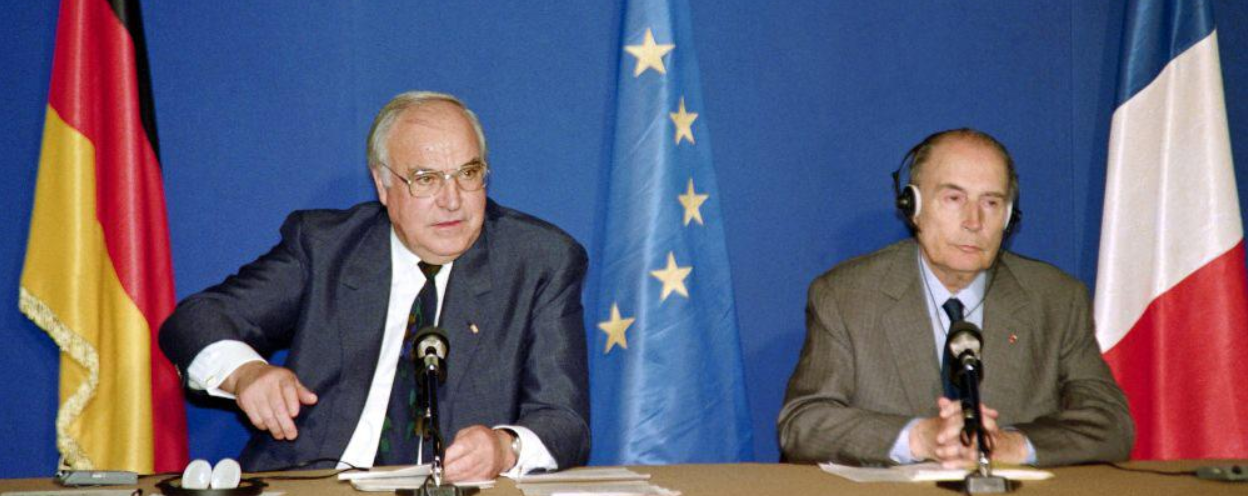
___________________________________________________________________________________________________
3 February 2022
Highlights of my week: The Commission laid out clearly the next steps in its creation of a `silent foundation’ for the EU’s global leadership in standards e.g., for green finance. The Conference on the Future of Europe (CoFE) enters the next phase of moving from discussion of ideas to shaping policy proposals that could define the EU that new members might join in the mid-2020s and onwards. The EBA launched the aptly named EuReCa database to find AML weaknesses. ESMA had an active week – publishing the final parts of its CCP recovery regime as well as consulting on CCP anti-pro-cyclicality and ending the clearing exemption of pension funds. The latter will push EU pension funds towards using EU-based CCPs. ESMA also took steps to stop UK firms’ “tied agents” circumventing MiFID rules. Commissioner McGuiness introduced the Complementary Delegated Climate Act to allow nuclear and gas to be counted transitionally as `green’ but triggered a threat of Court action from Austria and Luxembourg. Facebook’s Libra/Diem cryptocurrency project was sold – but is it really the end? City AM reported that the next Queen’s Speech will feature a bonfire of financial services regulation in the UK. Whatever else, it would be a clear signal of divergence from EU rules.
PS: Don't forget to watch the video of my 179th Brussels 4 Breakfast with Tilman Lueder of DG FISMA
Much more in our Gold weekly details
____________________________________________________________________________________________________
27 January 2022
Highlights of my week: Eurobarometer reports overwhelming support for the EU’s Green deal – especially amongst the young. The French Presidency continues to lay out its goals even as the Russian menace hangs over the East – raising questions about Germany’s commitment. ECB wants to know about bank exposures to Russia and Bloomberg explains why SWIFT is such a good weapon – but only up to a point. ECB also discusses reforms to money market funds. With such strong public backing, the Net Zero Assets Owners Alliance is championing a halving of “portfolio emissions” by 2030. The Commission has teamed up with the OECD to promote citizens’ financial competence – with the need underlined by surging demands for retail crypto futures.
Brexit: yet more evidence that the Leavers’ promises of higher trade were false. City of London watchers can point to surging jobs but the warning signs multiply about loss of competitiveness in corporate lending, market trading, access to talent and `new job’ creation in Europe.
Much more in our Gold weekly details
_______________________________________________________________________________________________
20 January 2022
Highlights of my week: The French Presidency of the EU has launched with a bang – many laudable goals to achieve but immediately running into the perennial problem with Germany of fiscal rules. However, many ideas for reform are surfacing! PM Draghi has been a beacon of stability for Italy – following a well-worn path of so many illustrious technocrats – but can he survive a new President? The EU’s commitment to the G20/OECD global tax deal has been thrown into doubt by a slightly different `awkward squad’. The Conference on the Future of Europe (CoFE) continues to make progress while the Commission and OECD launched a campaign to improve financial literacy. This may become necessary quickly as the IMF continue to warn about crypto-assets and the UK’s House of Lords could see `no convincing case’ for the UK to launch its own CBDC. The Brexit/CCP issue may have been postponed by the Commission for three years, but France will probably be holding the `Presidency pen’ as formal legislative proposals begin to surface in mid-year – ahead of actual implementation in `three years’!
_____________________________________________________________________________________________
13 January 2022
Highlights since Christmas: France has taken over the EU’s rotating Presidency with a plan for a more sovereign Europe with strategic autonomy – probably not music to the ears of Brexiteers! With Italy’s Draghi, President Macron also wants to reform the EU’s fiscal rules. The EBA closed the year with good news about Europe’s banks: asset quality has improved and NPLs are now done to 2.1% (but nearly a quarter of the €378 billion of publicly guaranteed loans are in question.) IOSCO produced its first statistical report on both hedge and open-ended funds – at $50 trillion, it covered 67% of funds globally. ICMA reported on 45 automated debt issuance platforms – up 10 in Q4 alone. The Commission launched - on New Year’s Day – its consultation on the Taxonomy treatment of gas and nuclear while AFME commented on the Green Bond Standard – to enhance credibility for both issuers and investors. A senior ECB staffer published a SUERF report on Bitcoin – questioning its efficiency as a means of payment while highlighting its role in illicit activities.
Reflecting the first year of Brexit, the FT used the analogy of a `slow puncture’ for the City’s role while City AM reported there was little appetite amongst EU firms for maintaining their UK presence and Bloomberg argued that Paris may be winning some players, but the City’s crown is being divided up amongst several centres.
Much more in our Gold weekly details
____________________________________________________________________________________________
16 December 2021
My highlights of the week: President Macron wasted no time in bending Chancellor Scholz’s ear on `pragmatic’ financing of the EU – perhaps with an eye to his re-election campaign? However, both Commissioner Gentiloni and the Bruegel think-tank seemed to agree with the President! It is now ESMA’s turn to find `room for improvement’ in bank’s use of IFRS 9 to report their Expected Credit Losses. It was a bad week for proponents of cyber-money as the IMF weighed in on the need for global regulation, ECB’s Panetta questioned the very nature of it and the CPMI published a report on Faster Payment Systems globally that appear to make speculation and money laundering the only remaining purpose of cyber-money. The CFA published a survey that underlined investors’ plea for clarity in ESG standards.
____________________________________________________________
15 December 2021
178th "Brussels 4 Breakfast": Our monthly look at financial developments in the EU institutions, with Graham Bishop, Julia Rodkiewicz (ICMA) and Thea Utoft (FTI Consulting)
_________________________________________________________________________________________________
9 December 2021
Highlights of my week: Chancellor Scholz was sworn in and the new German government got to work – but dominated by Covid. However, the positive messages about Europe did not seem to extend to any major shift on the EU’s fiscal rules. Banks are now increasingly involved in social issues such as financial inclusion, health and now remote working of their staff. But a Vox study suggests that banks are not yet pricing in the risk of “stranded assets” whereas the bond market does. The IASB continues to work on the incorporation of sustainability in financial reporting. EIOPA outlined its three-year plan to build sustainability into prudential rules for insurance and pension funds, while ISDA is considering the growing role of derivatives in ESG policy. The latest polls on Brexit continue to point to a completely divided Britain.
__________________________________________________________________________________________
2 December 2021
Highlights of my week: First fruits of the new German Government? France sees possible deal on fiscal rules. The Commission’s CMU package has been welcomed e.g. by EFAMA as “tweaking a successful framework”. CPMI and IOSCO launched a consultation on central clearing and portability (could this hold any pointers for moving € clearing into the EU?) The Commission’s plans for a Single Access Point for company information may ease investor’s problem of accessing disparate sustainability data. The BDB highlighted the risks to consumers of only allowing fee-based advice and SUERF’s Roldan pointed out the possible perverse results of an excess of consumer power.
_______________________________________________________________________________________
25 November 2021
Highlights of my week: Politics leapt to the fore this week as the German coalition negotiations produced an unexpectedly rapid conclusion including a stronger stance on European integration (and a tough line on Brexit!) But it will be months before any direct implications crystallise for financial services. Meanwhile, Italy’s Draghi continues to emerge as a political operator - rather than just economic – signing the Quirinale Treaty with French President Macron. The SSM produced a scathing report on banks’ current climate and environment risk management – a practical counter-point to the high-flown commitments at COP26 – now so long ago! EBA cautioned on some of the applications of IFRS 9 on expected credit losses. The Commission is just relaunching CMU – yet again – with some useful small steps including a consolidated tape and a softer line on `delegation’ for investment managers. ESMA is consulting on guidelines for a `failing’ CCP – more ammunition for its mid-2022 review of CCP’s implications for financial stability? Meanwhile the FT keeps up its reporting on the slow bleed of jobs away from London.
___________________________________________________________________________________________
18 November 2021
Highlights of my week: The ECB’s latest Financial Stability Review noted the growing vulnerabilities in housing and securities markets so perhaps the SRB’s blog about “Reinforcing crisis readiness with transfer tools” will be timely. The fall-out from COP26 continues as Accountancy Europe applauded the new approach to global high quality reporting standards and EFRAG is on track to meet its timeline to deliver a European version. Commissioner McGuinness spoke to the payments industry – emphasising the need to complete the rollout of instant payments across the EU. The European Parliament was able to complete the enactment of country-by-country tax reporting – now just 18 months for transposition and then results will flow – or not. The UK continues down its Brexit road and HM Treasury published its proposals to return financial regulation to the UK and expunge all EU law in “several years”. City AM laconically remarked “Good luck to them”.
Much more in our Gold weekly details
_______________________________________________________________________________________
17 Novemeber 2021
177th Brussels 4 Breakfast - CSFI video woth John O'Donnell (Reuters)
______________________________________________________________________________________
11 November 2021
Highlights of my week: This week included the memorial of Armistice Day 1918 as well as Kristallnacht 1938 – events that continue to underline the need for a strong European Union. COP26 continues to dominate the news flow – with an array of new acronyms and private sector promises that observers such as the FT wonder loudly if they are just too vague. However, the establishment of the International Sustainability Standards Board (ISSB) by the IFRS Foundation may turn out to be the enduring legacy as it will create the standards that all private firms will have to observe and report to stakeholders. As the FT’s Tett observed “the green transition may depend on the auditors”! Last week, I wrote about the wheels of the tumbril for the City of London turning slowly. This week, Commissioner McGuiness announced that they surely would turn – but pragmatically
_________________________________________________________________________________________
4 November 2021
Highlights of my week: COP26 was the only event in town this week – unsurprisingly! An IMF chart gives the whole story in a glance below – starkly. International bodies, professional associations, think tanks etc – all lined up to give their support to the lofty goals. But real progress is also happening on the `financial’ ground: as expected, the IFRS Foundation announced the formation of the International Sustainability Standards Board (ISSB) – to be located in Frankfurt so existing EU standards could easily be influential. Key global financial regulators announced their support for the ISSB so its global standards will surely become embedded in financial regulation everywhere. The G20 meeting was rather overshadowed but the OECD was pleased to receive its endorsement to bring the `BEPS’ rules into force in 2023.
_________________________________________________________________________________________
3 November 2021
Another article in my `Brexit and the City’ series – contemplating the impact of third country rules for non-EU banks (so including UK banks), and the ESMA pronouncements on CCP location next summer.
______________________________________________________________________________________________
28 October 2021
Highlights of the week: The EU’s “banking package” was surely the highlight - finalising Basel III. Commissioner McGuiness argued that it avoided “a significant increase in capital” but a string of banking associations begged to differ! UK bankers will be looking hard at the proposed treatment of “third country“ banks’ branches and they will also be examining the fine print of the CCP speech by the supervisory committee chair, as well as the CEPS report. Naturally, the imminence of COP26 triggered a further flurry of warnings about insufficient climate action. EURACTIV seemed to be alone in spotting that the OECD tax deal has been followed up by a quiet withdrawal of unilateral digital taxes and sanctions. After the UK budget, the independent Office of Budget Responsibility dropped the unsurprising comment that – in the longer term - Brexit would cause twice the loss of output than the pandemic.
Much more in our Gold weekly details
____________________________________________________________________________________
21 October 2021
My highlights of the week: As the effects of Covid recede, the EU has launched a review of its economic governance as any idea of trying to get debt levels back to the 30-year-old “Maastricht” criteria looks increasingly forlorn. COP26 is looming ever larger and EIOPA is looking at climate effects on insurance, whilst the SSM is going to launch its “climate” stress tests next year and the EBF joined the banking campaign for Net Zero. TCFD reported that already 50% of firms disclose their climate risks. Brexit issues remain: the FT reported that the ECB is getting tougher on banks to staff (and capitalise) their EU operations properly as Covid problems dwindle, though Commissioner McGuiness did promise there would be no `cliff edge’ on clearing.
_____________________________________________________________________________________
14 October 2021
Highlights of my week: Brexit has exploded back into the headlines – though superficially with little financial services impact. However, the string of extraordinary claims that Prime Minister Johnson negotiated the Irish Protocol in bad faith may become the turning point in whether the EU can trust the solemn word of a British Government. If it cannot, then the EU would be naïve and foolish to trust any “binding agreement” negotiated by a government led by Boris Johnson about financial regulation such as that relating to crisis support for UK-based CCPs or banks. Why put the levers of destruction of your financial stability into the hands of a man you now believe you cannot trust?
In an otherwise light week, a weakened agreement on global corporate tax rates was signed at the OECD. Several more regulators took aim at the potential impact on global financial stability of stablecoins, etc.
Much more in our Gold weekly details
________________________________________________________________________________________
7 October 2021
My highlights of the week: Pandora’ papers electrified the week – or should have done! While taxes go up for citizens to pay for the pandemic, the ineffectual action by governments (for a decade and more!) against tax havens rightly shocked the European Parliament. “Crypto” regulation seems to be getting closer: the IMF, IOSCO and CPMI issued reports on various aspects. If these assets are to become a serious means of payment, then they should follow the rules for safe payments systems – or risk financial stability. Their “un-greenness” is also being more fully recognised. The Distance Marketing Directive is about to turn 20 years old and pre-dates the iPhone by five years! Time for this serious review. The market’s attention is now focussing on the precise details of how to make the Green Bond Standard work in practice. The ESAs are bringing out their post-Covid Work Programmes for 2022 and consumer/retail investor protection feature prominently – as does the greening of the financial system.
_________________________________________________________________________________________
30 September 2021
Highlights of my week: The German election turned out to be even more inconclusive than expected but forcing Greens and FDP to work together could yet produce a positive outcome. However, CoFE trundles on and the European Policy Centre published a scenario analysis for 2035 on the different models of EU integration as the new German government will have a key influence. “Muddling upwards” seems most likely – did they glance at the history of the last couple of decades? The EBA looked at the impact of Basel III and concluded CET1 may have to rise another 14%. ESMA was also busy: reports on algo trading and settlement fails plus consultations on short selling and best execution. CEPS felt obliged to issue a clarification on the (mis) use of its AI Act analysis! Country-by country tax reporting is now agreed.
Brexit produced more strange twists: there may soon be a shortage of bankers as well as HGV drivers... and the City of London has turned to the Labour party for political support…
______________________________________________________________________________________
23 September 2021
Highlights of my week: Merkel about to leave - amidst clichés about `big shoes’! The Solvency II reform was announced – easing capital requirements on Europe’s largest investors. (How does it differ from the UK’s new version?) ESG standards are now embedded in corporate activity for more than half major global firms and 40% of banks are applying UN `responsible’ principles. The CME has launched clearing for `sustainable derivatives’ – another key step in the greening of the financial system (but that begs the question of whether derivatives are actually a `good thing’?). SSM’s Enria spoke about bank profitability – with a dramatic chart to underline the unsustainable situation of the EU’s banking system. Digitalisation of banks is proceeding apace but can regulators keep up? Will Ireland be able to extract a concession for clearing the last obstacle to a global minimum tax rate?
________________________________________________________________________________________
16 September 2021
Highlights of the week: The formal highlight should have been the State of the Union message (SOTEU – to its fans) but there was little new of substance for financial markets. However, Eurofi in Ljubljana produced some interesting speeches on banking union and the familiar refrain to get it completed. Interestingly, Keynes’ biographer – Lord Skidelsky – cited Keynes extensively in his analysis that QE is storing up many problems that could ultimately rebound on the health of the banking system. More immediately, both EBF and the German banks expressed their opposition to an NPL register as a means of stimulating secondary trading. The flood of comments to influence COP26 is well underway – 600 investors (representing €46 trillion/40% of investment assets) set out their five priorities. The prudential regulation of banks’ holding of cryptoassets also came under scrutiny.
________________________________________________________________________________________
9 September 2021
Highlights of my summer - lots of them! German voters’ opinions seem to be swinging around but Europe is not the top priority for any party except the Greens. Ahead of today’s ECB meeting, the ESAs highlighted the financial risks of phasing out the crisis measures. The Commission launched its Anti-Money Laundering package just before the holidays, but POLITICO listed five reasons why this may still not be sufficient and EU banks appear not to have reduced their use of tax havens yet. The Commission’s strategy to enhance retail investment drew much comment – supportive of the principle but sometimes critical of the detail. (How will retail investors feel if their first venture into capital markets coincides with a crystallisation of the ESAs warnings about risk?) The ESG taxonomy has now broadened into a `social taxonomy’ – can the financial system really be a driver of social change on top of green? Digital money: the ECB is about to start a two-year investigation into implementing its own – just as the IMF warns that private cryptocurrencies should not be `national money’.
Brexit and the City: Even TheCityUK is warning that the City may lose its global financial crown within five years.
__________________________________________________________________________________________
15 July 2021
Highlights of my week: Summer holidays from today … back on 9th September! I wish all my readers Happy Holidays – wherever you are allowed to go! To close the summer season, the European Commission extended the Green Deal by announcing the “Fit for 55” package of proposals designed to maintain the EU’s global leadership role. Actual disbursements from the RRF have now been approved. The ECB is going to develop work on the digital Euro but is still keeping its options open on an actual launch. More questioning if the EU is really doing enough on money laundering. Reviews of MiFID, MiFIR and Solvency II continue (How will the EU’s SII review compare with UK post-Brexit changes?). The work on the stability implications of “third-country” CCPs continues apace so I will have more to say in my `Brexit and the City’ videos in due course – the latest one on the ending of the City’s Golden Age has now had 12k views just this week. So the topic is interesting to someone!
__________________________________________________________________________________________
8 July 2021
My highlights of the week: The Commission’s Sustainable Finance Strategy and Green Bond Standard dominated attention – and were warmly welcomed by key EU professional bodies. In the run -up to COP26 in November, we are now ready for jockeying for the lead role amongst various players (national as well as global standard setters) and the EU seems to be taking an early lead in the race. At the more mundane level, CEPS estimated that 2-5% of global GDP is laundered each year and called for the EU to get real with its regulatory framework. POLITICO reported that the Commission’s imminent plan may create a new independent agency. Two more professional bodies have called for the Mandatory Buy-In regime to be postponed pending the forthcoming review.
Brexit has jumped out of the shadows as Chancellor Sunak set out his plan – amidst the magnificence of Mansion House and plenty of hyperbole – for the divergence of “agile” UK regulation from the EU’s. This is said to be just the beginning - citing the new financial services partnership with Singapore. However, the Singapore Monetary Authority seems to think it is little more than an agreement to talk about things … and will meet again in 2022! Shades of the MoU with the EU.
___________________________________________________________________________________________
1 July 2021
My highlights of the week: The imminent demise of LIBOR continues to trigger a torrent of comments by regulators so that market participants cannot be in any doubt! The Commission proposed a new Consumer Credit Directive, but was immediately criticised for lack of ambition. AFME pointed to the illogicality of enforcing the buy-in provisions next year while announcing a review of those provisions. Remarkably, EU Member State Malta has just been added to FATF’s `grey list’ for AML. The UK looks to have secured a carveout for financial services from the new global tax plan it negotiated.
Financial Brexit may have been a bit quiet recently but that seems to be about to end: Yes – the EU granted an equivalence ruling for data protection BUT only for four years and withdrawable at any time. The EU granted a one-year extension for bank capital requirements on non-EU CCPs – so it ends around the time the CCP stress test results will appear. SSM’s Enria told ECON about SSM’s difficulties in overseeing “third-country” bank branches in the EU under the current rules. Finally, Chancellor Sunak is scheduled to announce a sharpening of the City of London’s competitive edge.
________________________________________________________________________________________
24 June 2021
My highlights of the week: Brexit turned five this week and the British public may regret voting to leave but would not yet vote to re-join despite the growing evidence of the damage – economically, politically, culturally etc. Eurogroup failed to agree the timetable to complete banking union. Progress on nuts and bolts such as the NPL secondary market and cessation of LIBOR. The EU Taxonomy Compass was published – not a neat infographic but a massive spreadsheet that underlined the complexity and scale of `going green’! European Payments Council interviewed SWIFT on their drive to make ISO20022 transform payments – yet again raising the question of what concrete benefits digital currencies will actually bring to citizens.
__________________________________________________________________________________________
17 June 2021
My highlights of the week: The European Commission’s first RRF issue was more than 10 times over-subscribed; Switzerland’s “Brexit” may turn out to be more profound than expected; Germany continues to veto EDIS. Stress-testing banks’ “greenness” may turn out to be the most powerful trigger for sustainable finance but insurers will be impacted even more severely. The SSM is stepping up “diversity” pressure on banks and Basel is consulting on the prudential treatment of crypto-assets. AFME’s conference re-iterated the calls for Banking Union and Capital Markets Union to be completed while the EBF laid out five concrete demands for clarity in the drive for the Digital Markets Act. The European Parliament completed the Committee stage with overwhelming approval of “country-by-country” tax reporting. Commissioner McGuinness assured the Irish Senate that the EU absolutely wants a good relationship with the UK but pointed out that all the implications were known five years ago!
Much more in our Gold weekly details
_____________________________________________________________________________________
10 June 2021
Highlights of my week: Commission proposes a trusted and secure Digital Identity for all Europeans – great idea for citizens or hackers? Key step to beefing up NPL secondary market – agreement on rules for selling them to third parties. ESMA’s risk dashboard still highlights chances of sudden risk re-assessment. ESMA also launched the fourth CCP Stress Test – providing the detailed basis to assess the risks to the EU of third-country CCPS flowing from Brexit? Insurance sector and German banks see no general need for expanding ESA’s powers. Continuing broad welcome for the Commission’s drive to improve sustainable corporate governance but concerns remain on fine print of Taxonomy Article 8. Nonetheless, SFDR is becoming the “common language” of sustainable investment in Europe. The UK has just set up its own group of experts to classify green assets – second mover disadvantage? G7 corporate tax deal is welcomed all round as historic breakthrough but the G7 host – UK Chancellor Sunak – immediately lobbies for loopholes to protect post-Brexit Britain’s tax revenues.
Much more in our Gold weekly details
___________________________________________________________________________________________
3 June 2021
Highlights of my week: The Commission announced its plans to start borrowing €80 billion this year for the RRF. AFME demonstrated that the great majority of EU equity trading is still on-“venue”. Commissioner McGuiness analysed what happens when all three pillars of corporate reporting failed at Wirecard – investors lost €20 billion! FSB set quantitative targets for better cross-border payments – bar for Bitcoin etc. raised further? Oliver Wyman helpfully tabulated the six policy errors that CBDC must avoid. Strongly split opinions on the European Parliament’s deal on corporate tax transparency. The Dutch Banking Federation poured a bit of cold water on investor’s real attitudes to “green”. Some academic analysis of Brexit: financial service exports already more than £110 billion lower than expected since the Referendum.
Much more in our Gold weekly details
____________________________________________________________________________________
27 May 2021
Highlights of my week: Swiss/EU talks on a new partnership arrangement broke down. Commissioner Dombrovskis said budget “rules” would be implemented again only in 2023. So that leaves plenty of time for politicians and economists to argue about what the rules should be – while investors (aka “bond market vigilantes”) may be left wondering who represents their interests. EBA published final amended standards on MREL and SRB reported only modest MREL shortfalls versus targets. IAIS published its Application Paper to guide insurance supervisors on climate change – another link in bringing all financial services to terms with sustainability responsibilities. The City of London set out possibilities for collaboration with the US in this field whilst recognising the EU’s drive for “first mover” advantage. The FT reported that G7 is close to a deal on corporate taxation – with a lower minimum rate, implying this would break the logjam at the OECD. For the first time for ages (feels like years…) I did not see any Brexit stories that were sufficiently interesting to include!
Much more in our Gold weekly details
__________________________________________________________________________________________
21 May 2021
173rd Brussels 4 Breakfast
with co-presenters Nick Collier (City of London), Josina Kamerling (CFA Institute), Bepi Pezzulli (Italia Atlantica)
It has been a busy month. The EP has formally approved the TCA - but that hasn't stopped efforts by the Commission and by individual member states to take business away from London. The inaugural meeting of the Conference on the Future of Europe was held in Strasbourg: is the answer (as usual) 'more Europe', or are national strains starting to show? What does Annalena Baerbock's rise in Germany mean for a 'Green Europe'? Plus important interventions from Andrea Enria and Mairead McGuinness, and a new focus on sustainability.
_______________________________________________________________________________________________
20 May 2021
Highlights of my week: The ECB’s Financial Stability Review made chilling reading about the risks lurking in financial markets as pandemic support recedes. Almost as if queued up, the price of Bitcoin et al demonstrated what happens in illiquid markets with `poor fundamentals’ – to be diplomatic - when sentiment changes and the mania subsides even a bit. Maybe bank-based instant payments have some attractions after all…Bank supervisors/resolvers reviewed the tools now available to SSM and the crisis management framework. Securitisation should be another component of post-pandemic finance and both ECB and ESAs are reviewing how to implement the new Regulation. But market participants seem most exercised by the practical details of the “Taxonomy”: much criticism of over-lapping/inconsistent rules and too-short timetables for implementation. But perhaps these are just the teething troubles to be expected from such a global trail-blazing project.
The Brexit post-mortem of the City may suggest its Golden Age is firmly over but new casualties of the Brexit Ayatollahs are now appearing – musicians and foreign students.
Much more in our Gold weekly details
_____________________________________________________________________________________
13 May 2021
My highlights of the week: On Europe Day – 9 May – it is always good to remind oneself of Schuman’s famous 1950 Declaration that launched the EU. Seventy one years later, the Conference on the Future of Europe (CoFE) launched – with apparent popular support for `more Europe’ so do make YOUR voice heard! The Commission’s Spring Economic Forecast looks for a robust recovery – aided by the €800 bn recovery fund swinging into action – finally. However, SSM Chair Enria warned that recovery alone will not get EU banks `out of the woods’. Private equity raised near-record sums last year and the Commission has launched a consultation on its retail investment strategy. Meanwhile, bond investors scrambled to buy Germany’s new 30-year Green bond – the longest maturity yet.
Brexit is starting to catch up with the UK: New York is the winner as swaps trading shifts from London and the IMF expects the current account deficit – the UK’s Achilles Heel for a century – to widen ominously as exports to the EU dip (most unsurprisingly!).
Much more in our Gold weekly details
______________________________________________________________________________________
6 May 2021
My highlights of the week: The EU begins to grapple with two existential questions: what can be achieved by CoFE, and what plans do Member States have that warrant Next Generation EU funding? International standard setters try to find out what really happened amidst the 2020 margin calls. Protecting customers makes a rare appearance – MiFID’s appropriateness test for customer advice. The academics are beginning to wonder if CBDC is really such a good idea given the impact on ordinary commercial banking. The IMF reports that the dollar share of foreign exchange reserves hit a 25-year low – but is still about three times the euro’s share and other currencies remain virtually irrelevant. The Brexit deal was finally ratified by the European Parliament and Council – just as chief negotiator Barnier’s diaries took the lid off Boris’s `madman’ strategy!
Much more in our Gold weekly details
_____________________________________________________________________________________
29 April 2021
My highlights of the week: The think-tanks may be back from Easter holidays but the big shock of the week was the realisation that the German Green leader – Annelena Baerbock – could well be in the next German government and perhaps even as Chancellor! What would that mean for Germany’s EU policy? European banks were in the news again – French banks are faring better than expected on Covid loans and SUERF suggest that EU banks in general may be able to muddle through with regulatory relief. The insurance industry continues to argue that Business Interruption policies will need public support in a pandemic. Massive flows into sustainable funds show the public’s support while the Commission’s Corporate Sustainability Reporting Directive (CRSD) proposal puts the EU at the forefront of global actions. Vox thinks it is time to re-start thinking about the EU’s reform roadmap. Finally, the European Parliament approved the Brexit “TCA” – but kept itself fully in the implementation loop.
Much more in our Gold weekly details
______________________________________________________________________________
22 April 2021
172nd Brussels 4 Breakfast
Why you should watch:
The Commission's recommendation that the UK should be excluded from the Lugano Convention is big (and bad) news. More evidence that Brussels has little interest in accommodating the UK - and still less in doing a deal to bail out the City. That will also come up when CRD6 is published - even though it is really the EU's response to the external shock of Basel3 (which also, and equally, hits Britain). Other issues: the EU's push for instant payments, talk of an ECB digital currency, and lots to worry about on the ESG side.
________________________________________________________________________________________________
22 April 2021
My highlights of the week: Phew! the German Constitutional Court did not find it necessary to damage Europe’s economic recovery by holding up the `Next Generation EU’ plan. Pezzulli gives us the remarkable story beneath the dry prose of press releases on how Italy fended off the `pillaging’ of its financial infrastructure. Even more powerfully and urgently, a trio of leading commentators in Vox critiques the critical deficiencies in the implementation of banking union. Meanwhile, the Commission is to push ahead on convergence of insolvency rules – again!
Climate change was at the forefront this week: the co-legislators agreed a Climate Law for a 55% Co2 reduction by 2030 and then climate neutral by 2050. The Commission published its key steps on the Taxonomy – with avowed intention of making the EU a global leader in the field. The Petersen Institute put a pin in some of the hype around China’s dash for digital currency leadership. Brexiteers were on the back foot this week as it looks as though the use of English law for securities may meet its “Waterloo” at Lugano - Watch my video “Brexit and the City of London: April 2021 Update”
Much more in our Gold weekly details
______________________________________________________________________________________
16 April 2021
Video: Brexit and the City of London: April 2021 Update
In this April video update, he discusses:
- Equity, derivatives, bonds
- Equivalence – already in the dustbin of history?
- The famous MoU – does it achieve anything significant?
- English law and securities – remarkably boring but may turn out to be vital
- ‘Kind strangers’ needed to fund the biggest (even before the Brexit hit!) current account deficit amongst major countries.
________________________________________________________________________________________________
15 April 2021
Highlights: The German Constitutional Court will (probably) not de-rail the Next Generation EU proposals but the Commission is already preparing the mechanics of raising the €800 billion anyway. Instant payments are already a reality via the banking system but the ECB reported on its digital euro consultation – finding privacy a key public need. Low-tax EU states may be privately quailing at the thought, but President Biden’s call for a global corporate tax rate has many attractions for states seeking tax revenues. The Brexit `TCA’ deal is still on the last lap of ratification as the European Parliament has not yet fixed a date for a plenary vote. Meanwhile, the demands for “equivalence” seem to be heading into the dustbin of history already.
_______________________________________________________________________________________________
1 April 2021
My highlights of the week: The onset of Easter has lightened the news flow but some serious issues have surfaced: the German Constitutional Court has put a probably-temporary road-block in the way of the RRF; the ESAs have warned of the risks ahead to both banks’ asset quality and the liquidity of investment funds; the Commission is consulting on its plans to remove blockages to instant payments.
However, the extraordinary speed and magnitude of Archegos’ collapse underline the risks that the financial system must be able to withstand. That may typify the moment when `regulatory co-operation’ may have to be tested in earnest: whose judgement call? Who will pay if it turns out to be the wrong call? Can they be trusted to pay? These are the deeply-buried issues at the heart of the Brexit debate on derivatives regulation and the agreed (but unpublished) MoU probably does not allay all such fears.
_________________________________________________________________________________________
25 March 2021
Still time to Register for my London 4 Europe webinar - 7PM 25 March Brexit: Ending the City’s Dominance of European Finance?
My highlights of the week – lots to choose from amidst a pre-Easter rush! The Conference on the Future of Europe (CoFE from now on…) has finally got underway – a year late but still planned to report next May. What message will EU citizens send about the longer term future while responding in the short-term to the vaccination shambles? How will this feed into the necessary deepening of the monetary union?
Council agreed the EU’s strategy for instant retail payments while Bank of America reported on the astonishing electricity usage of the Bitcoin rival – “coins” now consume 0.4% of global electricity! Better Finance highlighted retail investor’s difficulties in accessing full data on equity markets while CEPS pointed to the sharp rise in retail “ESG responsible” investing – underlining the paramount need to keep these investors’ faith in the evolving standards. CCP stability was brought back onto the agenda – pointedly mentioning Brexit.
________________________________________________________________________________________
18 March 2021
My highlights of the week: The Commission is having another go at enhancing the Single Rule Book – consulting on greater convergence of the ESAs. ECOFIN has agreed the Retail Payment Strategy that will deliver instant, safe payments for all citizens - just as ESMA warned on the risks of cryptocurrencies when Bitcoin hit $55,000. What is the point of it if citizens can make instant, cheap payments? When will sanity be restored as in 1637 Amsterdam when “tulip mania” crashed? More supportive comments on ESAP (Euro Single Access Point for corporate data) – undoubtedly a key building block of CMU. The UK has started consulting on “sweeping changes” to financial regulations – surely making any discussions on “equivalence” utterly pointless!
(Register for my London 4 Europe webinar - 7PM 25 March Brexit: Ending the City’s Dominance of European Finance?)
Much more in our Gold weekly details
________________________________________________________________________________________
17 March 2021
The Zoom video of my 171st Brussels for Breakfast yesterday is at www.grahambishop.com
As CSFI says: There are the negotiations on a MoU, there's the progress (or lack of it) on longer term relations between the EU and UK (and on which 'third country' model the EU should apply). There's also Fabio Panetta's important intervention in the clearing debate, there's the new focus on AM and the BIS's study into corporate credit stress post-Covid... And then there's ESMA's proposed land-grab on corporate reporting, particularly on sustainability issues. We may have left the EU, but EU issues certainly haven't left us.
________________________________________________________________________________________
11 March 2021
My highlights of the week: Finally, the EU’s legislative institutions agreed on the mandate of the Conference on the Future of Europe – with a conclusion next spring. Will it amount to anything? British commentators will undoubtedly repeat their historic error about Messina in 1957 but, in a post-Covid world, EU citizens may see benefit in being “ever closer” – but only once they have got past the Covid vaccine shambles! The end of scandal-tainted LIBOR is nigh and ESAP – the European Single Access Point for corporate reporting - is moving off the starting blocks. It is an essential foundation stone of CMU. The Open Lux scandal develops and Tax Justice Network reckons that OECD states (and their dependencies) account for 68% of the corporate tax abuse – hardly a good starting point for OECD action against the problem.
The City of London deployed the latest statistics to show its contribution to global finance while a former French ambassador to the UK did not spare the UK’s blushes when she pointed out that “Britain faces a tough challenge to retain global influence after its departure from the EU under a prime minister who has a well-known reputation for “lying”.
Much more in our Gold weekly details
__________________________________________________________________________________________
4 March 2021
The Commission has bowed to the inevitable and is suspending the EU’s fiscal rules until 2022. The decline in GDP has been much worse that in 2007-9 but a BIS study suggest loans losses may be lower as the hard-hit sectors are not the big borrowers. A batch of AML comments: OECD weighs in against the “white collar professionals” who enable AML; MEP Giegold hailed the landmark decision to require public reporting of tax country-by-country. ESMA proposed changes to the Transparency Directive to shut Wirecard’s stable door.
In the UK, former Commissioner Hill announced a review of listing requirements that turns the clock back a decade to allow multiple share classes for founders and a sharp deviation from EU standards. ECB’s Panetta spoke powerfully in Frankfurt about the systemic risks to the EU of euro clearing remaining in London. With a clear probability that the equivalence decision will not be renewed next year, it may come as a great surprise in the UK - the Continent is now so cut off that not even the FT bothers to report such trivia.
Much more in our Gold weekly details
_____________________________________________________________________________________
25 February 2021
My highlights of the week: SRB Chair Koenig discussed the idea of a European Bank Charter for the EU’s largest banks and (eventually) a harmonised EU liquidation regime for banks – following the example of the United States. The Covid impact on market structures continues – even bond trading is going digital. The Wirecard impact also continues: CFA called for improved corporate governance. In a sign of the times, the Central Banks of China and the UAE joined the “Multiple CBDC Bridge”.
Brexit also generated much news: BoE Governor Bailey attacked the EU’s stance on equivalence (but I think this is a hopeless case – see www.GrahamBishop.com with likes: dislikes running at 500:10!!); the FT reported that British insurers are urging a “watering down” of Solvency II; Bovill Consultancy used a Freedom of Information request to find that nearly 1500 EU financial firms are planning a new UK office. Brexit has fractured British politics: in 4Q 2020 49% said we were wrong to Leave v 39% right, and electors now identify themselves as Leave or Remain rather than Tory/Labour.
Much more in our Gold weekly details
________________________________________________________________________________________
18 February 2021
Weekly highlights: The €672 billion RRF is about to go live – finally! So the next Commission economic forecast in the spring should look a bit healthier. Several regulatory speeches about EU banks share a theme “We are not out of the woods yet”. The Sustainable Corporate Governance plan draws more warnings about unintended consequences.
The fall-out from Brexit becomes ever more apparent. My new paper (see below) explains why a generalised regime of equivalence is very unlikely. Right on cue, cross-party Parliamentarians advocate changing UK regulations to be more competitive and a new lobby group of “Leavers” is founded to promote “bold new initiatives” in regulation. Does the Commission read the UK press?
Much more in our Gold weekly details
__________________________________________________________________________________
12 February 2021
Brexit: Ending the City’s Dominance of European Finance?
The future of the financial services industry – centred in the City of London – matters enormously to the health of the United Kingdom’s economy. The Trade and Co-operation Agreement (TCA) has few provisions on financial services and the UK now appears set to drive a wedge between EU and British rules so it can “benefit” from its new-found Brexit freedom. In reality, this “wedge” is unlikely to benefit the economic prospects of the City or the United Kingdom.
- To illustrate the significance of this City's tax contribution, replacing say half would require the basic rate of income tax to rise from 20p to 28p in the £.
Full article at Federal Trust
______________________________________________________________________________________
11 February 2021
My highlights this week: Finally --- the Next Generation EU package was approved by the Parliament (complete with rule of law provisions). Making directors responsible for the corporate governance implications of the Non-Financial Reporting Directive (NFRD) sounds obvious but Vox points out that it may rebound by focussing attention on short-term deliverables – at the expense of longer term objectives? Insurance Europe continues to blast the new PRIIPS rules.
But the main news is that Brexit chickens are quickly coming home to roost after only a month. Quelle surprise! Amsterdam has overtaken London in share trading and will be the new home for trading the ICE carbon contract. SEFs are seeing a rising share of derivatives trading and the City of London conveniently reminded the UK that financial services provided more than 10% of the UK Government’s tax revenue last year – as normal.
Much more in our Gold weekly details
__________________________________________________________________________________
4 February 2021
My highlights of the week: How will Biden impact US regulatory policy? Will the UK try to use its G7 Presidency to shape global rules to suit “Global Britain”? IRSG launches its roadmap. CEPS launches a scathing attack on the failure to curb money laundering that is 2-5% of global GDP. Both EFAMA and Insurance Europe attack the flaws in the PRIIPS review. IFRS trustees may even announce a new sustainability standards board at COP26. Vox carries the first article to suggest that digital central bank currencies may be a “gigantic flop”. Brexit: the penny is finally dropping that an equivalence deal to preserve the City is not very likely.
Much more in our Gold weekly details
_____________________________________________________________________________________
28 January 2021
My highlights of the week: Commissioner McGuiness pointed to the early agreement on ESM reform and the consultations on crisis management and deposit insurance as evidence of the strong commitment to Banking Union and CMU. EBA will publish the scenarios for its 2021 stress test next week – how severe amidst the second Covid wave? How will banks have to treat moratoria and government guarantees? EBF gets down to the detail of applying the green taxonomy to core banking activities. GDPR fines up 39% last year! BIS shows central banks are preparing to lead on digital money. 587 MEPS demand proper action on tax havens – after Brexit, the “British spider’s web” of havens is a target.
A City of London report shows that London remains the leading global financial centre but Commissioner McGuiness warns that equivalence is a long way off – UK’s former Commissioner Hill says “why on earth would they?” allow London to continue its domination. Firms find the EU is serious about adequate staff re-locations.
Much more in our Gold weekly details
______________________________________________________________________________________
21 January 2021
President Biden was inaugurated – amidst high hopes for a new Trans-Atlantic relationship – but he did not even mention Europe in his address. The Commission announced its plan to strengthen the role of the euro and the EMU – re-affirming the course of the EU regulatory ship for the years ahead. AFME reported that up to €600 billion in new equity is needed to repair corporate balance sheets – nearly the same as the much-vaunted RRF for governments. The Commission has to postpone it detailed taxonomy rules after widespread veto threats from Member States. The IMF asked if digital money is really “money” around the world but the ECB and Commission are pushing ahead with investigations into how to make it happen in the EU.
The realities of Brexit continue to intrude: BoE Governor Bailey warned against being a “rule-taker” and Chancellor Sunak talked excitedly of “Big Bang 2.0” so the British regulatory boat is surely going to row away from the clear course of the EU regulatory ship. How can there be equivalence?
Much more in our Gold weekly details
________________________________________________________________________________________
20 January 2021
The TCA and possible "equivalence" for financial services was the main topic of the 169th Brussels4Breakfast Zoom call . Please E-mail me graham@grahambishop.com if you have views on the subject!
______________________________________________________________________________________________
14 January 2021
In a light week of other news, the realities of Brexit are beginning to surface: BoE Governor Bailey said the UK should not be a “rule-taker”; the Minister (not Parliament) “took back control” of applying IFRS in the UK with a first wave of UK-adopted IAS – either a pointless exercise or the beginning of a wedge between UK and EU accounting standards; some in the City still cling to hopes of a rapid, wide-raging equivalence decision by the Commission – even as IPOs begin to follow share trading by leaving the UK.
The LIBORs now have less than a year of remaining life so AFME issued a “call for action” on securitisations. Green finance passed another milestone as EFAMA reported that ESG-linked ETFs passed €1 trillion outstanding. The ECB glimpsed the future as it was flooded with a record 8000 responses to its digital euro survey – analysis will now follow in “the spring”.
Much more in our Gold weekly details
______________________________________________________________________________________
7 January 2021
Happy New Year ...my highlights to 7 January 2021: A 1200-page Brexit deal suddenly emerged into the limelight at the last possible moment and No 10 “took back control” from the EU. Rather than the Trump-like statements of British ministers, the actual consequences will now start to emerge e.g. half the trading volume in EU shares left London in the first two days.
However, the EU’s everyday agenda of financial regulation rolled on: an EU “bad bank” or national ones? Solvency II Review – will it help the EU economy? Sustainability reporting – the effects of the Taxonomy Regulation; European Data Protection Board (EDPB) proposals in the wake of the ECJ’s Schrems II ruling – will they permit easy data transfer out of the EU? Etc.
Much more in our Gold weekly details
___________________________________________________________________________________
17 December 2020
Our next newsletter will be on 7th January, so we would like to wish you a Happy (and safe!) Christmas. Brexit transition will have ended (probably...) when we next write so it may be a more relaxed New Year OR the preparations may not have been as comprehensive as we are told!
With Covid vaccines, 2021 is likely to be a much better economic year but that will still leave a `day of reckoning’ on NPLs – despite the Commission’s action plan. However, the ESM is now enabled to provide a credit line to the Single Resolution Fund and most banks will still not be allowed to pay significant dividends until that `day’ has passed.
Much more in our Gold weekly details
____________________________________________________________________________________________________
10 December 2020
My highlights of the week
By a twist of fate, we mark the death of Valery Giscard d’Estaing by celebrating his contribution to European integration just as it becomes inevitable that the UK will leave the EU in the worst possible manner. Brexiteers will not recognise that the EU also has sovereignty: the right to decide on the standards of products sold to its citizens. However, it looks hopeful that the EU has surmounted another major challenge to its integration as Poland and Hungary seem ready to back down from vetoing the Budget and Next Generation deals – discovering that “the veto” is no longer as powerful a weapon as it used to appear. Banking problems are never far away as SSM highlighted that NPL standards are “all over the place”, and a conflict has surfaced between releasing capital buffers and MREL. EFAMA pointed out that Art 8 of the Taxonomy Regulation requires investors to report sustainable investments in the year before investee companies report the underlying data.
The grim realities of Brexit close in: problems of UK/EU data transfer, banking passport ceases, STS securitisations from the UK lose that status…
Much more in our Gold weekly details
________________________________________________________________________________________
3 December 2020
My highlights of the week: Eurogroup President Donohoe brokered the deal to get the ESM Treaty agreed – opening a credit line for the Single Resolution Fund if (or is it “when”?) the need arises. Clearly, “Brussels” is now thinking more deeply about how to deal with the inevitable surge in loan losses. The Hungarian-Polish veto of the Budget/Next Generation project has triggered thoughts about how to bypass vetoes – potentially re-shaping the nature of the EU in the fullness of time. Moreover, the Council’s agreement to a long-term approach on tax also points to greater co-operation.
As everyone finally stops holding their breath waiting for the Brexit “deal” to be announced – or not – attention is swinging to the technical details such as the impact of EMIR Article 2a. Without an equivalence decision, small or non-financial counterparties may unexpectedly find themselves subject to a different regime. The City is feeling it has been thrown to the lions but now some EU states seem to fear that the UK may gain too much – perhaps precipitating another French veto!
Much more in our Gold weekly details
___________________________________________________________________________________
26 November 2020
Highlights of the week: Poland and Hungary are attempting to veto the EU budget and the Next Generation recovery plan – Are they too late? Can they be circumvented? In a major step towards the reality of the Single Market for citizens, the Parliament approved "collective redress" rules against “mass harm”. The ECB published its latest Financial Stability Review with much to review! EFAMA produced the evidence to rebut suggestions that EU Money Market Funds were “bailed out” by the central bank.
ESMA has drawn together some of the mass of new regulatory reporting to produce its first, annual survey of EU capital markets – with fascinating insights for geeks like me including data that shows EU capital markets are not nearly as beholden to the UK as Brexiteers claim. On that inevitable topic, ESMA has also declined to extend the Derivative Trading Obligation (DTO) beyond the end of the transition as it seems that key liquidity providers have already set up on the mainland. However, with just 36 days to go, uncertainty reigns supreme.
Much more in our Gold weekly details
_____________________________________________________________________________________
19 November 2020
Highlights of the week: Commissioner McGuiness demanded change in the financial system - calling for markets to listen and support non-financial measures such as climate change. She is pushing at an increasingly open door! Non-financial factors are also at work in the approach to the EU budget and the Next generation financial package: Poland and Hungary have vetoed progress while they try to remove the “rule of law” conditions that reflect the founding ideals of the Union. But the week has not been short of financial news as the EBA gave its Advice on insolvency law, the SRB called for a common insurance scheme to aid the transfer of distressed assets and the SSM underlined the need for good governance – with `fit and proper’ executives.
The final act of Brexit draws ever-closer – but the British public seems to be ever-more certain they made the wrong decision. What will happen when the public experiences the reality of the imminent, hard Brexit?
Much more in our Gold weekly details
____________________________________________________________________________________
18 November 2020
168th Brussels 4 Breakfast
_____________________________________________________________________________________
12 November 2020
My highlights of the week: A long-term budget deal seems within the EU’s grasp – unless Hungary’s Orban vetoes it due to the “rule of law” linkage. The RRF is teed up to go and EIB’s President is arguing for a further step on to the global stage with an “EU” development bank to match the US and China. The impending abolition of the “IBORs” may feel a bit like the Y2K problem that never appeared, but ISDA rightly presses on – with a handy overview of progress. Better Finance felt they had to warn ECON publicly of the MiFID `quick fix’ risks to the long term interest of `retail’ – the very foundation of CMU.
The Brexit saga still seems to be unending – though Britain’s “ruling “Vote Leave” clique may have felt he need to wait for President Biden. Both EBA and ESMA have taken the precaution of up-dating/ re-iterating their post-transition guidance for 1 Jan 2021.
Much more in our Gold weekly details
___________________________________________________________________________________
5 November 2020
My higlights of the week: Parliament and Council have still not agreed the fine details of the Resilience and Recovery Fund so it is not surprising that Eurogroup shied away from even thinking about a second package – to match the second Covid wave. However, ECOFIN did push forward `more Europe’ against money laundering – giving the Commission guidance on a single rule book and EU-level supervision. CMU got another push as EFAMA called for a Consolidated Tape and – at the intensely technical level – the Commission tabulated corporate law for each state as part of the implementation of CSDR. ESMA gave the FT a `pat on the back’ – rightly – for it works in exposing the Wirecard fraud.
The odds have moved towards a no-deal Brexit after 14 days of “intensive negotiations” failed to bridge the remaining `small gaps’ between the EU and UK. After the tortuous twists and turns, it is hardly surprising that the Institute for Government reported that neither government nor business are fully prepared!
Much more in our Gold weekly details
_____________________________________________________________________________________
29 October 2020
The Brexit end-game grinds slowly towards us and the political commentators are gloomier about the long-term effects on relations. But the technical preparations are accelerating as the end of the transition is close and the prospects for a significant deal for financial services are minimal.
Last week capped a bad month for European bank shares – now within a whisker of the depths in the spring panic. SSM’s Enria has called for a `bad bank’ as banks brace for a rise in bad loans – and rein back lending. But good news from the capital markets – AFME reports a records year so far and capped by last week’s huge demand for the EU’s SURE bonds. However, the most staggering statistic of the week is the Geneva Association’s calculation that at current premium rates for Business Interruption insurance, it would take 150 years to pay for the Covid losses - so far.
Much more in our Gold weekly details
______________________________________________________________________________________
22 October 2020
My higlights of the week:
ECB President Lagarde talked about the recovery seeming to lose momentum as a second Covid wave builds up. The consequences may be profound as a McKinsey survey showed “over half of Europe’s small and medium-sized businesses say they face bankruptcy in the next year if revenues don’t pick up”. However, Parliament seems to be backing away from confronting Council on the EU budget so the Next Generation plan could still operate in 2021. In the meantime, “EU bonds” got off to a cracking start when the Commission issued two bonds totalling €24 billion for the SURE programme – oversubscribed 13 times and contributing a significant foundation for CMU! However, that will require citizen investors to trust financial markets and aspects of the MiFID II review were heavily criticised by ESMA – elaborated in a new CEPS report on opening Pandora’s Box. (Karel Lanoo discussed this with me in the 167th Brussels4Breakfast Zoom – below).
The ludicrous Brexit saga staggered into yet another chapter of negotiations as “Boris” found a discrete way to blink….
Much more in our Gold weekly details
_____________________________________________________________________________________
22 October 2020
CSFI’s 167th Brussels4Breakfast Zoom video with Karel Lanoo of CEPS is at www.GrahamBishop.com
____________________________________________________________________________________
15 October 2020
My highlights of a slower news week: Today is Brexit decision day for “Boris” – or perhaps not! But even if some “free trade deal” on tariffs and quotas is pulled out of the hat in a while, that will not stop the queues of trucks at Dover filling in Rules of Origin forms and other “EU standards” compliance forms.
Financial markets seem to regard the revival of the Covid pandemic with reasonable equanimity – even EU bank shares rallied slightly before falling back as SSM seniors continue to highlight the risk of their “severe scenario” materialising. That would be associated with NPLs exceeding those of the Great Financial Crash – perhaps hitting €1.4 trillion. However, sustainable corporate governance and central bank digital money continue to gain traction.
Much more in our Gold weekly details
_______________________________________________________________________________________
8 October 2020
My highlights of the week: We are about to have a new financial services Commissioner as Mairead McGuinness survived her ECON Hearing and was then approved in the Parliament’s Plenary - leaving just the formality of the Council’s agreement. The Commission’s consultation on a Green Bond Standard (GBS) garnered widespread support from the industry – but some concerns remain. The ECB’s statement on its interest in issuing a digital euro has started some ripples – including the possibility of disintermediating banks. The ECJ’s “Schrems II” judgement triggered a joint letter to the Commission from the entire financial services industry of the risk to data transfer to third countries.
The Brexit knife-edge is nearly over, but Bloomberg pointed out that about half of London share trading is in EU stocks – a category that may move to the mainland.
Much more in our Gold weekly details
_____________________________________________________________________________________
1 October 2020
My highlights of the week
SSM is now talking of €1.4 trillion NPLs in the adverse scenario - worse than the last crisis. Hardly surprising as the GDP decline is set to be about three times the 2007/9 decline. The CMU action plan was announced - the fourth iteration of the concept since the FSAP in early 2000s. Strong support amongst all sectors of finance but criticism from retail representatives that protecting retail investors – who actually provide all the money – is still not central. Another action plan – this time on Digital Finance – was launched and also gained strong support across the financial services industry. ESG may be taking another step into “mainstream” as the IFRS Foundation launched a consultation on whether IFRS – used in 140 countries – should develop sustainability standards.
The Brexit crunch looms ever-closer and the FT Editorial Board wrote “The City must not be forgotten in the Brexit talks” – but several years too late as the Government has never listened and the foreseeable, natural consequences are now swinging into action. Next up for Government inaction: the motor industry.
Much more in our Gold weekly details
______________________________________________________________________________________
24 September 2020
My highlights of the week
European bank shares tumbled another 12 % this week (and are now just 11% of their all-time high) – as the OECD warned “the pace of recovery has lost some momentum” and the ESAs’ risk assessment highlighted that “the impact of the crisis on EU banks’ asset quality is a key concern”. Amidst this gloom, ECB President Lagarde spoke to the Franco-German Parliamentary Assembly and reflected on the forces that have always driven Europe together. The UK’s High Court ruled on the meaning of some “business interruption” insurance clauses and the regulator told insurers to pay up promptly.
The Brexit stand-off continues – despite the UK government’s admission of the possibility of 7000 lorries in a two-day queue at Dover…. The Commission gave a time-limited extension of permission to use UK CCPs - for a simple reason “give market participants the time needed to reduce their exposure to UK CCPs”
Much more in our Gold weekly details
_______________________________________________________________________________________
17 September 2020
My highlights of the week
Commission President von der Leyen delivered her first State of the Union message – re-iterating her call for completion of banking union and capital markets union (listing some key legislative steps) and promoting the international role of the euro.
In recent months, the Green community has produced many sets of standards - and advice to corporates on how to apply them. Now, key bodies (CDP/GRI/CDSB/SASB/IIRC) have announced a shared vision of what is needed for progress towards comprehensive corporate reporting. Moreover, the ECB has just joined the Steering Committee of the Network for Greening the Financial System. It feels as though “sustainable investing” is really joining up the dots … with the EU leading the way.
Much more in our Gold weekly details
______________________________________________________________________________________
10 September 2020
My highlights of the week
The “shock of the week” prize clearly goes to Boris Johnson for his unilateral decision to “overwrite” parts of the EU Withdrawal Treaty because – at his insistence – it was negotiated “at pace”. Much will be said and written about the implications of this breach of trust but – for financial services – the issue of trust in the UK’s equivalence regime will surface quickly. In the event of a crisis, can the EU rely on quiet UK promises to provide hugely expensive support to parts of the EU’s financial infrastructure located in the UK?
The appointment of MEP McGuinness as the new Commissioner for financial services may slow the rush to CMU as she seems to have no experience in the field. However, the ECB underlined the need for swift moves on CMU. The insurance industry and its supervisors are also grappling with the creation of a pandemic insurance system – at massive cost to “someone”!
Much more in our Gold weekly details
_________________________________________________________________________________________
3 September 2020
Welcome back from holidays... to our bumper newsletter
Europe was far more active over the summer than expected and I was also active with Zoom/YouTube… most recently with the European Liberal Forum (ELF) seminar “Completing the Banking Union” - elaborating on the comments I made in the 165th Brussels4Breakfast Zoom. I will also be moderating the “Trade in Services” session on September 11th in ELF’s Expert Forum on “Internal Market and Trade”. Former Commissioner Mario Monti will open the event with his thoughts on “Re-thinking the Single Market post-COVID-19” (Register here)
The next term will surely be historic as EU banks come to terms with the Covid loan losses and the reality of Brexit finally strikes!
________________________________________________________________________________________
Graham speaking on Banking Union - 27 August
I commented on the banking system’s problems during the 165th Brussels 4 Breakfast and I will be participating in a Zoom webinar tomorrow at 09.30 Brussels time to elaborate on this.
The European Liberal Forum (ELF) is hosting - with Billy Kelleher MEP (ECON Shadow Rapporteur 2019 Report on Banking Union) as the opening speaker, and Diane Fromage (Assistant Professor of European Law at Maastricht University) will also participate.
The webinar
The Banking Union is an essential pillar of the EU’s Economic and Monetary Union. In recent times it has become clear that it is a strength of the entire European economic system, vital for mitigating the impact of negative contingencies of the economic cycle.
The conclusions of the European Council on the possibility for the Commission to receive empowerment “to borrow funds on behalf of the Union on the capital markets” are one more step into the direction of a more integrated European financial system. However, the Banking Union is still not completed and not as resilient and weather-proof as one would wish.
Recently, the European Liberal Forum published a Discussion Paper (including a substantial article by Graham Bishop) which addresses technical questions concerning the state of the art of the European Banking Union system, examining the various proposals to counter the crisis and the possible use of complex analysis from the world of artificial intelligence to prevent crisis at micro-level.
_________________________________________________________________
165th Brussels4Breakfast (fifth Zoom edition!)
The Covid crisis mean that the EU was more active than normal over the summer. So we have just held our 165th Brussesl4Breakfast – the fifth in our Zoom format. Click on www.GrahamBishop.com
_________________________________________________________________
My highlights of the week
EUCO may not enjoy their first physical meeting at the end of this week as EUCO President Michel said “a deal is essential” so it may be a long night. Nonetheless, the euro’s attractions continue to draw new applicants: Bulgaria and Croatia entered the two-year waiting room of ERMII though Bulgaria is being wracked with renewed corruption allegations. The Commission launched a guide to `best practices’ towards clients Covid difficulties – supported by banks and insurers. AFME reported the highest ever issuance of bonds – with a surge in ESG bonds – though supported by ECB purchases. The Commission suffered a severe blow from the ECJ in overturning the “Apple decision” but still found grounds to push its tax proposals forward. Wirecard: German regulators to be investigated.
Much more in our Gold weekly details
9 July 2020
My highlights of the week
Today is Election Day for Eurogroup President so we highlight the three candidates, and the European Parliamentary Research Service’s `brief’ about the role. But the first topic on the new President’s table will be the question of Europe’s “Hamiltonian moment” – or not! So the Fondation Robert Schuman has reminded us of the famous dinner with Jefferson in 1790 where US matters were settled ... and the European Commission reminded us with their Summer Forecast why the EU needs to settle EU matters in 2020.
Europe’s payments industry may be at a crossroads as a group of banks launch the European Payment Initiative (EPI) while SUERF debates the likelihood of Central Bank Digital Money, rather than Libra. The deadline for Brexit extension passed without comment from the UK Government…but the EU noticed that the UK is already setting out to “diverge”, so goodbye “equivalence”.
Much more in our Gold weekly details
2 July 2020
My highlights of the week
The German Presidency gets underway amidst a welter of historic developments – with a stark warning to the UK. Germany also makes some unfortunate history: a staggering fraud at formerly–iconic Wirecard. The Commission’s digital finance strategy consultation draws very positive feedback. The Single Market for ordinary people takes some genuine steps forward: consumers can now get effective redress cross-border, the Commission consults on the retail payments strategy and the Instant Credit Transfer limit is raised to €100,000 (so why do we need cyber money??).
Brexit: the “extension” window shuts, Merkel is blunt that the talks could fail and EU negotiator Barnier on UK financial service proposals “I will be blunt: its proposals are unacceptable”
Much more in our Gold weekly details
25 June 2020
My take on events of the week to 25 June:
· EUCO fails to agree on the Recovery Package – as expected… but then pledges to agree at its 17/18 July special meeting! But will this collide with growing splits on what the Conference on the Future of Europe should achieve?
· CRR “quick fix” completes all legislative stages in just 9 weeks from conception – the EU can act quickly when necessary.
· Banks’ potential loan losses are widely discussed but the insurance industry is also wrestling with vast problems – now and in the future.
· The last chance to extend the Brexit transition expires in five days and the UK is already proposing new laws that do not import the EU’s precise rules.
Much more in our Gold weekly details
18 June 2020
My take on the week’s news
Tomorrow is EUCO Day –though only the first attempt at finding consensus on the Next Generation recovery plan. EU President Michel did not even mention Brexit in his invitation letter but Boris Johnson-Cummings is now well into his end-game: could an economically irrelevant “triumph” on fishing enable him to cave on the real issues? Probably not.
Banks are suddenly exuding confidence on possible loan losses from a recession twice as deep as the 2007/9 GFC but the regulators want proper disclosure. Moreover, they may give quite some time for a rebuilding of capital buffers but have yet to explain where the new capital will come from. The wave of responses to the Commission consultation on the Non-Financial Disclosure Directive (NRFD) has underlined that this will be a major tool in pushing sustainability.
Much more in our Gold weekly details
11 June 2020
Graham's highlights of the week
Covid dominates everything – nearly all the stages of the CRR “quick fix” amendments are done since the idea was floated at Easter. The ECB is treading a delicate line between pushing banks to provision properly while also improve lending standards. It provided a loosening of capital buffers but banks seem reluctant to use for fear of market reactions. That should not be surprising as the €400 billion of available capital only approximates to the losses in the sovereign debt crisis yet the GDP decline in this crisis is expected to be twice as deep.
Brexit grinds on – even amidst the Covid crisis – and the EU unanimously decided not to change Barnier’s negotiating mandate. However, he may have a little wiggle room on state aid to keep the playing field level.
Much more in our Gold weekly details
4 June 2020
Highlights of the week
Reactions continue to the Commission’s “Next Generation” recovery plan and the MFF budget plan. IF it all comes to pass, then as CEPS put it, a “fundamental taboo” will have been broken. EURACTIV reports that the Commission will surely follow a very different set of economic policies than the old “troika” days. So it may be a defining moment for economic policies. We could be at a corresponding moment for monetary policy. Bruegel published a critique of the German Constitutional Court “ECB decision” by a group of leading German economists that picks many holes in the Court’s economic understanding. A Treaty revision may yet put an end to national judiciaries effectively undermining the economics of the euro – the heart of the European project.
Meanwhile, Commission/Council/Parliament are rushing to finalise the “CRR quick fix” so it can be formal law by end-June so that it is applied to 2 Q bank reporting. 210 days to go to the end of the Brexit transition and the door to further discussions remains open – just. The House of Lords pithily pointed out the Northern Irish contradiction agreed by Prime Minister Johnson – and time is running out.
Much more in our Gold weekly details
28 May 2020
Highlights of the week
Hot on the heels of the Franco-German €500 billion proposed funding, Commission President von der Leyen launched the Commission’s complete recovery package – totalling €2.4 trillion. Fondation Robert Schuman describes the complete package below, and EURACTIV provides an excellent over-view of the state-by-state reactions. However, the ECB’s Financial Stability Review reminded us of the gravity of the financial situation – especially when one reads the small print. But ECB President Lagarde upstaged the FSR the saying the GDP decline was more likely to be in the 8-12% range rather than the Review’s assumption of 8%. As that is getting for three times the magnitude of the GDP decline in the Great Financial Crash a decade ago, perhaps we should be bracing for Non-Performing Loans to exceed by a margin the near €1 trillion pile of NPLs reached by 2014.
Much more in our Gold weekly details
21 May 2020
Highlights of the week
The Franco/German recovery "bazooka" may also herald major politcal change to re-enforce the "level playing field" - rather than allow Brexit to distort it. The headline was the €500 billion package but reading the full statement reveals that the scale of political change may be just as great – the Conference on the Future of Europe next year may even lead to re-opening “the Treaty”. In the past, that has always been an opening of Pandora’s Box! Such a re-opening could be used to re-affirm the primacy of the ECJ and thus neutralise the German Constitutional Court’s manoeuvres to challenge the ECJ’s primacy.
Much more in our Gold weekly details
20 May 2020
162nd Brussels for Breakfast: the Merkel/Macron package; German Constitutional Court; Brexit, and CRR quick fix
The Franco/German recovery "bazooka" may also herald major politcal change to re-enforce the "level playing field" - rather than allow Brexit to distort it.

The overnight news from Chancellor Merkel and President Macron electrified the discussion from the start. The headline was the €500 billion package but reading the full statement reveals that the scale of political change may be just as great – the Conference on the Future of Europe next year may even lead to re-opening “the Treaty”. In the past, that has always been an opening of Pandora’s Box! Such a re-opening could be used to re-affirm the primacy of the ECJ and thus neutralise the German Constitutional Court’s manoeuvres to challenge the ECJ’s primacy....
More for Friends of GrahamBishop

14 May 2020
Highlights of the week:

This week marked the 70th anniversary of the Schumann Declaration on 9 May 1950 that launched the process that has evolved into the European Union of today. Yet the week also marked a furious reaction across the EU to the judgment by the German Constitutional Court that was nominally about the ECB’s bond-buying powers but actually challenged the entire legal foundations of the Union. Apparently more prosaically, the Commission announced its Action Plan against money laundering but its success hinges on a further notch towards greater integration of the EU.
Much more in our Gold weekly details
7 May 2020
Highlights of the week:
Several more "impossible things" happened this week: The European Commission baldly downgraded its economic forecast for 2020 GDP by around 9 percentage points - to an almost unbelievable decline of more than 7% . Against this backdrop, the German Constitutional Court appeared to declare war on both the ECB and ECJ. But economic observers were left bewildered by the Court's grasp of the economic realities facing the ECB so the bond market vigilantes barely blinked – raising the German/Italian 10-year government bond spread by hardly 10 basis points. However, the political foundations of the European Union may need to be shored up in the fullness of time.
30 April 2020
Highlights of the week:
The results of EUCO's virtual meeting dominated the week as proposals for a financial "package" multiplied - together with varied thoughts on "corona" bonds. More fundamental thoughts about the EU's political structure are also emerging, but the pressure to keep "sustainability" at the centre of the policy response remains unabated. Bank shares hit a new historic low but have rallied nearly 20% as early results for the first quarter were not as bad as some feared, and the Commission announced an emergency package of amended bank regulations to ease the pressure on bank capital.
23 April 2020
Highlights of the week:
In a few hours we will know if EUCO has agreed on "corona" bonds (however defined) or some other form of major funding to protect the EU economy and, correspondingly, the financial system. Expectations are low and the bank share index continues to hover around 30-year lows (and literally half the levels seen in February) as we await banks' Q1 results in the next couple of weeks. The realism of the "expected losses" required by IFRS 9 may give a foretaste of how Europe will cope with the biggest recession in modern times.
16 April 2020
Highlights of the week:
The only good news is that the Covid epidemic may be near its peak but we can now begin to reckon the economic damage.
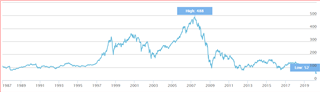
The IMF has warned of the risk to financial stability and a glance at the 30-year STOXX chart of European bank shares underlines the scale of the likely damage: bank shares have halved as the crisis struck, sell at less than 30% of their book value and are one-tenth of their peak in 2007.
The FT has just published an article from the official who ran the US TARP programme in 2008/9. He calls for US banks to raise €200bn now from private investors to cover expected losses. Which external investors would supply such capital to European banks as their profits are unlikely to generate much? (See Schildbach's article below)
9 April 2020
Welcome to our Notes and Video of the 161st Brussels 4 Breakfast
The Zoom video is here
Topics: Brexit; EU policy response;
Banking Regulation – relief, but the start of a slippery slope?
Brexit:
As it was just David and I speaking – prodded by Andrew’s questioning - David led off with thoughts about the Brexit negotiations. Gloomily, he feels that it is now less than 50:50 that there will be a deal at all. However, he was sanguine about the possibility of an extension - but only agreed at the very last moment.
EU policy response
Covid19 has dominated everything since our last meeting in mid-March when the number of new cases in Europe that day was just under 5,000 (versus the peak of 41,000 just three weeks later). The following day, the Commission set out its co-ordinated response to the pandemic – though much of the response is national as the EU itself has no role (competence in EU-speak).
Though small numbers were discussed in relation to say EIB lending, the really significant decisions were to authorise the fullest flexibility of the State Aid regime and the Growth Pact Framework. Eurogroup stated that the automatic stabilisers in the economy should be allowed to work fully and had already agreed national fiscal measures of 1% of GDP – combined with liquidity measures that amounted to 10% of GDP even in mid-March. Eurogroup also gave the ECB political cover for its decision to launch a €750 billion Pandemic Emergency Purchase Programme (PEPP) that allowed the purchase of Greek government bonds and a widening of eligibility criteria for other assets.
The rapid emergence of a vigorous debate on issuing jointly–guaranteed “corona bonds” seems to overlook that an EU institution – the ECB – may soon run its balance sheet up to €5 trillion (getting on for 40% of EZ GDP). EZ members are proportionately liable for this balance sheet! At the moment of the webcast, the Eurogroup President was reporting that the nearly all-night virtual meeting had failed even to agree reduced conditionality on ESM lending.
Banking Regulation – relief, but the start of a slippery slope?
We also discussed the regulatory response to the need for major actions by the banking system. Just before our March meeting, the STOXX index of EU bank shares had hit a peak for the year of 102 (back to the same level as 1/3 of a century ago!). A month later the index sank to 49 as bank shareholders began to digest the Covid implications – pricing banks at about 25% of their published book value.
The regulators sprang into action on two levels: relief measures on both capital and loan-loss provisioning. The Pillar 2 Guidance buffers were released immediately and the more relaxed CRD V composition of capital for Pillar 3 Requirements was immediately implemented. Together, this amounted to a release of €120 billion of CET1 capital – about 10% of the total in the banking system. So far so good. More controversially, banks were permitted to use more flexibility in the treatment of NPLs and the “expected credit losses” that will have to be reported under IFRS 9. If debtors do not pay due to a public moratorium then that individual debtor should not be treated as a missed payment. Moreover, that categorisation does not click in until a payment is 90 days past due.
I am not the only person concerned about this move and I cited Nicolas Veron’s recent paper on the subject. Investors already seem to have major concerns about the genuine quality of bank assets. If the authorities now connive to reduce the credibility of stated assets even further, then we may have started slipping down a slope where there may only be one buyer of new bank equity should it be needed. The risk of de facto nationalisation has returned very quickly. More in the months ahead.
17 March 2020
Reflections on the Great Financial Panic – are there parallels we can learn from?
Looking at the market reactions to the weekend central bank moves, one can only be deeply disturbed – another 12% decline in US equity markets yesterday, taking them fully into normal “bear market” territory.
The big question is what happens next when many EU economies were only growing at 1% annually – supported by record low interest rates. We now have a massive shock to confidence of consumers and commerce. Behaviour patterns are likely to be changed fundamentally by the coronavirus shock and it will probably take years before new patterns are fully established, or old ones recovered.
One of my sons asked me over the weekend if the 1987 stock market “crash” is a parallel – and my answer is No. Then the economies were growing at 3% annually – and continued after what was the first big “technical” correction of markets in modern times – driven by automatic systems. Sell-offs have always had a severe phase that was triggered by stop-loss orders and margin calls (look at the charts of 1929!), but this is now being accentuated by algorithmic trading that recognises the patterns and sells short for the purpose of triggering further margin calls. That is followed by a brief bounce when the short sales are covered by buying the shares back.
The next phases may well reflect the new economic reality rather than market mechanisms and the prospect of low growth at the very best – or prolonged recession – is very real. I am afraid the model may be Japan where the Nikkei index peaked at nearly 40,000 in late 1989 and finally bottomed at 7,000 in 2009 - moving roughly sideways for the next three years.
I still recall vividly that the UK market fell to almost 1/4 of its previous level between 1972 and 1974 – just as I started working in the City. But equities did then rebound dramatically in the next few months - before developing into the bull market that has just ended so dramatically. That dramatic plunge and recovery reflected first the realisation that much of UK industry would be bankrupted by corporation tax payments on illusory profits generated by the wave of inflation sweeping the UK. But the government was able to take “administrative action” to avert impending doom by a "stroke of the pen" to remove that tax doomsday machine. No government can remove coronavirus with a corresponding administrative action today.
11 March 2020
160th Brussels for Breakfast – CPD Notes
Organised by the Centre for the Study of Financial Innovation (CSFI), hosted by CISI with fellow speakers Gergely Polner (Hanbury Strategy) and Niamh Moloney (LSE Dept. of Law). This blog complements the subsequent 51st Brussels 4 Brunch 30-minute CISI webinar that is also available to Friends of GrahamBishop.
We want to involve the Brussels Finance Watchers community in the choice of future topics so my up-coming video invitation for the 162nd meeting (still planned for April 8th ) will include my then-current thinking about the top three topics - but we welcome your suggestions to graham@grahambishop.com
Naturally, the Brexit negotiations took centre stage – though the subsequent discussion on the plight of EU banks proved to be very sobering.
Become a Friend to read the full article
3 March 2020
The view from Brussels of the EU/UK negotiations: a total illusion of “independence”
The smoke may be clearing from the opening salvoes in the Great Negotiation War and I happened to be in Brussels for a conference just after the `negotiations’ finished last week. My clear conclusion is that the UK is about to be sacrificed on the altar of an ideological purity about independence that is a total illusion.
Conversations with leading experts (is one allowed to use that term nowadays?) and a wide range of very well-informed participants exposed the fallacy of the UK position vividly. The tone was set by EU Negotiator Barnier at his Press Conference afterwards (see end for the English). It seems the EU is also independent. But Barnier did say “…However, I continue to believe that we can reach a good agreement for both sides.” [...]
Become a Friend to read the full article
23 February 2020
Graham Bishop video invitation for next Brussels for Breakfast
Graham Bishop suggests - and requests - ideas for the next Brussels for Breakfast debate on March 11th 2020.
12 February 2020
Negotiating with a bloc seven times your size: Clash no 1 – Financial Services
The UK has the same rules as the EU at this instant – but the main Directive about trading securities is about to be examined later this year. The UK will not be at the table when the EU debates reversing a key concession to the UK after the Great Financial Crash.
Become a Friend to read the full article
11 February 2020
159th Brussels for Breakfast – The EU-UK trade deal: if - when - what
What will be in the trade deal with EU? When will it happen? Will it even happen at all? Lots of questions but no definitive answers at this stage!
This was the starting point for a debate focused on the troubled onset of talks on a EU/UK new trade deal: financial services are on the table and act both as Britain's main strenght in the ongoing negotiations but also as the EU's bargaining chip since The City wants unrestricted access to the European single market and this won't come without a price tag...
Become a Friend to read the full article
14 January 2020
158th Brussels for Breakfast – CPD Notes
The bulk of the meeting was consumed by discussion on the timetable and content of the Brexit negotiations. The rest of the meeting covered the continued rush of EU developments, such as the Conference on the Future of Europe, the ESM reform, the upcoming ECB's paper on Central Bank Digital Currency (CBDC) and the ESG march into the heart of the financial system.
Become a Friend to read the full article
Graham Bishop - Consultant on EU Integration - Political, Financial, Economic, Budgetary
Archives
Monthly assessments
